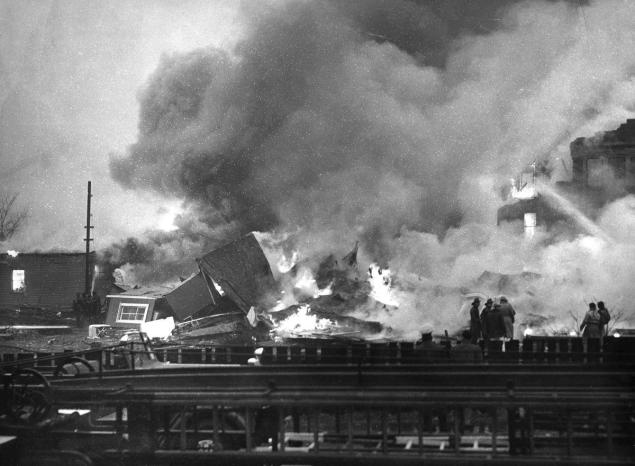
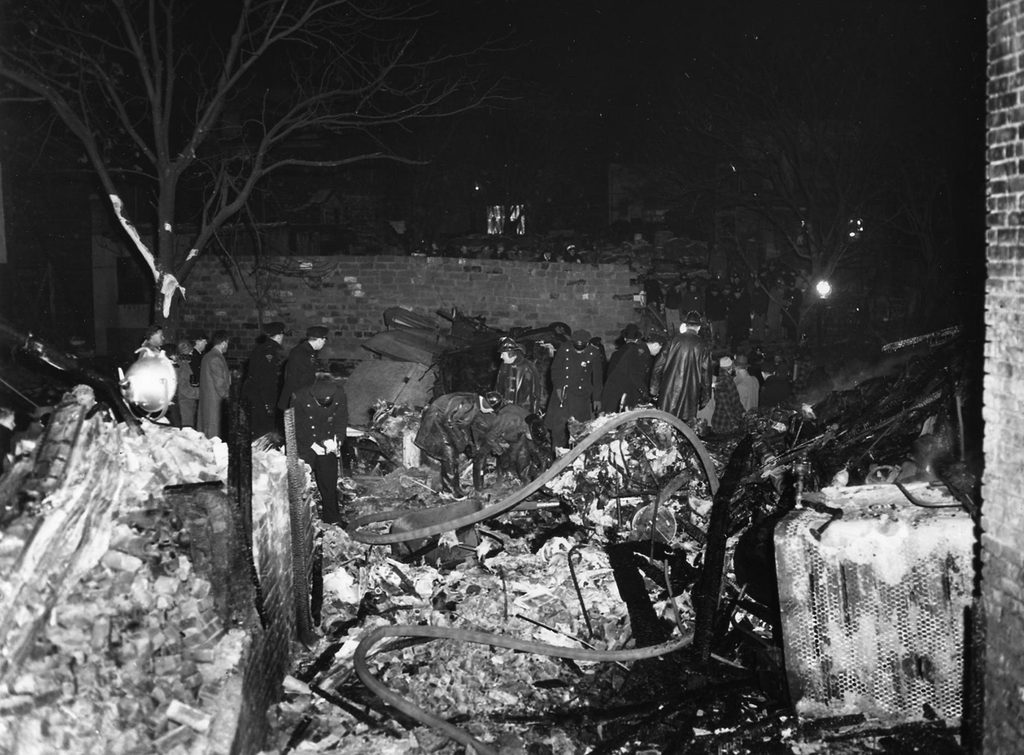
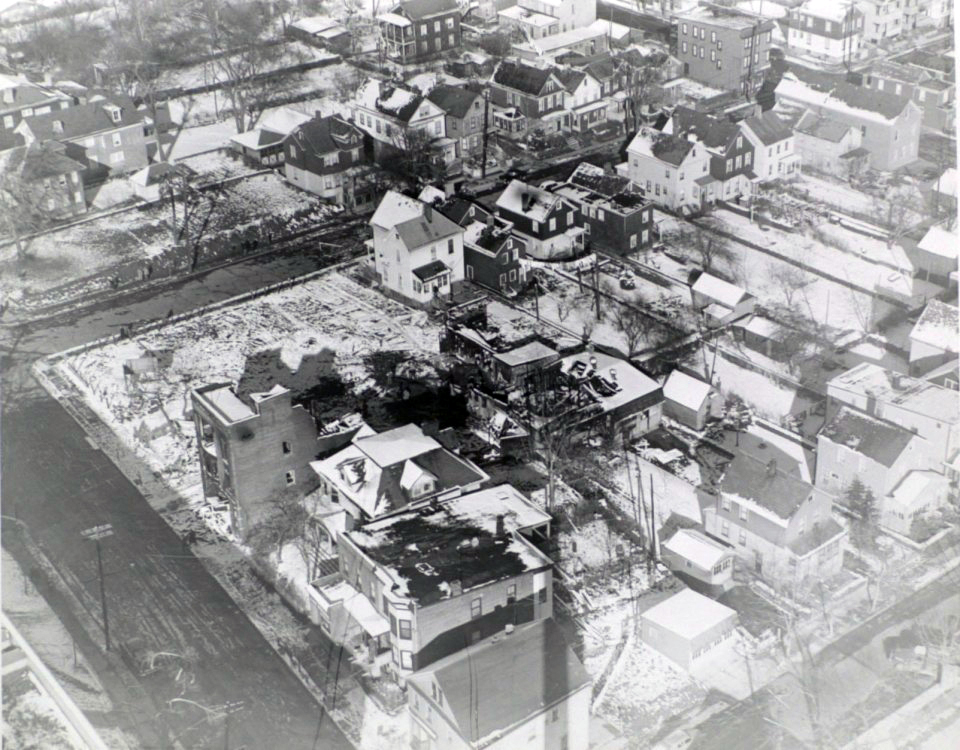
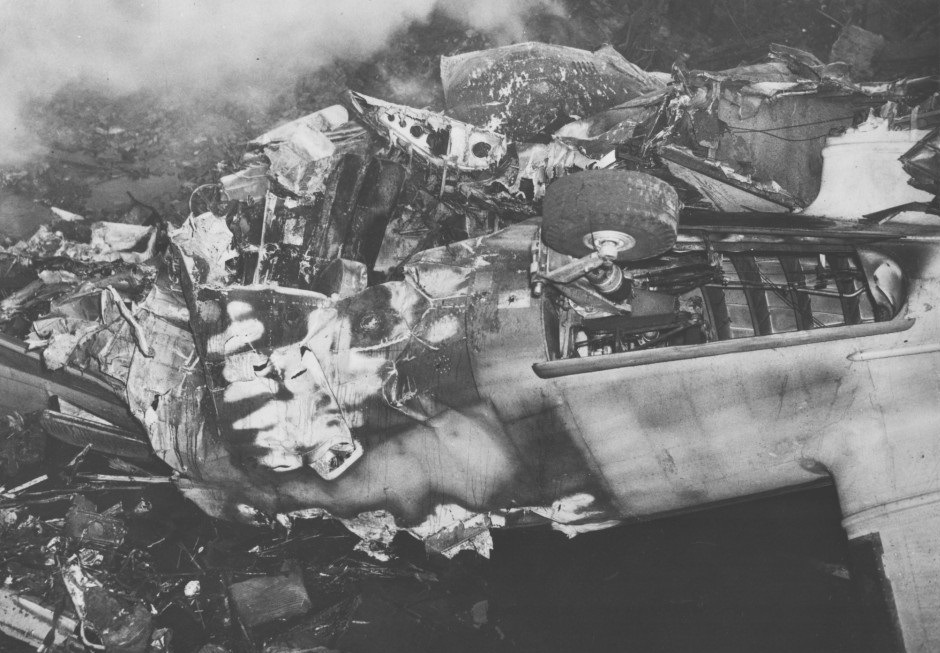
On December 16, 1951, at 15:09 LT, a Curtiss C-46F Commando twin-engine passenger transport (registration N1678M) operated by Miami Airlines crashed into Elizabeth, New Jersey, shortly after departing Newark Airport. Following takeoff, improper nut installation caused the hold-down studs of the right engine’s No. 10 cylinder to fail, separating the cylinder and initiating an uncontrollable in-flight engine fire. High aerodynamic drag from extended landing gear, combined with severe power loss, caused the airframe to stall at an altitude of approximately 200 feet. The aircraft plunged into the banks of the Elizabeth River, killing all 56 occupants on board and injuring one person on the ground.
1. Tactical Incident Summary
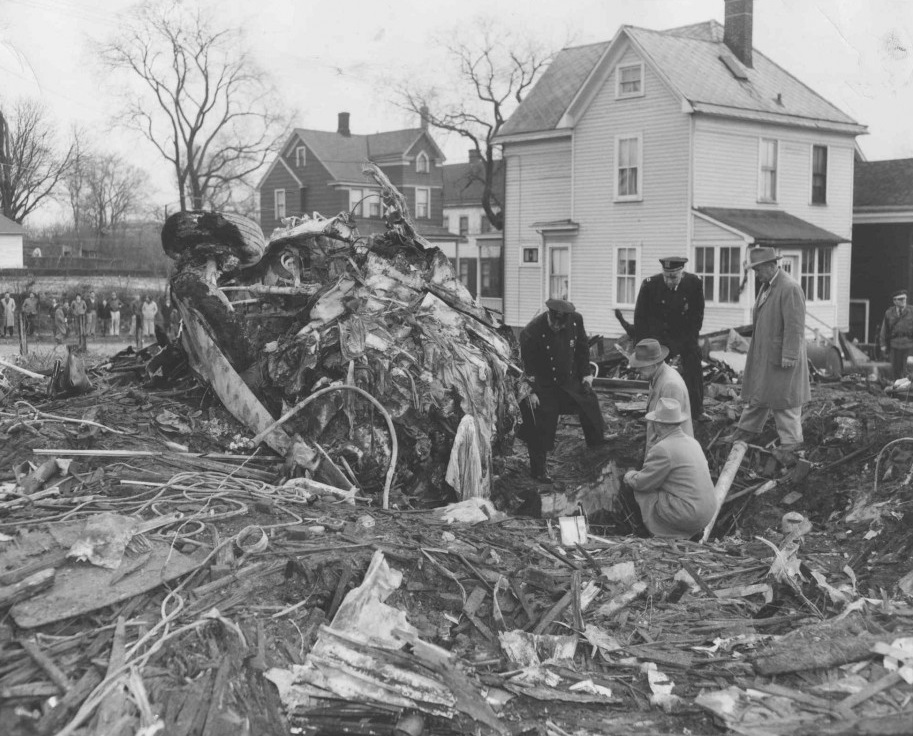
- Date & Time: December 16, 1951, at 15:09 LT
- Location: Elizabeth, New Jersey (~3 miles SW of Newark Airport Runway 28), United States
- Aircraft Model: Curtiss C-46F Commando
- Registration / Serial Number: N1678M
- Manufacturer Serial Number (MSN): 22572
- Year of Manufacture (YOM): 1945
- Operator: Miami Airlines
- Flight Phase: Departure / Initial Climb & Emergency Return Approach
- Flight Type: Scheduled Domestic Revenue Passenger Flight
- Flight Route: Newark Airport (EWR) ──► Tampa International Airport (TPA)
- Airframe Total Hours: 4,138 flight hours
- Occupants: 56 Total (4 Crew Members, 52 Passengers including 2 infants)
- Fatalities & Injuries:
- Onboard: 56 Fatalities (4 Crew, 52 Passengers) | 0 Survivors
- Ground: 0 Fatalities | 1 Serious Injury
- Crew Flight Experience:
- Captain (PIC): Albert C. Lyons — 8,679 total flight hours (2,600 hours on type)
- First Officer (Copilot): John R. Mason — 1,224 total flight hours (234 hours on type)
- Cabin Crew: Stewardess Doris Helm + 1 deadheading employee in jumpseat
- Airframe Status: Destroyed by high-speed ground impact and post-crash gasoline fire
- Primary Cause: Low-altitude aerodynamic stall induced by severe power loss from the right engine and high parasitic drag from extended landing gear during an emergency return.
- Contributing Factors:
- Fatigue failure of the hold-down studs on the right engine’s No. 10 cylinder due to improper nut torque/installation, causing cylinder separation and an uncontainable in-flight fire.
- Premature extension of the landing gear during climbout following non-essential radio advice from a ground observer mistaking engine smoke for hot brakes.
- Overweight takeoff weight (~117 lbs over the 48,000 lbs MTOW limit).
- Informal and inadequate airline training programs regarding single-engine emergency procedures.
2. Sequence of Events & Technical Findings
[Takeoff Roll Runway 28] ──► [Right Engine Smoke & Cylinder Separation] ──► [Landing Gear Extended via Tower Suggestion] ──► [Uncontrollable Fire & Loss of Airspeed] ──► [Low-Altitude Stall at 200 ft] ──► [Impact on Elizabeth River Bank]- Pre-Flight & Runup: The aircraft was loaded to 48,117 lbs (117 lbs over maximum allowable weight). During engine runup, ground observers noted grey/white smoke issuing from the right engine, which continued through the takeoff roll at 15:03.
- Engine Failure & In-Flight Fire: Shortly after liftoff, the hold-down studs of the right engine’s No. 10 cylinder severed due to fatigue from improper installation. The cylinder separated from the crankcase, causing massive mechanical failure, fuel leakage, and an uncontainable fire under the right engine nacelle.
- Landing Gear Re-Extension: Observing smoke, a company pilot on the ground misdiagnosed the cause as overheated brakes and advised the control tower to suggest lowering the landing gear. The crew complied and extended the gear, drastically increasing aerodynamic drag while operating on degraded single-engine thrust.
- Emergency Circuit & Stall: As the pilot attempted a left-hand turn to realign with Newark’s Runway 6, airspeed degraded continuously while the right propeller was partially feathered. At an altitude of 200 feet over Elizabeth, NJ, the left wing dropped sharply into an unrecoverable stall. The aircraft struck a storage building and plunged inverted into the shallow waters of the Elizabeth River.