


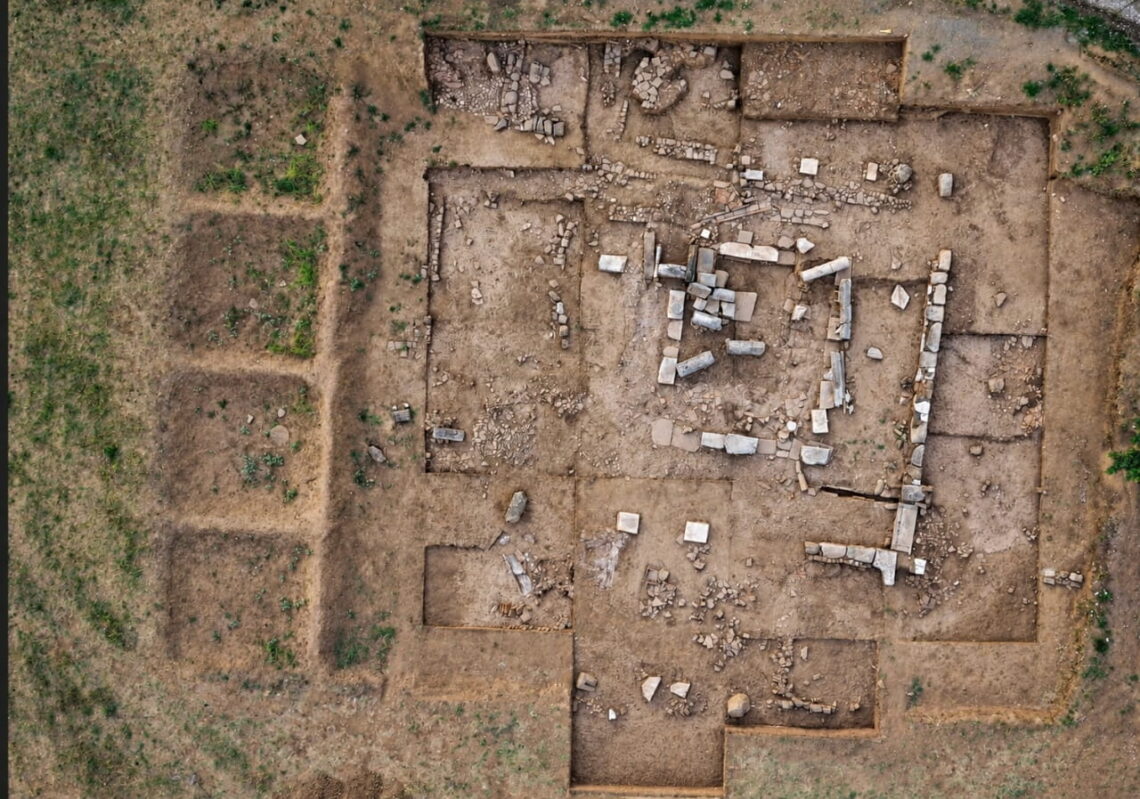

Greek archaeologists and Chinese scholars finished the first dig season at Angelokastro in Aitoloakarnania in July 2026. The Greek Ministry of Culture runs the project with the Chinese School of Classical Studies in Athens and the Ephorate of Antiquities of Aitoloakarnania and Lefkada. It is the opening stage of a five-year program, set to run from 2026 to 2030, that aims to map out the ancient settlement of Arsinoe.

Dr. Olympia Vikatou, Secretary General of the Ministry of Culture, directs the work. Dr. Li Xinwei, Director of the Chinese School, leads the team on the Chinese side.
The crew worked at a spot called Kakavaria, where builders and diggers had already found traces of Arsinoe’s architecture in earlier years. This season the team pushed the old trench wider, recorded what was left of the walls and floors, and looked for clues about how the town was laid out.
One building drew the most attention. Archaeologist Lazaros Kolonas had dug up parts of it decades ago, and the new work filled in the picture. It was a square structure, carefully built, with a courtyard ringed by columns. The walls show signs of repairs and rebuilding, which points to several periods of use. The plan looks a lot like buildings found at other sites in the region, including Kalydon.

The finds came out of the ground in good number. Workers recovered roof tiles, clay end tiles that once decorated rooflines, pottery, bronze coins and animal bones. Conservators are cleaning and stabilizing the pieces now. Specialists will study them next to work out what each object is and when it was made.
The coming seasons will keep the digging going and turn to the town’s defensive walls and towers. The team also plans to bring in geophysical surveys, remote sensing, surface survey and geoarchaeological work. Together, these methods should give a fuller view of how Arsinoe was planned, how its history unfolded and how it changed over time.

The project also marks a step in Greek and Chinese cooperation on archaeology and the care of cultural heritage. Both sides expect the partnership to build a deeper record of the ancient town for years to come.