



Archaeologists in Denmark have uncovered a large Viking Age production site that supplied textiles and other goods to one of the region’s main trade centers over 1,000 years ago.

The site sits near Søften in eastern Jutland, about 10 kilometers north of modern Aarhus. Excavations by the Moesgaard Museum show a planned production area instead of a normal farming village. The settlement covered at least 100,000 square meters. Most of the work focused on making textiles, though other forms of handwork also took place there.
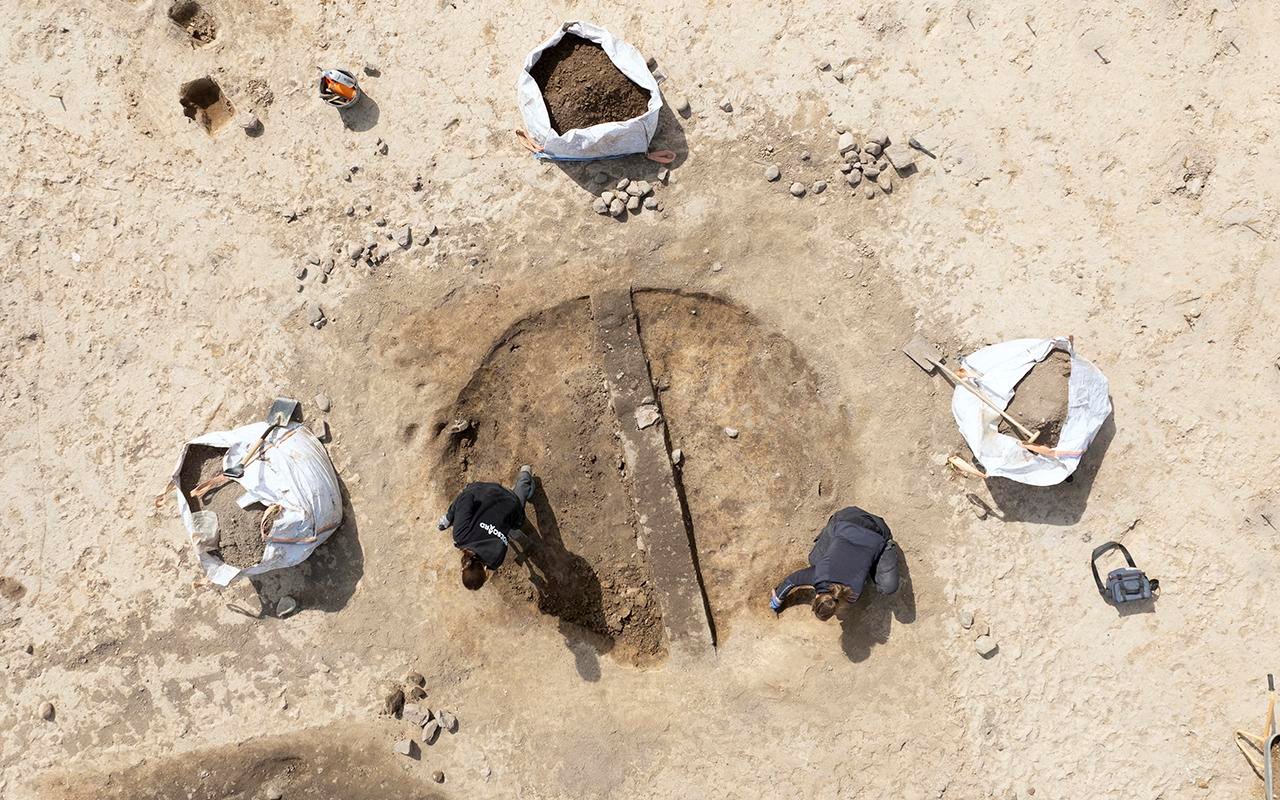
Researchers found an area where flax was prepared before workers turned the plant into linen. They also uncovered 82 pit houses, small sunken buildings linked with Viking workshops. Many held spindle whorls and loom weights, showing cloth production took place on a large scale.
The layout points to a well-planned settlement. Different areas served different jobs. One section focused on textile work, while others supported handwork. A single house stood apart from the workshops. Archaeologists think a manager lived there and oversaw workers, raw materials, and daily production.

Liv Stidsing Reher-Langberg, who leads the excavation, said the settlement stands out because textile production formed the main activity. Few Viking sites show such a clear focus on one type of work.
Excavators also found silver coins, cut pieces of silver, glass beads, and pottery. These finds show trade played an important part in the settlement. Researchers think many of the finished goods traveled south to Aros, the Viking town that later became Aarhus. During the Viking Age, Aros grew into one of Denmark’s leading trade centers and linked local producers with markets across northern Europe.

Historian Kasper H. Andersen said production on this scale served far more than nearby communities. The settlement formed part of a wider trade system tied to the growth of Aros.
The new findings match earlier work in the same area. About four kilometers away, archaeologists uncovered an elite estate at Lisbjerg with close links to Aros. In 2024, a Viking silver hoard turned up at nearby Elsted. Together, these sites show how villages around Aros supplied goods and raw materials to the growing town.

The current excavation began in August 2025 and covers more than 60,000 square meters. Earlier digs in 2008 and 2013 found more workshops immediately south of the new site. Those finds show the production area stretched across a much larger landscape.
Researchers are now using radiocarbon dating and pollen studies to refine the age of the settlement and identify the plants processed there. The results should give a clearer picture of how flax moved from field to workshop before cloth entered Viking trade routes across northern Europe.