


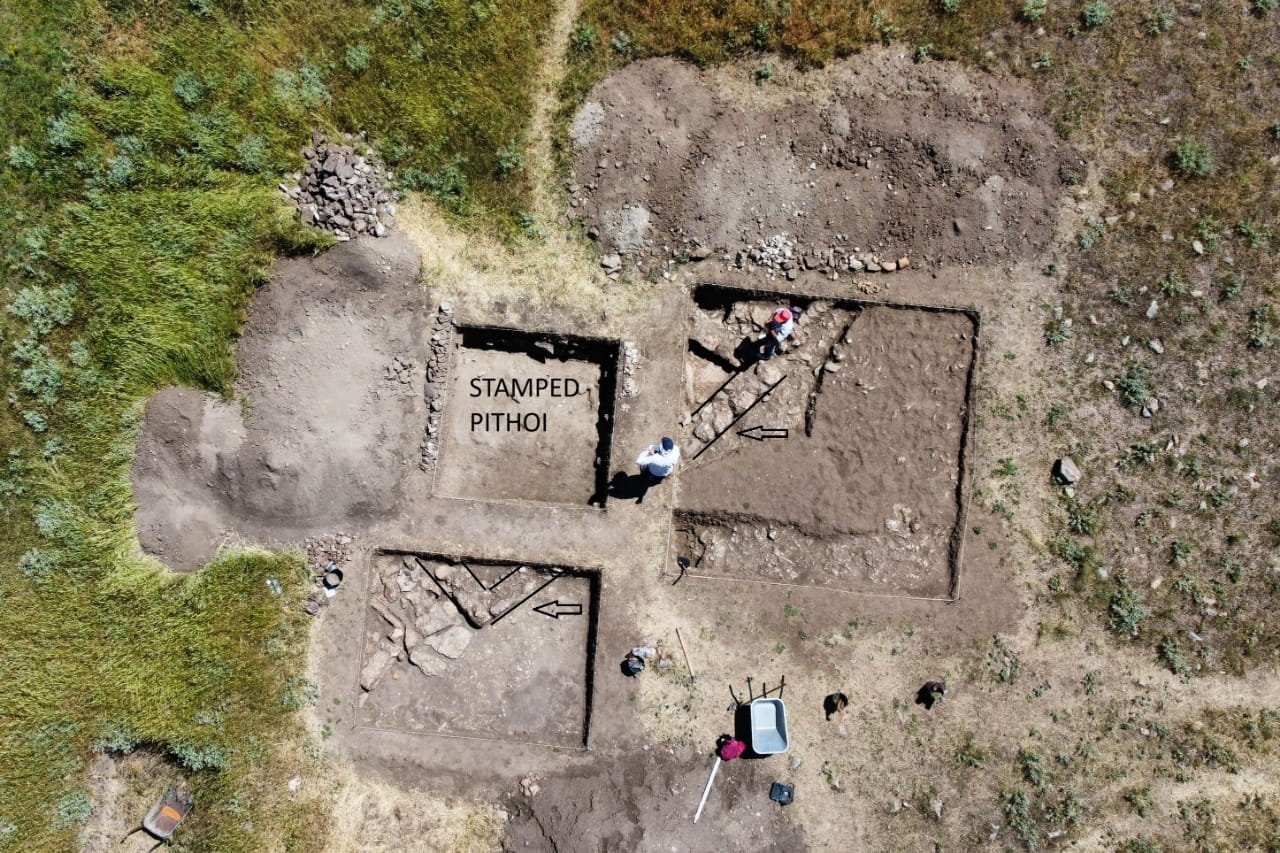

Archaeologists have completed a new season of excavations at Gradište near Mlado Nagoričane in North Macedonia, focusing on the Lower Terrace sector of the ancient settlement. Earlier work in this area uncovered rock-cut structures from the fourth century BCE and stone features similar to tumuli. Beneath these structures, the team found many votive vessels, small pits, and a perirrhanteria, suggesting ritual activity took place at the site.

The latest campaign continued work in this ritual zone and brought new evidence about religious practices and daily life. East of a previously identified tumulus, archaeologists uncovered the walls of a building filled with fragments of large storage jars known as pithoi. One pithos had a decorated rim with finger ring stamps. The image shows a female deity, possibly Demeter, holding a cornucopia in one hand and pouring a libation from a kantharos over a tripod with the other.
South of this area, the team found part of a wall, likely used to separate the ritual space from the wider settlement. Next to this wall stood a small room linked with ritual meals or gatherings. The room contained many animal bones, including remains of wild boar and goats, along with a large group of Hellenistic tableware.

Much of the pottery came from outside the region. The collection included West Slope guttus, West Slope kantharoi, small black-glazed echinus bowls with stamped palmettes, amphora fragments, hydriai, lamps, and pieces of terracotta figurines. These objects show connections with wider trade networks during the Hellenistic period.
One of the most important finds from the room was a stone table base and parts of a decorated dining couch. The remains included a moulded leg and an appliqué showing a deity holding a phiale, a vessel used during libation rituals. The figure appears to have rested on a kline, a type of ancient reclining couch. Similar decorative elements from klinai have been found in wealthy Hellenistic tombs at Pella and in royal tombs at Aigai.

The room itself was modest in size, despite the high quality of objects found inside. Two large triangular stones marked the eastern side, while walls enclosed the space. Archaeologists believe the room formed part of the ritual area, known as a temenos, and was likely used for ceremonial dining. Researchers compare the setting with ritual dining spaces linked with the Sanctuary of Demeter and Persephone at Corinth.

Other parts of the settlement also show signs of wealth and wide contacts. A building with a peristyle courtyard examined during an earlier campaign contained painted plaster walls, imported amphoras, and finely decorated ceramics. Together, these remains point to strong links with the cultural and economic networks of the Macedonian kingdom during the fourth and third centuries BCE.
Future work will focus on further excavation of the buildings found during the latest campaign. Archaeologists also hope to determine whether a temple once stood in this part of Gradište.

The excavation project was carried out through the Annual Programme of the National Institution Museum Kumanovo, with funding from the Ministry of Culture and Tourism of the Republic of North Macedonia. The work was led by archaeologist Dejan Gjorgjievski.