


Today, the more than 70-year-old Tupolev Tu-95 turboprop-powered strategic bomber remains in service with the Air Force of the Russian Federation. Code-named “Bear” by the North Atlantic Treaty Organization (NATO), the Tu-95 is expected to stay in service with the Russian Air Force until at least 2040. Following development and testing, the Tupolev Tu-95 entered service with the Soviet Air Forces in 1956 but was not used in combat until the Syrian Civil War in 2015.
5It can trace its roots back to the Boeing B-29 Superfortress
The Soviet Union learned about the Boeing B-29 in 1943 when American WW1 ace Eddie Rickenbacker made a controversial trip to the country. The Soviets asked the United States for the B-29 under the land lease agreement, but the request was ignored. Then, one day in 1944, a B-29 was damaged during a bombing raid over Manchuria, forcing it to land in Vladivostok.
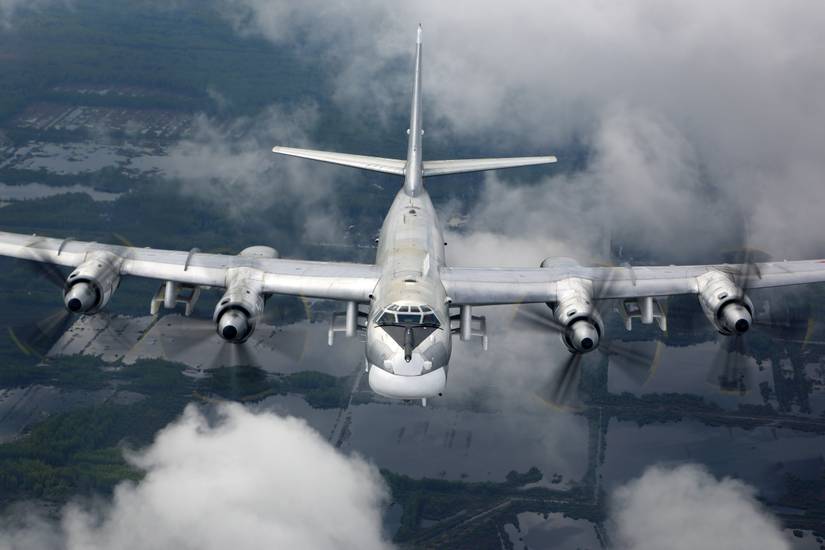
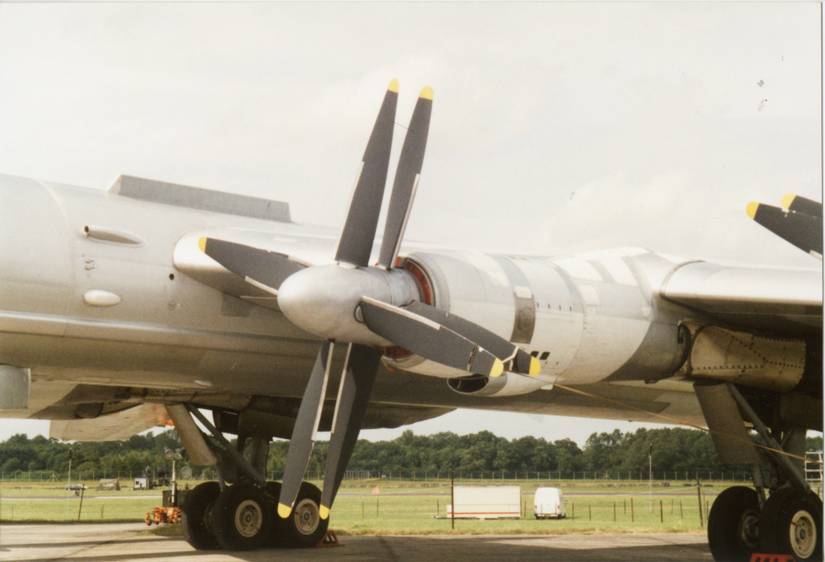
Three more B-29s soon followed after one crashed and two made emergency landings while participating in raids over Japan. The United States asked for the planes to be returned, but the Soviets kept them, asking the Tupolev Design Bureau to replicate them. The result was a re-engineered B-29 called the “Tupolev Tu-4.” Realizing that the Tu-4s piston engines were not powerful, they redesigned the aircraft and fitted four Kuznetsov coupled turboprops, each equipped with two contra-rotating propellors. The aircraft was initially called the Tu-20, but the name was later dropped in favor of the Tu-95.
4 WWII Nazi engineers designed the Tu-95s engines
To understand how Tupolev built the world’s most powerful turboprop engine, you need to know about Ferdinand Brandner. Born in Vienna, Austria, to German parents from the Sudetenland, Brandner earned a degree in engineering in 1925. After graduating, his first job was helping to design locomotive engines for Humboldt-Deutz-Motoren AG.
In the 1930s, Brandner joined the Nazi Party and got a job working at the Junkers-Motorenbau factory in Dessau. After the fall of Berlin in the spring of 1945, Brandner tried to escape Soviet troops but was captured trying to get to Prague.
Realizing Brandner’s importance, he, along with 2,500 other German scientists, engineers, and technicians, was taken to the Soviet Union as a part of Operation Osoaviakhim. As a part of the plan, the Soviets dismantled the Junkers factory in Dessau and a BMW factory in Stassfurt and reassembled them in Kuibyshev in the Soviet Union.
Following the end of WWII and the beginning of the Cold War, Joseph Stalin wanted a long-range bomber that could hit targets in the United States without refueling. At first, jet engines were studied for the Tu-95, but the turboprops built by Brandner and his German engineers were selected to achieve the required distance.
3 Delivered the world’s largest atomic bomb
On October 17, 1961, Nikita Khrushchev announced that the Soviet Union was planning to detonate a powerful Tsar bomb, the most enormous nuclear bomb in the world. Weighing nearly 30 tons, the 26-foot-long 6-foot, wide bomb was to be dropped on a target within the Sukhoy Nos island test site in the Barents Sea.
To carry the weapon, the Tu-95 had to have its engines, bomb bay, suspension, and release mechanisms extensively redesigned. The underside of the plane was also painted with special protective reflective paint. The plan was to fly over the test site at 34,449 feet (10,500 meters) and release the bomb.
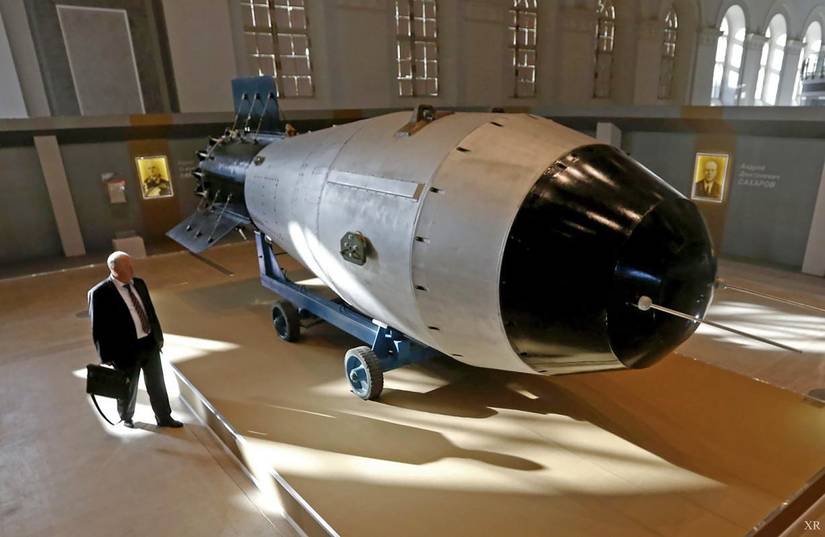
To give the crew of the Tu-95 some chance of surviving the blast, the Tsar Bomb was fitted with a 17,000-square-foot parachute. When the bomb detonated at 12,139 feet (3,700 meters), the Tu-95 was 24 miles away. Despite the distance, the shock wave from the blast caught up with it after the plane had covered 71 miles, and while it severely buffeted the aircraft, it landed safely.
2 One of the world’s loudest aircraft
As mentioned earlier, the Tu-95 has four Kuznetsov NK-12 engines fitted with two four-blade counter-rotating propellors. Because the tips of the propellors rotate faster than the speed of sound, the noise they create is deafening. The plane is so loud that there was a myth suggesting that the crews flying them all lost their sense of hearing. Generating as many decibels as a rock concert, the United States Navy claims that submerged submarines can hear a Tu-95 flying overhead on their passive sonar.
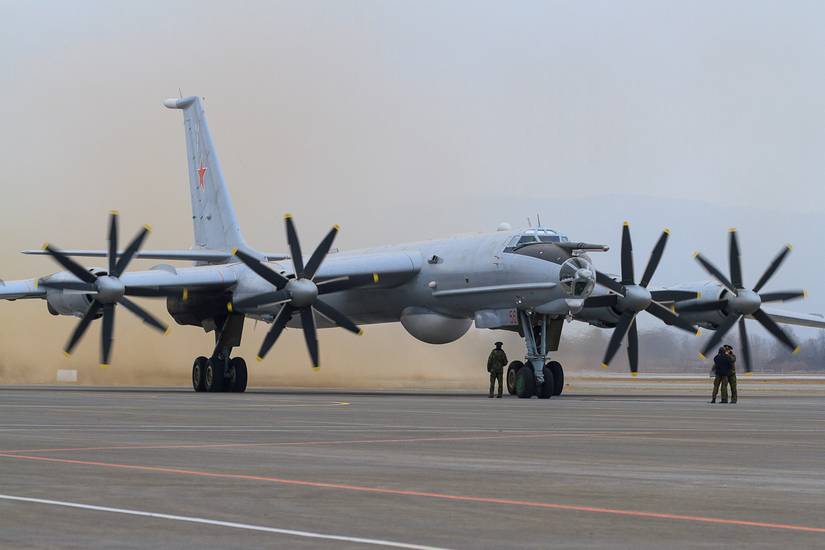
While the Tu-95 remains the noisiest aircraft in service, this was not always the case. In the 1950s, the United States Navy wanted a fighter bomber that could take off from an aircraft carrier without the aid of a catapult.
They took a Republic XF-84H Thunderscreech and replaced the jet engine with a 5,850 hp turboprop engine. While undergoing tests at Edwards Air Force Base in California, people 25 miles away complained about the noise. Ultimately, the program was canceled, and the aircraft never entered service with the Navy.
1 Used as an airliner
In 1955, the Air Ministry of the Soviet Union asked the Tupolev Design Bureau to manufacture an airliner with a range of 4,971 miles. Tupolev already had the ideal aircraft and modified a Tu-95, which resulted in the Tupolev Tu-114 Rossiya. At the time of its introduction, the aircraft was considered extremely fast, reaching speeds of 550mph, making it the world’s fastest-ever propeller-powered plane.
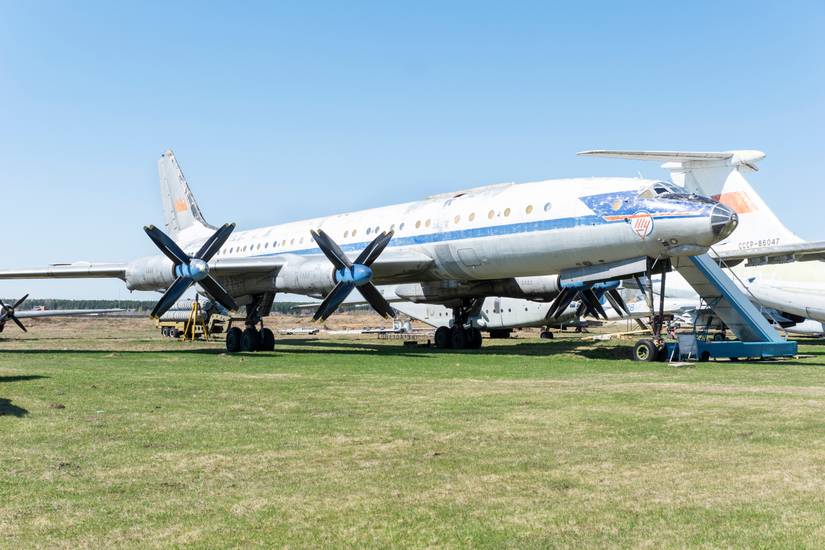
The Tupolev Tu-114 Rossiya had a range of 5,560 miles and could carry 224 passengers. When the aircraft entered service with Aeroflot, it was configured for 170 passengers, 12 flight attendants, and five crew.