


The US Navy’s F/A-18 Hornet and Super Hornet are variants of an iconic multirole fighter jet that has become emblematic of US naval air power. The F/A-18E and F Super Hornet is the latest and greatest in the family. The aircraft has grown in power and size, and earned a new nickname, the “Rhino.” Hornet squadrons form the bulk of the squadrons in Carrier Air Wings that embark on American aircraft carriers. Renowned for its versatility and performance, the Rhino is the backbone of the Carrier Strike Group (CSG), enabling the Navy to project power ashore anywhere.
4 Adaptable and Dominant
The F/A-18 Hornet started out with models of the A-D variant line, but the Navy has phased out almost all of those jets in favor of the much larger, more powerful E/F Super Hornet model. The Boeingbuilt fighter has always come in both single and two-seater options. However, over the years, evolving Naval Aviation doctrine has favored the two-crew fighters, which comprise the majority of active squadrons.
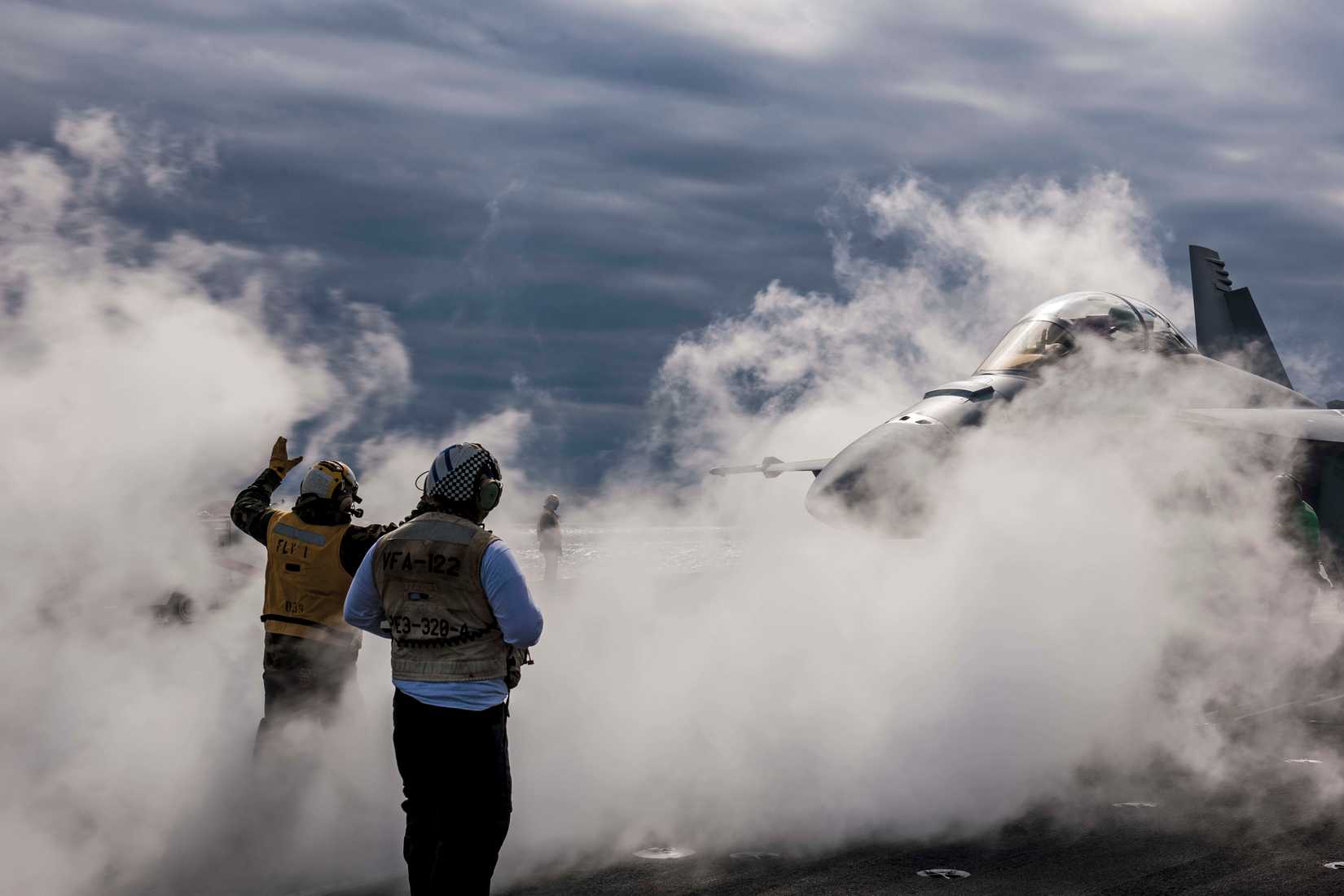
As the striking arm of the Carrier Air Wing, Rhino squadrons must perform both air-to-air and air-to-ground missions. The F/A-18 was conceived and built to offer unmatched versatility to meet the needs of America’s Navy. US Navy and Marinesquadrons operate from both land bases and flat-tops. The rugged design of the Rhino gives it the ability to perform to its combat potential in a wide range of environments and execute a vast spectrum of mission sets. Boeing says,
“The F/A-18 Super Hornet’s design integrates numerous mission systems to allow it to fly combat missions in air-to-air, air-to-ground, and anti-ship roles.”
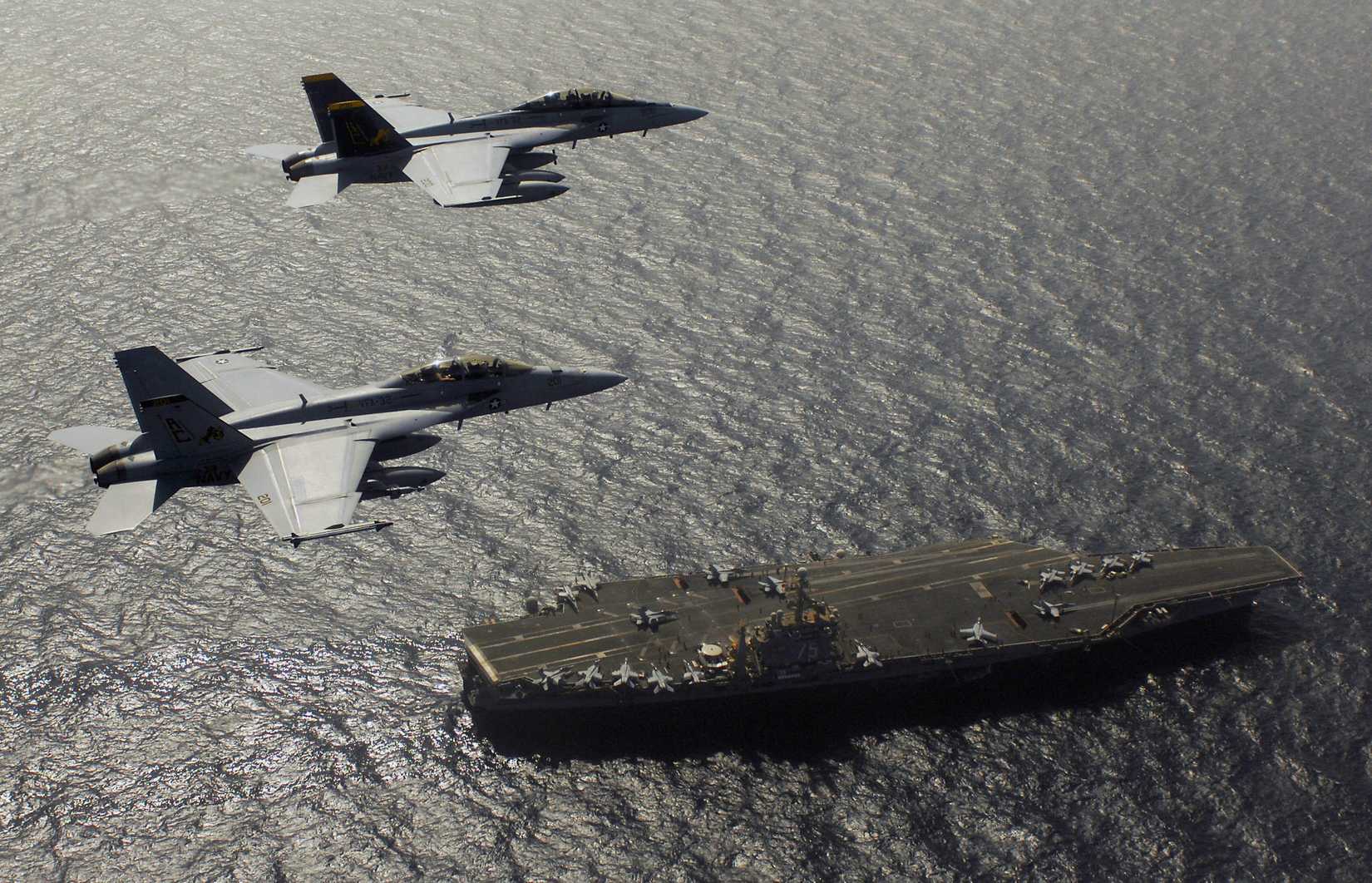
The key design capability that allows it to carry out a variety of operations is its system compatibility, which eliminates the need for extensive modification between mission types, weapons systems or mission-specific equipment. The highly compatible and reliable design makes the Super Hornet a highly lethal and reliable asset to its operators. The F/A-18’s exceptional ability to perform in offensive and defensive combat roles has ensured its place as a frontline fighter for decades with no sign of slowing down soon.
3 Peak Performance Strike Fighter
The F/A-18 excels in combat performance largely thanks to the powerful twin engines that drive it through the air and the high maneuverability of its aerodynamic shape, which is optimized for the needs of carrier-based fighters. The Super Hornet features a seat of two Pratt & Whitney F404 engines, producing enough thrust to propel the big jet to speeds over Mach 1.8 – all while maintaining exceptionally responsive but smooth controls. Navy and Marine pilots need their jets to be as good at dogfighting with the enemy as they are at landing on the ship’s deck. The Super Hornet’s aerodynamics feature a highly swept wing with a leading-edge extension that enhances its maneuverability in close combat.
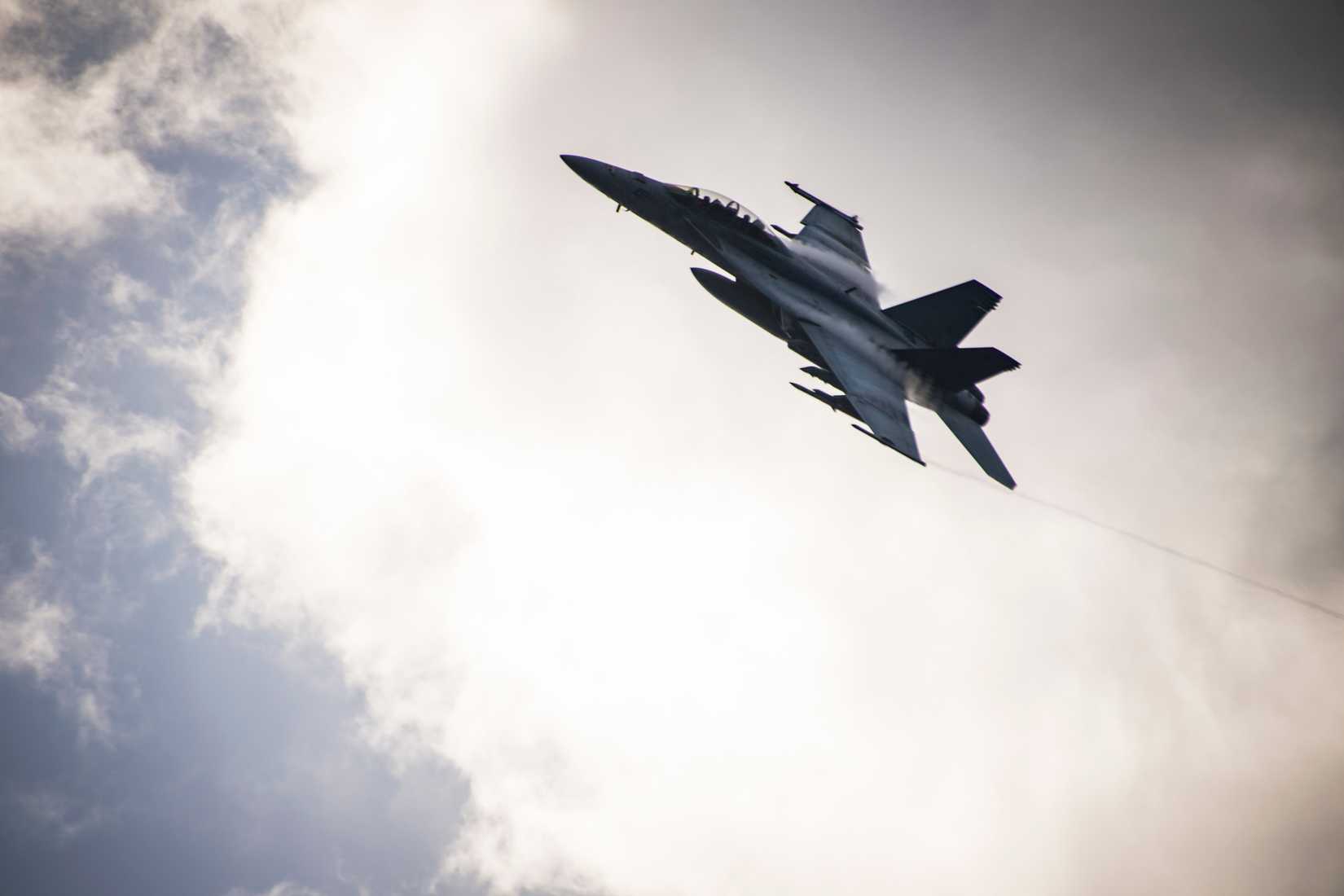
According to the National Interest, “The Hornet’s agility and ability to perform complex aerobatic maneuvers under pressure make it a critical asset in air-to-air combat situations.” This awesome combination of speed, agility, and power ensure the Rhino can more than hold its own in dogfights, even scoring victories against opponents like the F-22 Raptor in excercises.
2 Always Evolving
The F/A-18’s electronic systems are among the most sophisticated avionics, sensors, and computing equipment fielded by any carrier-launched aircraft in the world. The missions demanded of the Rhino require crews to detect, track, and engage a wide range of targets with the highest precision in any scenario.
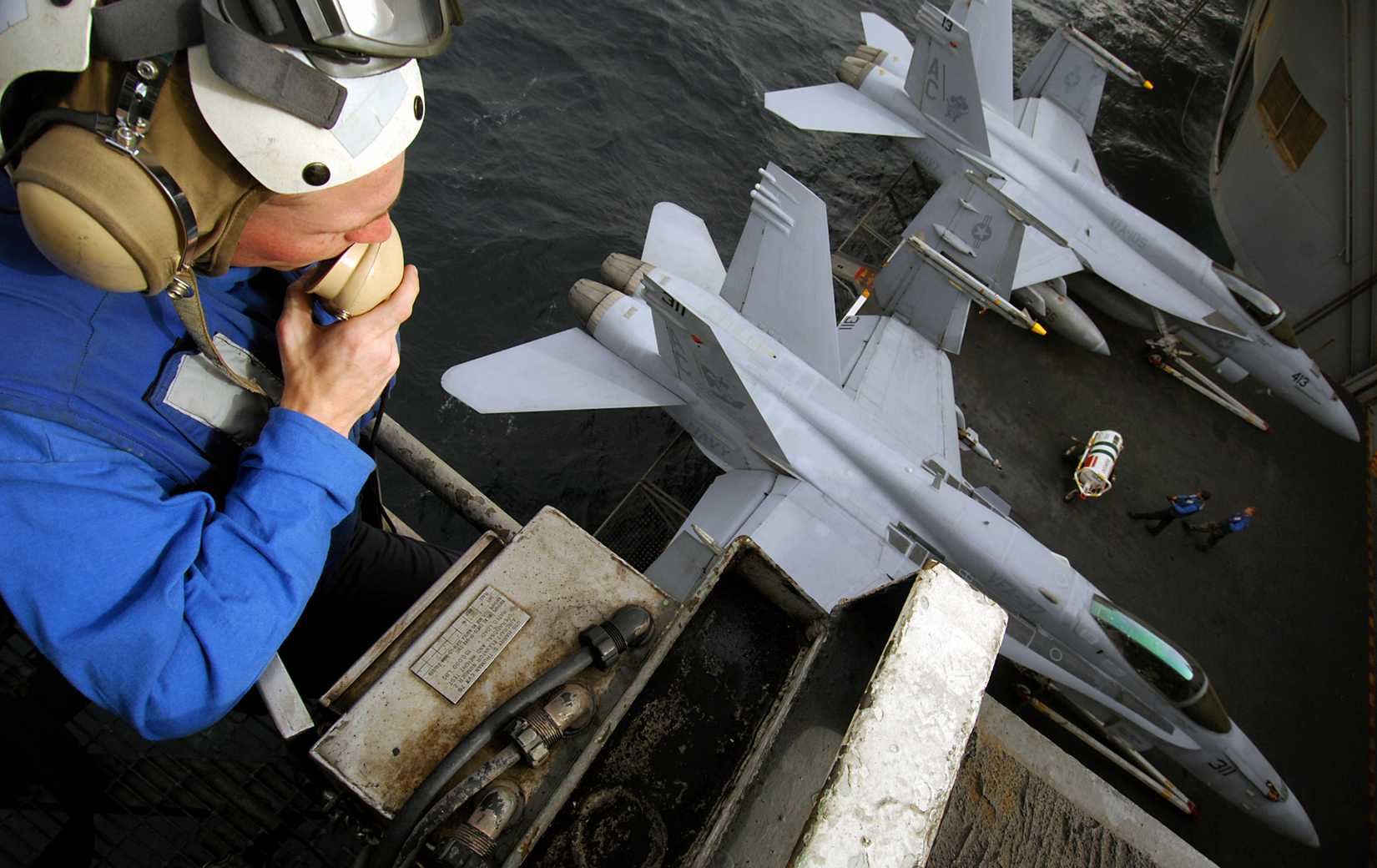
The F/A-18 has a host of technology, like advanced radar, infrared targeting, and data networking systems, enabling Rhino crews to ensure they hit their target without fail in offensive and defensive missions. The Raytheon-built AN/APG-79 AESA radar system is a technology capable of superior target detection and tracking. As is described by Air and Space Forces Magazine:
“The Super Hornet’s radar system is one of the most effective in modern combat, allowing it to detect and engage enemy aircraft at greater distances.”
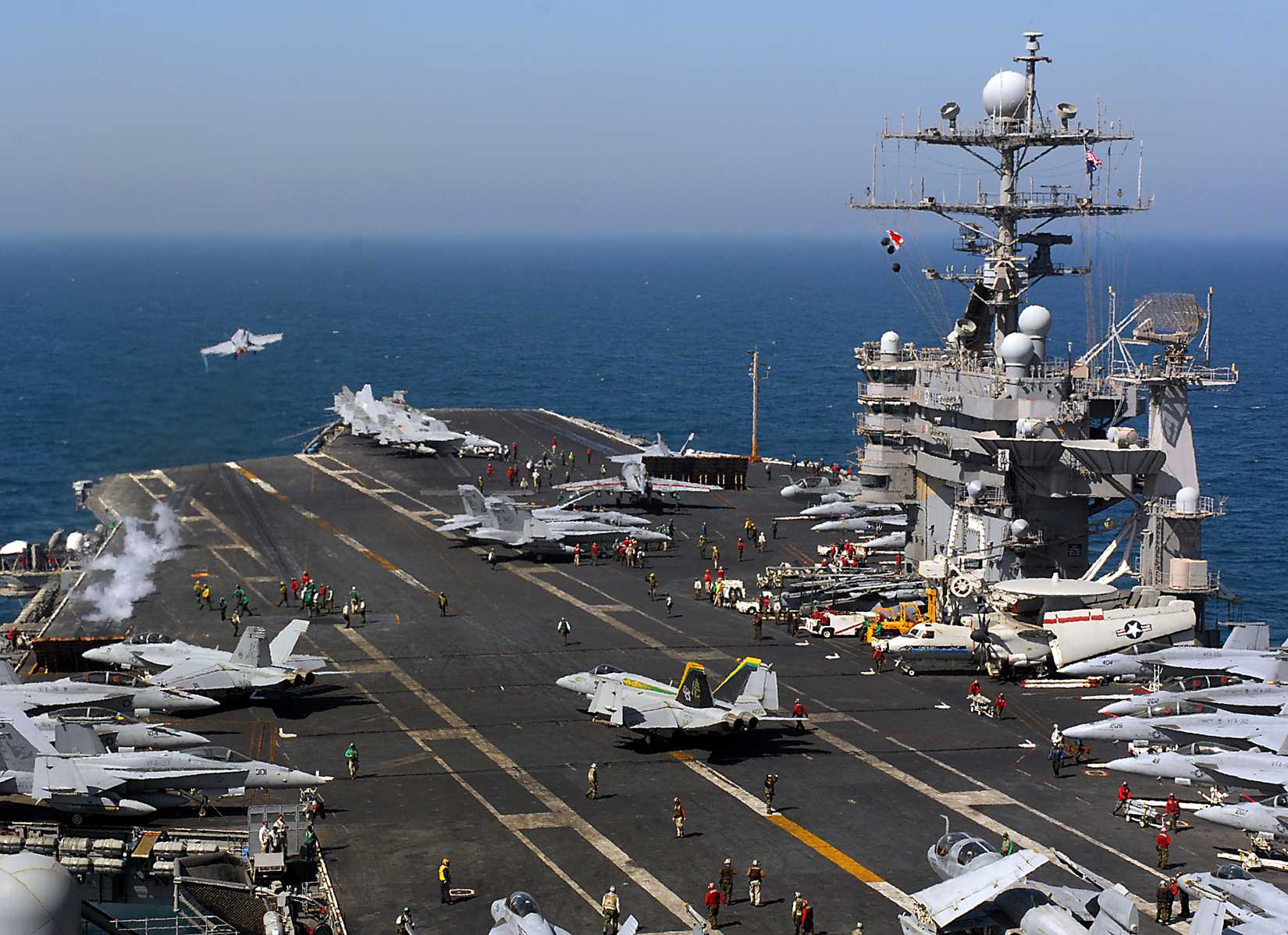
The aircraft’s design is specifically tailored to withstand the stresses of carrier operations, including the harsh conditions and weather found at sea. The airframe and systems are built to endure the extreme demands of cyclic operations with thousands of carrier landings and takeoffs in the jet’s lifetime.
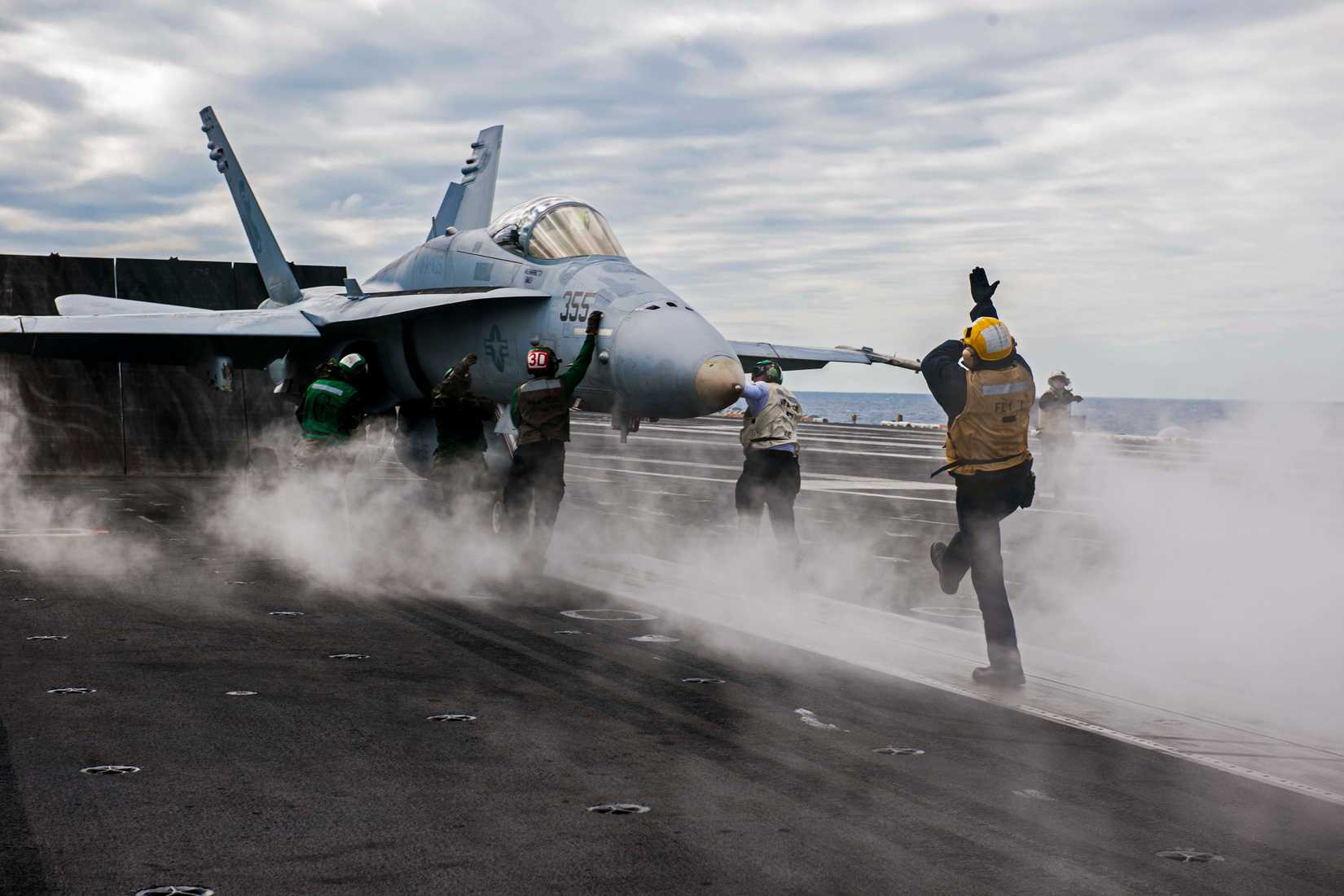
F/A-18E/F Super Hornet Specifications
Data from Boeing and the US Navy.
- Length: 60 feet 1 inch (18.3 meters)
- Wingspan: 44 feet 5 inches (13.5 meters)
- Height: 16 feet 9 inches (5.1 meters)
- Maximum speed: Mach 1.8 (1,190 mph, 1,915 km/h)
- Maximum range: 2,000 nautical miles (3,700 km)
- Service ceiling: 50,000 feet (15,240 meters)
- Weapons capacity: Up to 17,750 pounds (8,000 kg) of ordnance
- Powerplant: 2 × Pratt & Whitney F404-GE-402 engines
1 Uncompromising Multi-role Capability
The F/A-18’s reputation for being an exceptionally flexible platform has secured its place on the Navy’s flight line and that of America’s allies. As technology has advanced, so have the Hornet’s core systems, and few combat jets can claim to be as effective on the battlefield in the modern era of combat. The F/A-18E/F Super Hornet recently incorporated Block III upgrades, encompassing new cockpit displays, radar system modernization, and enhanced electronic warfare (EW) capabilities.
As The National Interest reported, “The Super Hornet Block III is designed to operate in future high-threat environments, ensuring that it remains a top-tier fighter for years to come.”
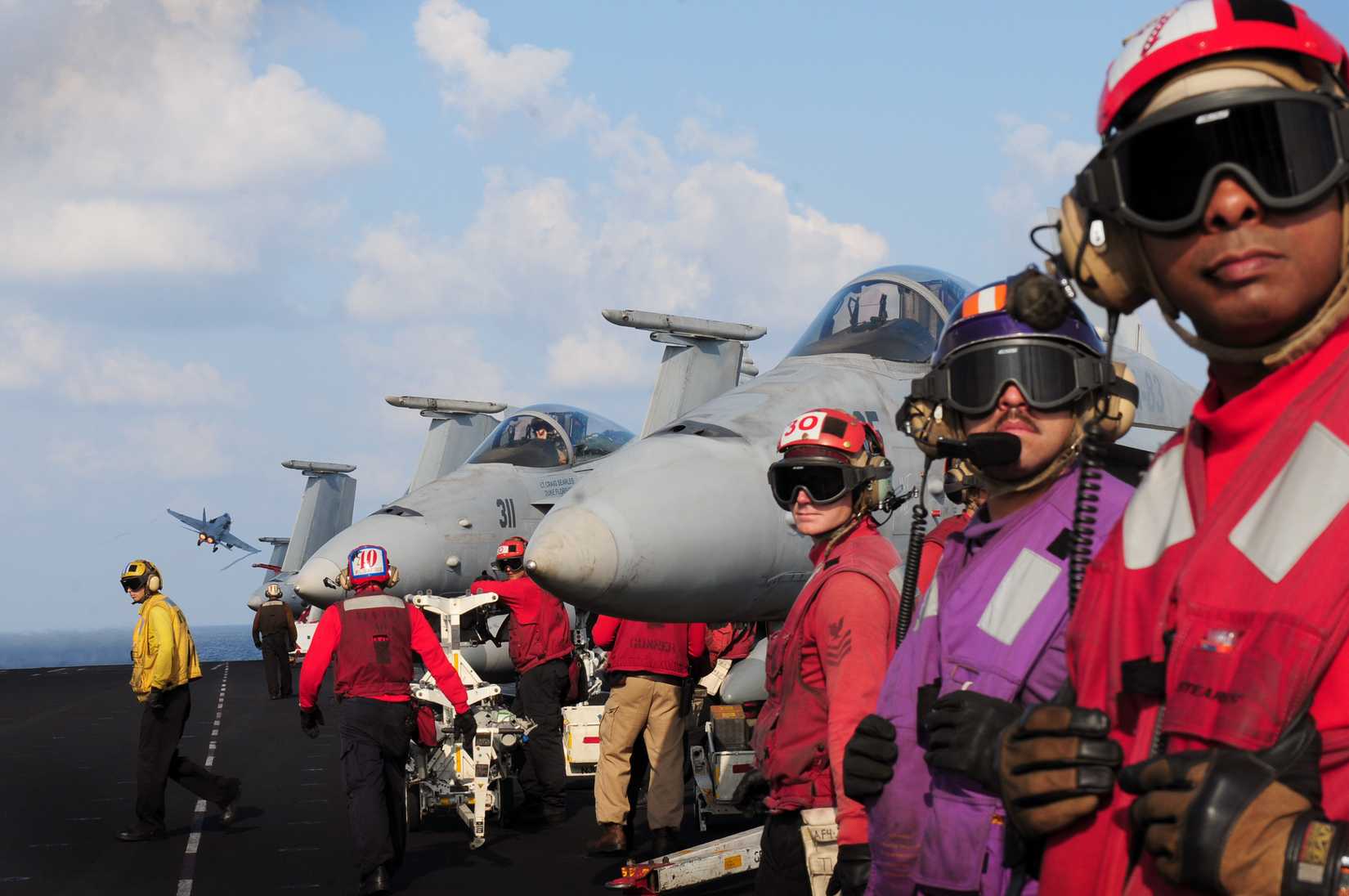
The Navy’s strike fighter role requires a multi-mission capability that can turn and burn into any threat that arises when a CSG is deployed against threats. In the 5th Generation battlespace, keeping a competitive edge against emerging threats is a constant process. The continuous evolution of the Rhino keeps the Navy’s premier strike platform at the forefront of technology.
The Super Hornet’s formidable capabilities stem from its tip-to-tail design flexibility, uncompromising focus on combat performance, cutting-edge avionics, rugged reliability, and open architecture that keeps one eye on the future at all times. As military technology evolves, the F/A-18 has continued to meet the challenge and will remain a vital component of the US Navy and Marines as well as allied air force fleets for many years to come.