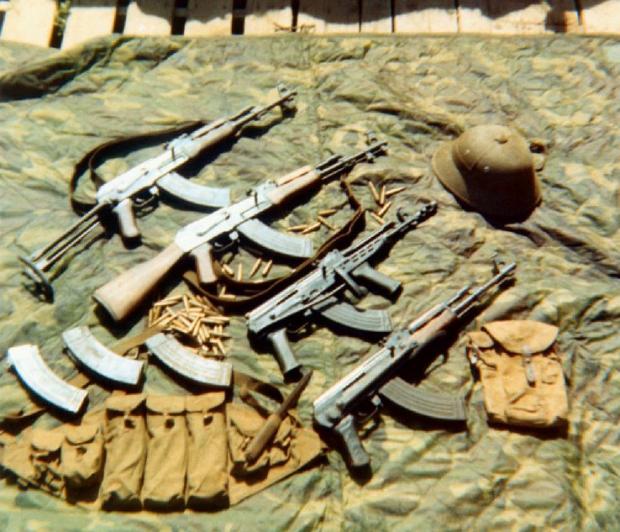

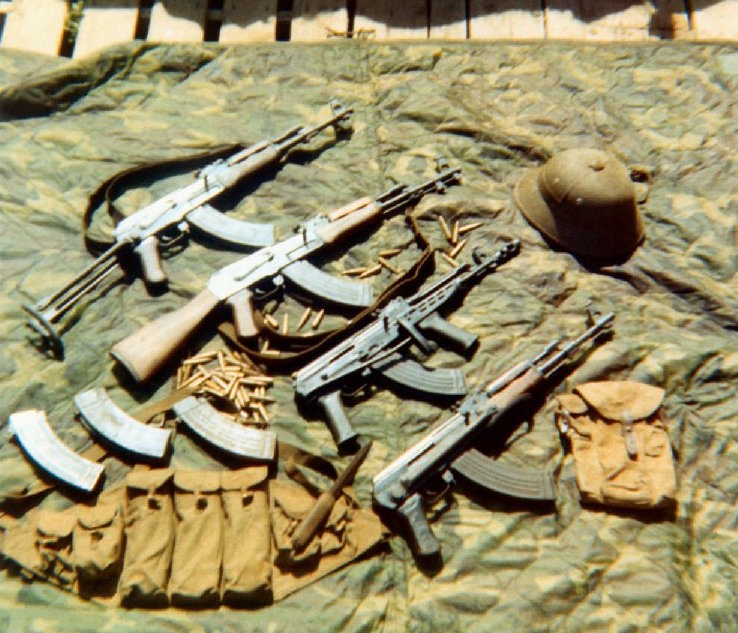
These are a few examples of the weapons and equipment my unit captured while operating in Northern I Corps of the Republic of Vietnam 1970-1971. The four AK’s here are all chambered for the Soviet 7.62 x 39mm round. I believe that the 3rd one from the top is a rare East German AK with the side folding stock, front pistol grip and unusual flash hider. I never confirmed the origin, so I may be wrong on that. We only found this one and the Intel guys really liked it. My view on the AK-47 and AKM is that they were very reliable weapons. You could leave one in a rice paddy and come back a week later, shake out the mud and water and it would fire.The down side of the AK design is the safety lever/selector switch requires the user to take a hand off the weapon to operate and the first click down is full auto. It is an awkward move and takes time. Secondly, the AK does not have an ’empty magazine bolt hold open’ feature. In other words, when the last round is fired, the bolt slams shut on an empty chamber. This is a major flaw in the design. Also takes a second to realize you are out of ammo and must change mags. After installing a new mag, you must operate the bolt to chamber a fresh round. The Czech VZ-58 series addressed those two faults and fixed them both in their design. We captured some of them too, but I can’t find the photos. Lastly notice the knife/dagger next to the chest AK magazine carrier. That knife was one of the few items that I could bring back. See next photo.
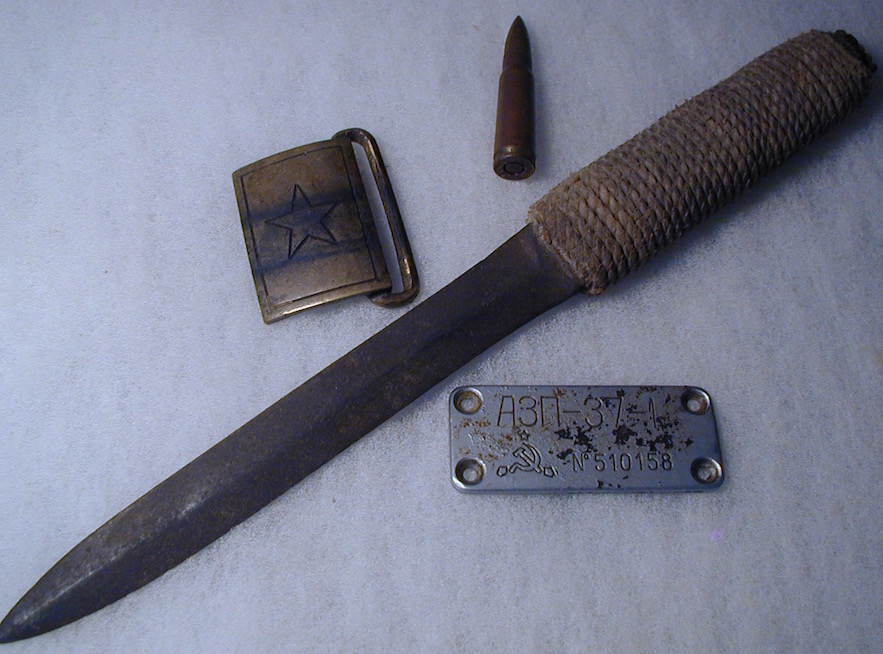
Here is that same knife today. I think it was modified from some other knife or bayonet. The Soviet data plate is from a captured 37mm Anti Aircraft gun that we liberated out in the Ashau Valley. I will post a photo of that below. The NVA buckle is one part of a two piece that got burned a bit. I never found the other part.
The bullet is an original AK-47 round also used with the SKS and RPD light machine gun.
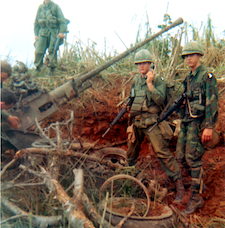
Here is the 37mm AA Gun that was spotted by a LOACH (OH-6A). We were tasked to go get it and bring it back. This gun sat on a 4 wheel carriage and was too heavy for a Huey to lift. We needed a CH-47, but they refused to fly out to the Ashau Valley as it was too hot. So we blew the barrel and receiver off the deck of the gun carriage and loaded it into a huey (UH-1H). It was later mounted in front of the TOC as a trophy. We did not know it until we got it back, that it was loaded with a live round in the chamber. It was a high explosive point detonating round. I removed the metal data plate from the receiver and that is the one shown above. This gun never shot at the good guys again.
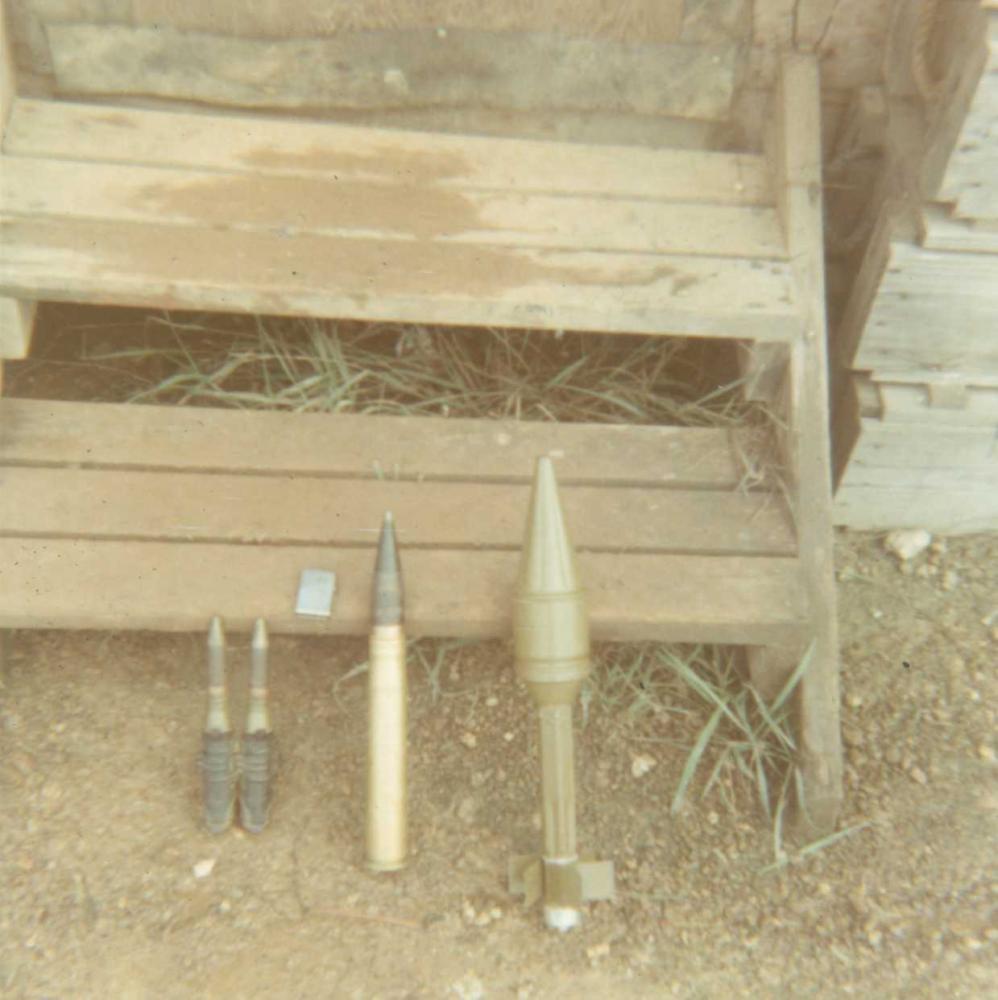
Shown here are (L-R) two 23mm rounds, a 37mm AA round and a RPG-2 rocket. The 37mm AA round in the middle was one taken when the above gun was captured. There were a number of rounds with it but luckily it was unmanned at the time.
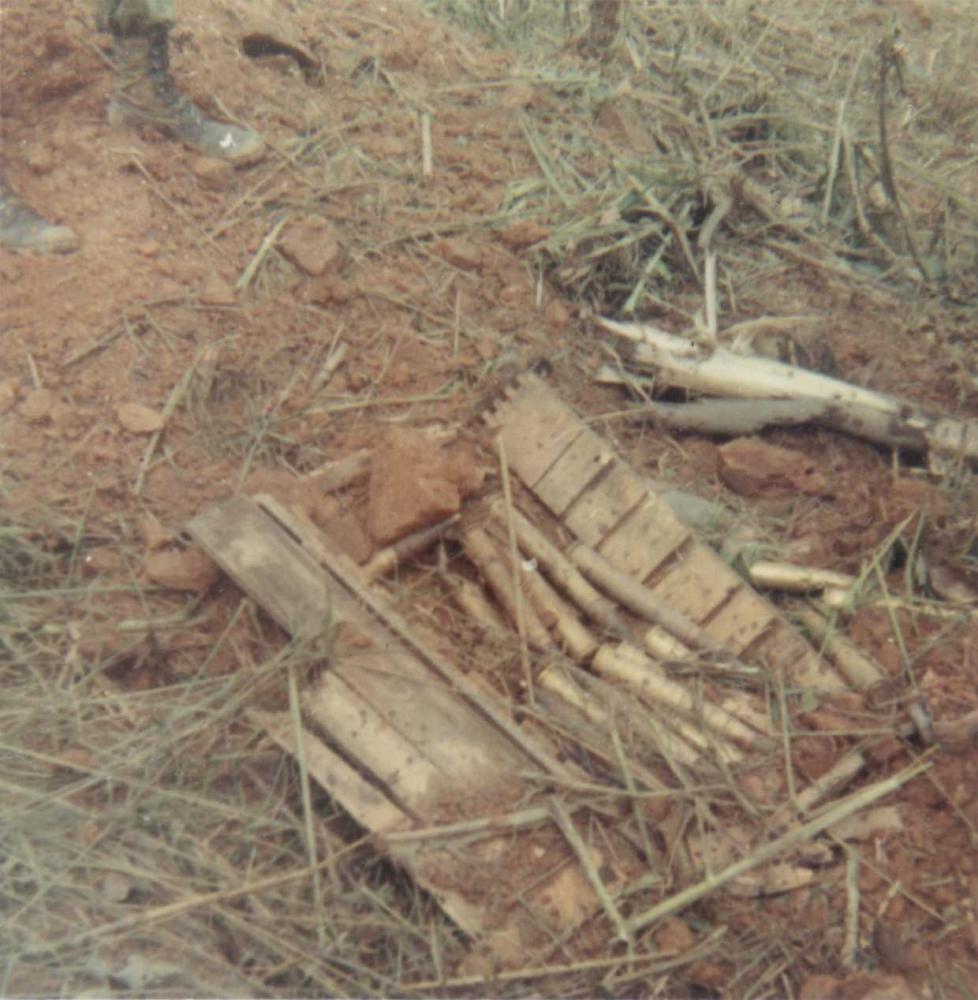
Broken case of 37mm ammo. Most was blown in place (destroyed). The 37mm AA gun was a single shot weapon. It was breech loaded manually before firing.
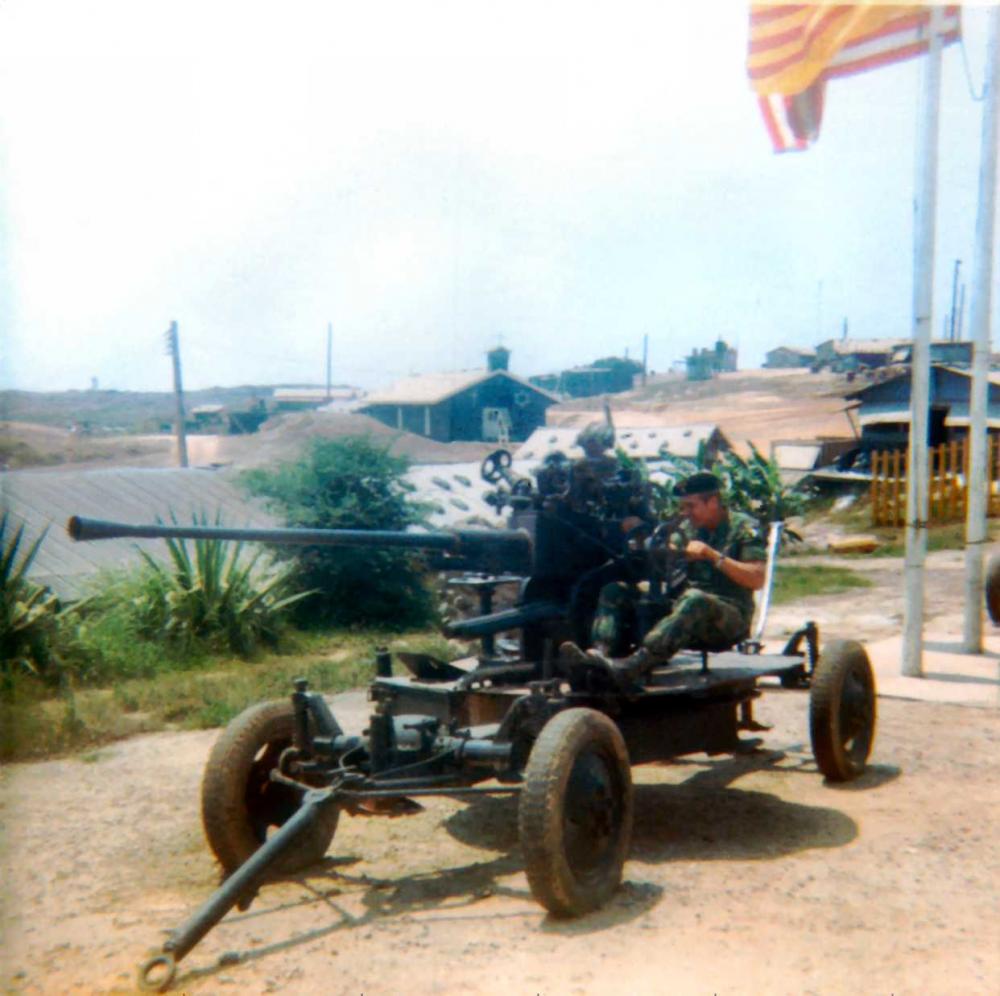
Here is what the whole Soviet 37mm AA weapon would look like had we been able to retrieve it intact. This is another one that was captured and on display at Camp Evans (above Hue). You can visualize that it was pretty heavy. It had to be towed into position by a truck. The one we captured was also dug in inside a bunker with overhead cover. Only the flash suppressor was visible when the little bird spotted it.
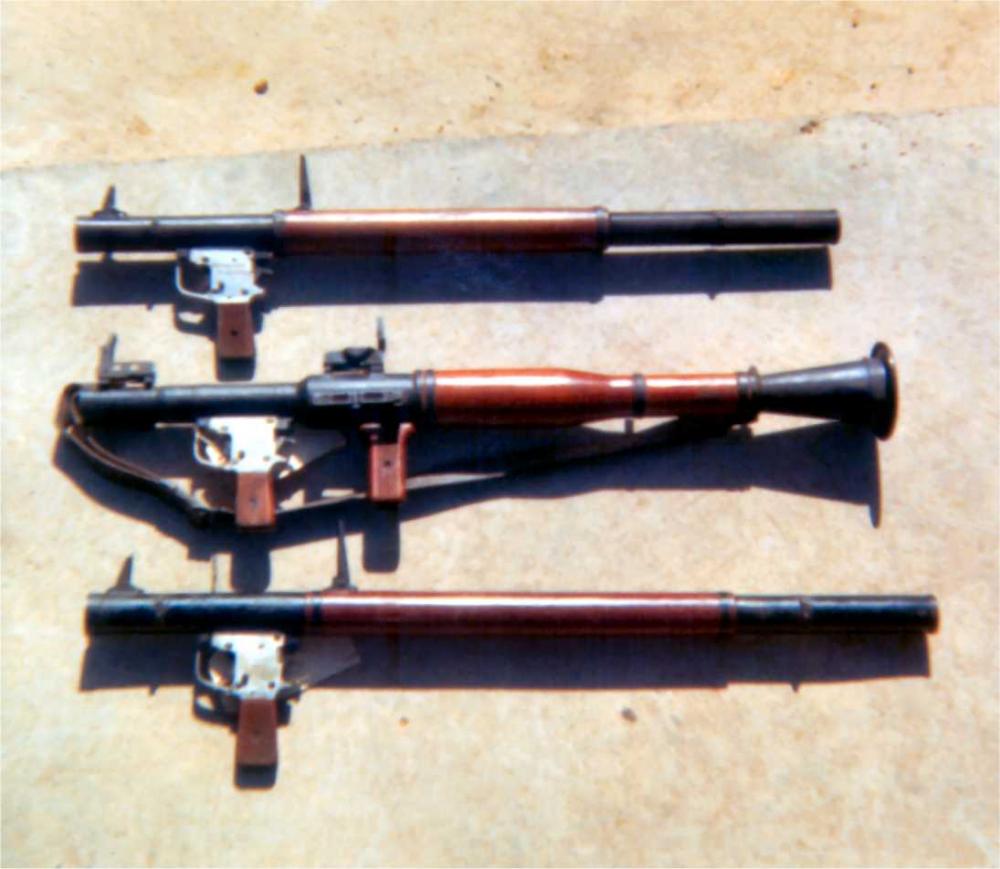
Here are three RPG launchers. RPG stands for Rocket Propelled Grenade. These Soviet made rocket launchers were/are very effective weapons that send a flying shaped charge toward its target. They are very loud and intimidating! The RPG-2 is shown on both top and bottom and they have simple metallic sights. The RPG-7 is in the middle and has optical sights. RPG-7’s being more advanced and with better range were more commonly encountered when making contact with the NVA during my time there. The older RPG-2’s were used mostly by the VC or Viet Cong. NEVER fire an RPG-2 from your left shoulder! They are both recoilless, so back blast is a concern. I am sure that these are still is use today in several conflict areas.
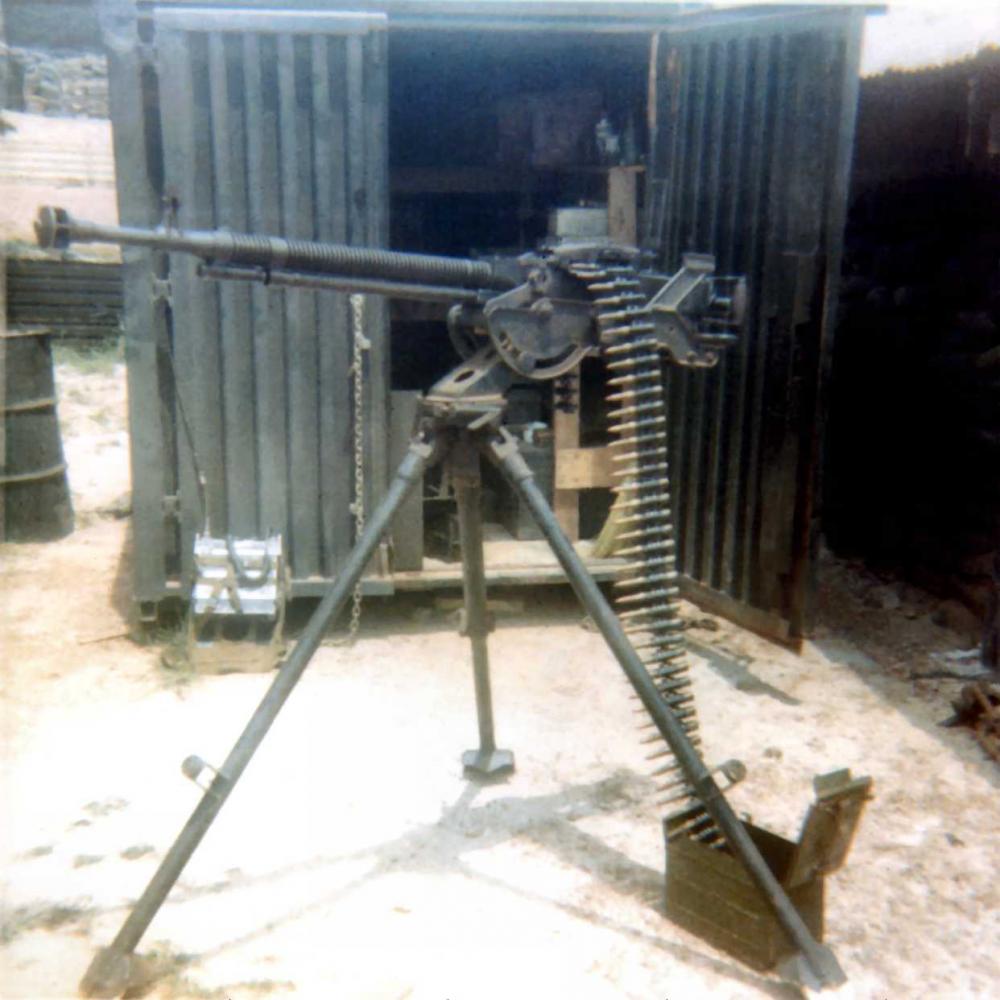
Another captured NVA weapon. This one shot down one of our helicopters before it was taken. This is a 12.7mm DShK M1938 heavy Machine Gun (Soviet made). It fires a .50 caliber bullet that could do considerable damage to an aircraft. This one was used as a training weapon and we fired it out on the bunker line until the ammo was depleted. It is mounted on an anti aircraft tripod, but was also mounted on wheeled carriages. The Soviet ammunition was not interchangable with our .50 Cal MG.
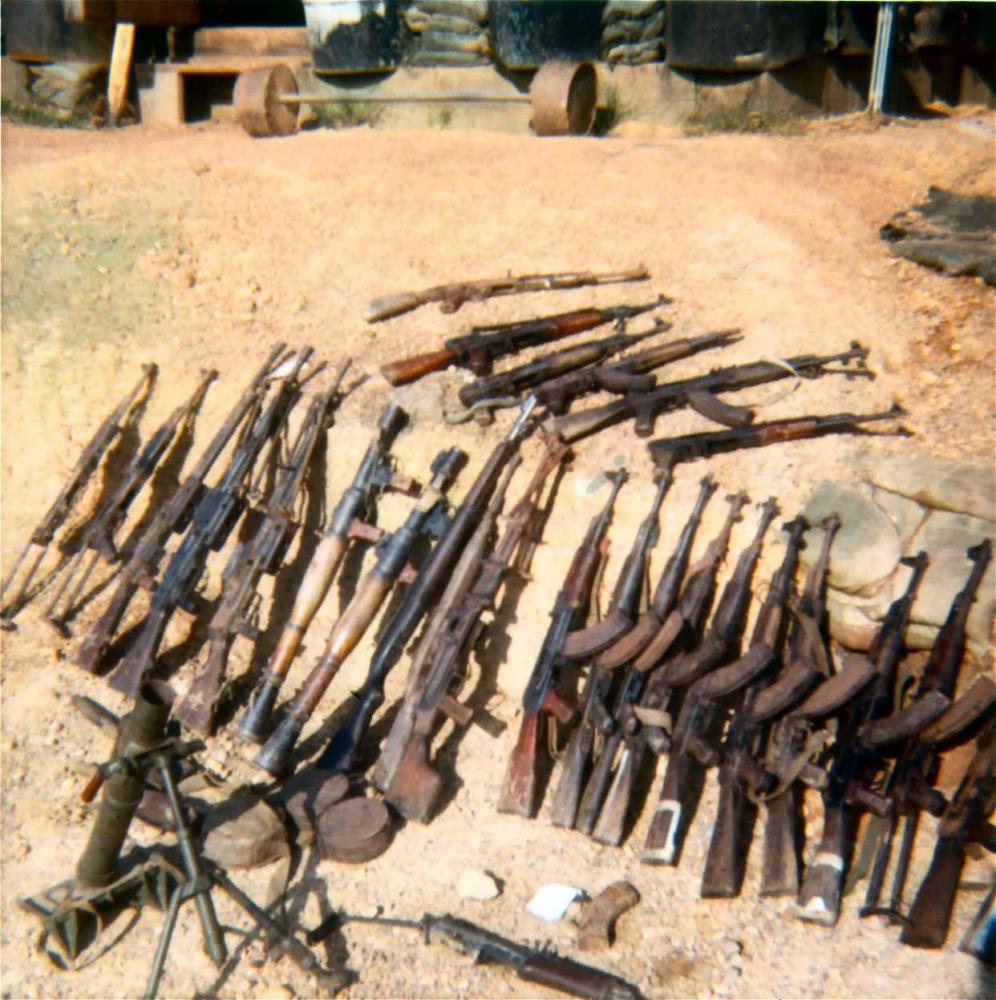
More captured weapons. Look carefully and you can see an M-1 Garand, M-1 Carbine, two RPG-7’s, an RPD, a 60mm mortar and even a couple of old French weapons in this bunch. Mostly Ak-47’s that while dirty and rusty could still function.
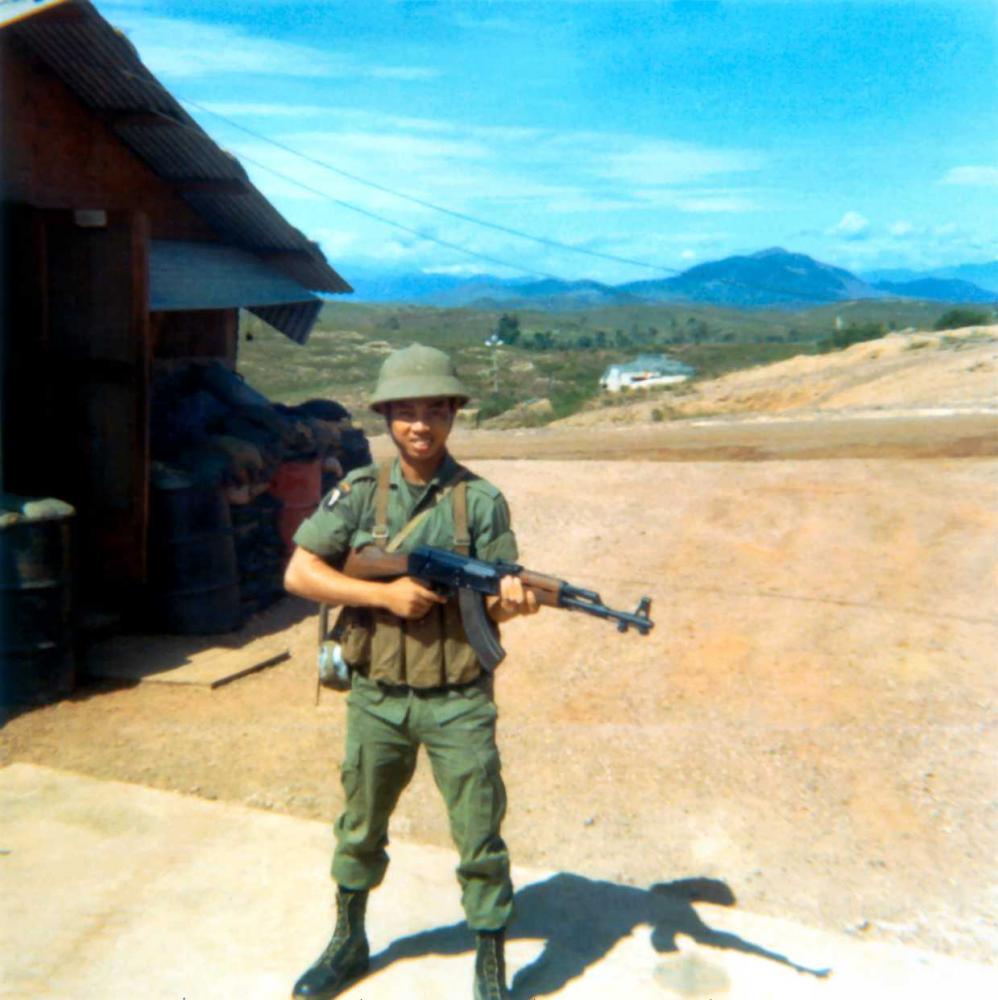
This is Thanh, our Kit Carson Scout. He was a former NVA soldier who came over to our side. This kid was about 17 years old and was absolutely great in the bush. He saved our hides several times by spotting NVA signs and warning us about danger areas. We called him “Baby San” on occasion.
We dressed him up as an NVA soldier on occasion for photos. The knife in the photo above is attached to his canteen. This is what an NVA soldier looked like (minus the 101st patch) and if you spotted one, you might only have a few seconds to figure out what to do next. I have often wondered what became of Thanh. He was loyal and devoted to our unit. I hope he survived.
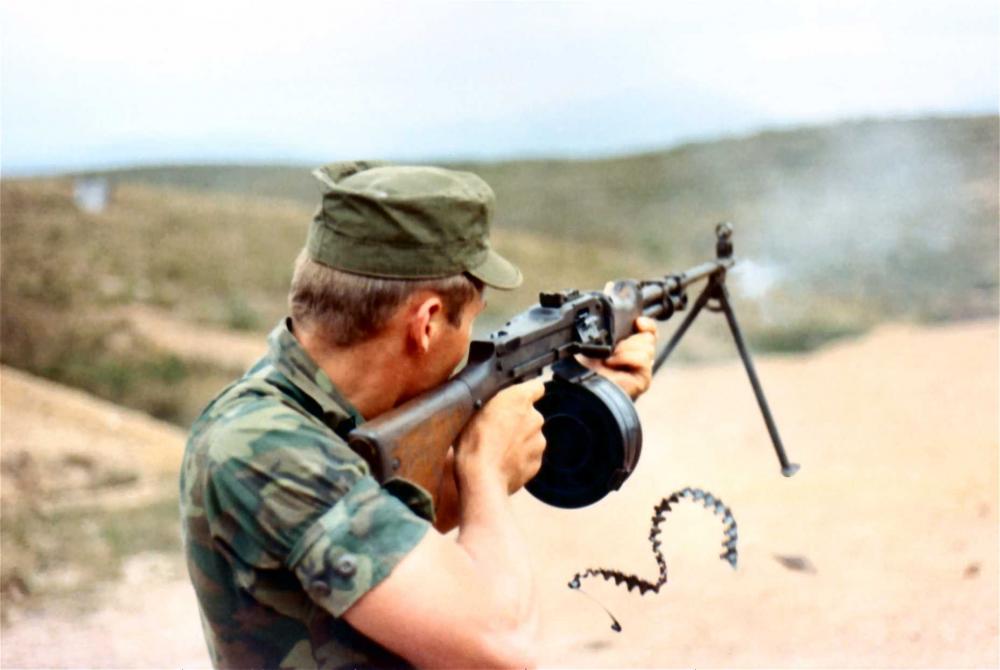
This is an RPD light machine gun in action. It fired the same ammunition as the AK-47 but from a 100 round drum. The bullets were attached to a non-disintegrating metallic link belt that separated into three smaller belts that could be reloaded with loose ammo as time permitted. In this photo you can see one of the belts detach and fall. This was a very well made and reliable machine gun. It was not crew served and was lighter than the US M-60 MG. Although extended here, the bipods folded when not needed.