


If you were to casually peep through any book about the Eastern Front in World War 2, dozens of photos of Soviet soldiers clinging to the handrails of T-34 tanks racing to the front line will adorn the pages. A dangerous practice forced on the Red Army by the inability of unarmoured road bound trucks to keep pace with the tanks and assault guns that were prioritized by Soviet industry, tank riding did not last far beyond the end of the conflict. By the time the Soviet Union disaggregated in December 1991, its ground forces had completed their transformation into a fully mechanized colossus. While tanks and tracked BMP infantry fighting vehicles were the most heavily armed and threatening members of Soviet ground forces (excluding artillery and tactical ballistic missiles), the honour of most numerically prevalent combat vehicle belongs to the eight wheeled BTR-60PB (bronetransporter: armoured transporter) and its successors, the BTR-70 and BTR-80.
The development path to the BTR-60 arose from the Soviet Army’s (the Red Army rebranded in 1946) quest for a highly mobile infantry transport that may keep up with tanks and shield its troops from small arms fire and shrapnel. The Soviets had plenty of experience fighting against the SdKfz 250 and 251s of Nazi Germany’s Panzer Grenadier regiments but…
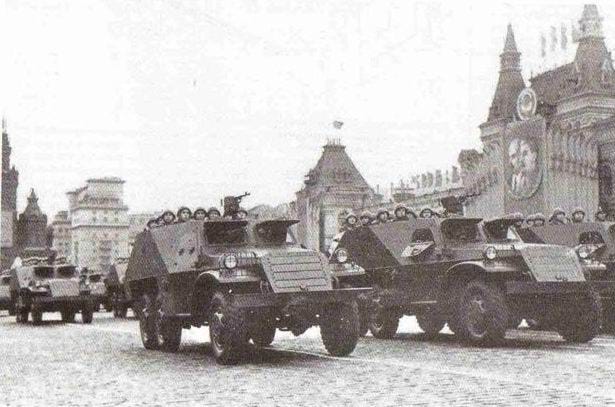
While the US and the UK in the 1950s onwards focused on tracked armoured personnel carriers (APCs) after divesting all their half tracks to foreign allies, the Soviet Union chose to develop both tracked and wheeled mounts. Their reasoning was rooted in geography, doctrine, and logistics. Tracked vehicles like the BMP offered superior off-road performance and firepower, but they were expensive, maintenance-heavy, and slower over long distances. Wheeled APCs, on the other hand, could move rapidly across the vast Soviet road network, required less upkeep, and were far easier to produce in large numbers—an essential factor for an army built around mass and momentum.
This dual-track approach led to the emergence of the BTR-60 in the late 1950s, a vehicle that embodied Soviet priorities of mobility and simplicity. Powered by twin gasoline engines and capable of amphibious operations without preparation, the BTR-60 allowed infantry to keep pace with advancing armor while maintaining a degree of protection. Yet, this design came with compromises—limited armor, cramped interiors, and dangerous troop dismount procedures would later expose its weaknesses in real combat.
Still, the concept proved enduring. The improved BTR-70 and BTR-80 refined the formula with better engines, enhanced protection, and more practical troop access, ensuring that wheeled APCs remained a backbone of Soviet—and later Russian—motorized infantry units. But as warfare evolved and conflicts shifted from open battlefields to urban environments and asymmetric engagements, the very strengths that once defined the BTR family began to raise new questions about survivability and adaptability.