


Southern Peru’s Toro Muerto, home to an extensive collection of rock art, has long puzzled researchers with its enigmatic petroglyphs.
A new study published in the Cambridge Archaeological Journal proposes a novel interpretation: the abstract geometric shapes adorning the volcanic boulders might be representations of ancient songs, potentially linked to shamanic rituals involving hallucinogenic plants.
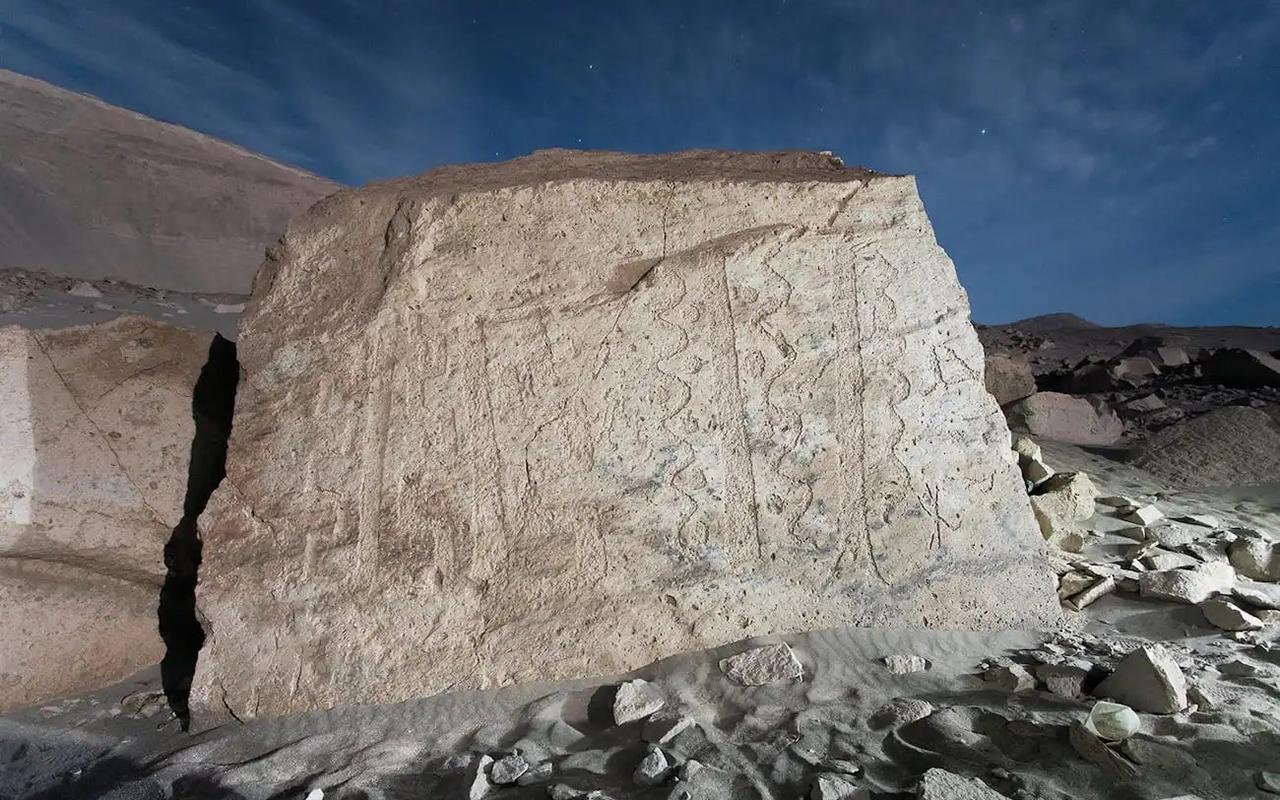
Toro Muerto, translating to “Dead Bull,” boasts a significant collection of petroglyphs from the Wari Culture, a Middle Horizon civilization that flourished between CE 500 to 1000. Among these intricate carvings are dancing anthropomorphic figures known as danzantes, accompanied by geometric motifs, predominantly zigzag lines, and occasional dots or circles.
While previous interpretations hinted at symbolic representations like snakes or lightning, the recent study draws parallels with the Tukano people of the Colombian rainforest. These indigenous communities utilized geometric designs in their artwork, inspired by visionary experiences induced by the psychoactive drink yajé/yage. The Tukano’s art, featuring concentric circles, dots, wavy lines, and zigzags, reflected their creation myths, intertwined with dances and songs sung during rituals.

The researchers propose that similar to the Tukano’s use of geometric patterns to represent songs, the petroglyphs at Toro Muerto might embody ancient musical compositions. They write in their study that “some geometric images could have been representations or embodiments of songs themselves, in their own right, independent of any depictions of mouths or bodies.”
Moreover, Mesoamerican iconography from Maya, Mixtec, and Nahua codices also showcases spiral-shaped dots or lines, possibly depicting songs visually. This suggests that the depiction of songs in graphic form might not be unique to Toro Muerto but rather a widespread phenomenon in various cultures.
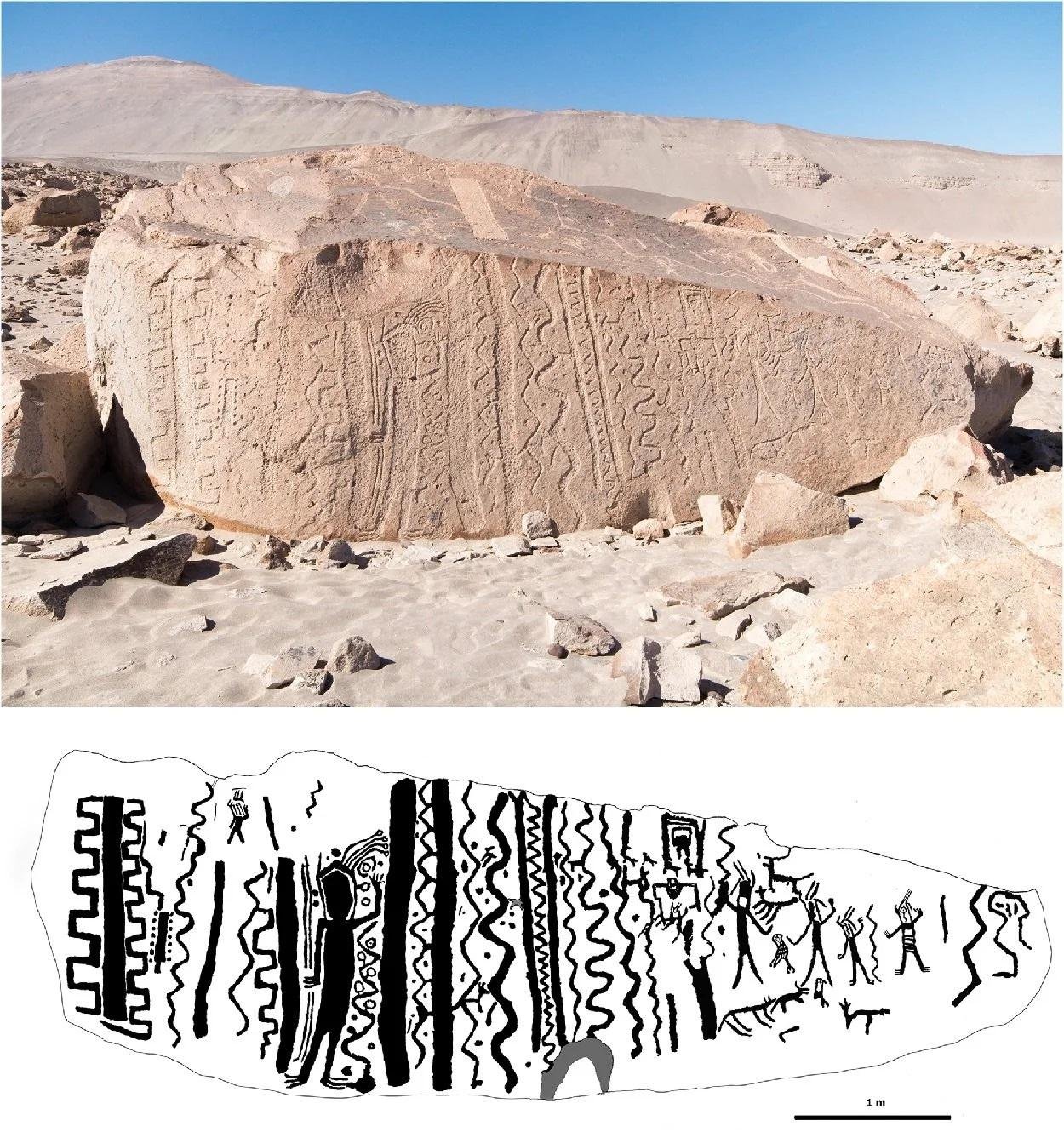
The study extends its hypothesis to propose that certain complex compositions featuring dancers and linear geometric patterns symbolize journeys to the afterlife or parallel worlds. The researchers propose that the intricate arrangements of dancers surrounded by wavy lines could depict the transfer to another realm, where participants reconnect with ancestral mythology. They suggest that the geometric patterns, particularly zigzag lines, could have represented the sonic sphere, while the dancers symbolized the transfer to another world. These interpretations reveal a deeper connection between art, music, and spirituality in ancient Peruvian culture.

While acknowledging the speculative nature of their hypothesis, the researchers assert its logical coherence and call for further exploration of the ontological and social context surrounding these ancient petroglyphs. They propose a paradigm shift in interpreting Toro Muerto’s rock art, emphasizing the role of music and visionary experiences in ancient Andean cultures.