


In conjunction with an Outdoors article Jeff is writing for The Seattle Times, here is a photo gallery of our trip to see the legendary wrecked B-17 in the Olympic Mountains, and the now abandoned Tubal Cain mine.
In the winter of 1952 a modified B-17 outfitted for rescue missions was flying over the Olympic Mountains in blizzard-like conditions. One of its wings clipped a high ridge and the plane skidded down a snowfield into a box canyon killing three of the eight crew members. The survivors built an emergency shelter that kept them alive overnight until they were rescued the following day.
Some of the aircraft wreckage was removed by the military, some by looters, but much of the aluminum fuselage has been left intact for over 60 years, creating a fascinating adventure for aircraft enthusiasts and hikers alike.

The first thing you discover is one of the B-17 engines, resting in a mossy zen garden setting

Amanda crosses a log bridge to reach the main wreckage
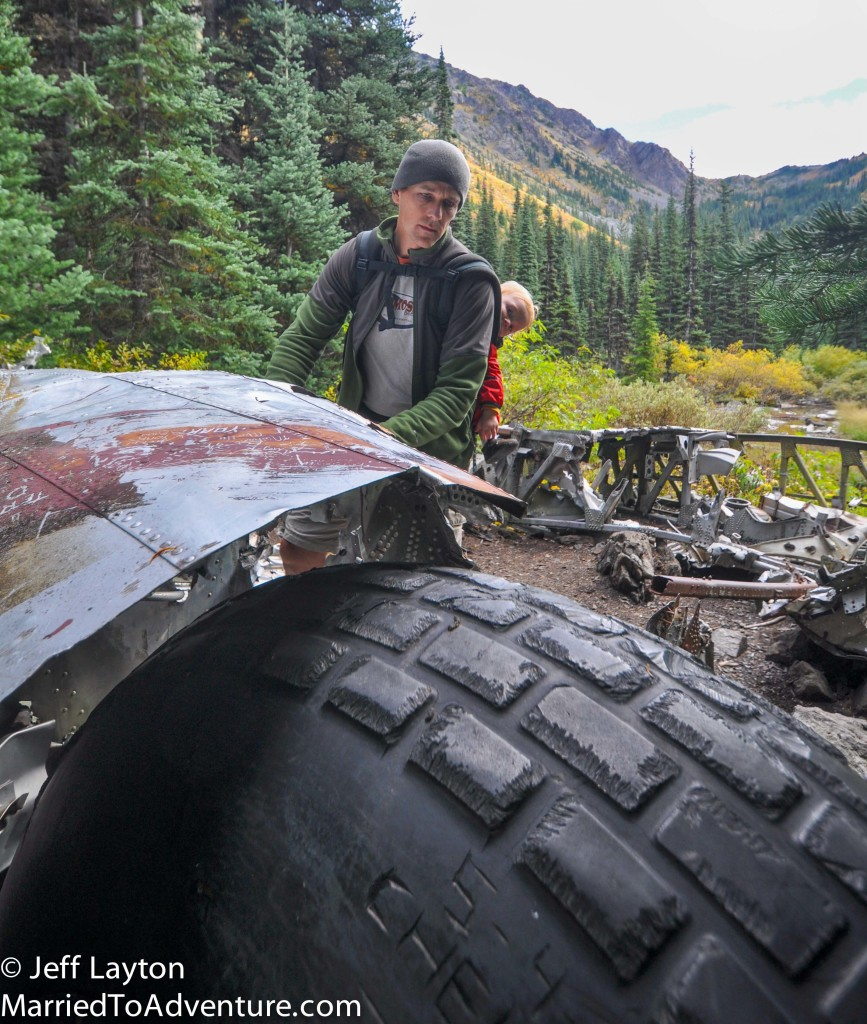
The most easily recognizable pieces of debris are the waist-high landing gear wheels

Hydraulics on the landing gear still look shiny and new

Much of the debris lies in a swampy meadow. Somewhere up above, the plane clipped the ridge and slid down the hillside to its final resting place, leaving wreckage in its wake.
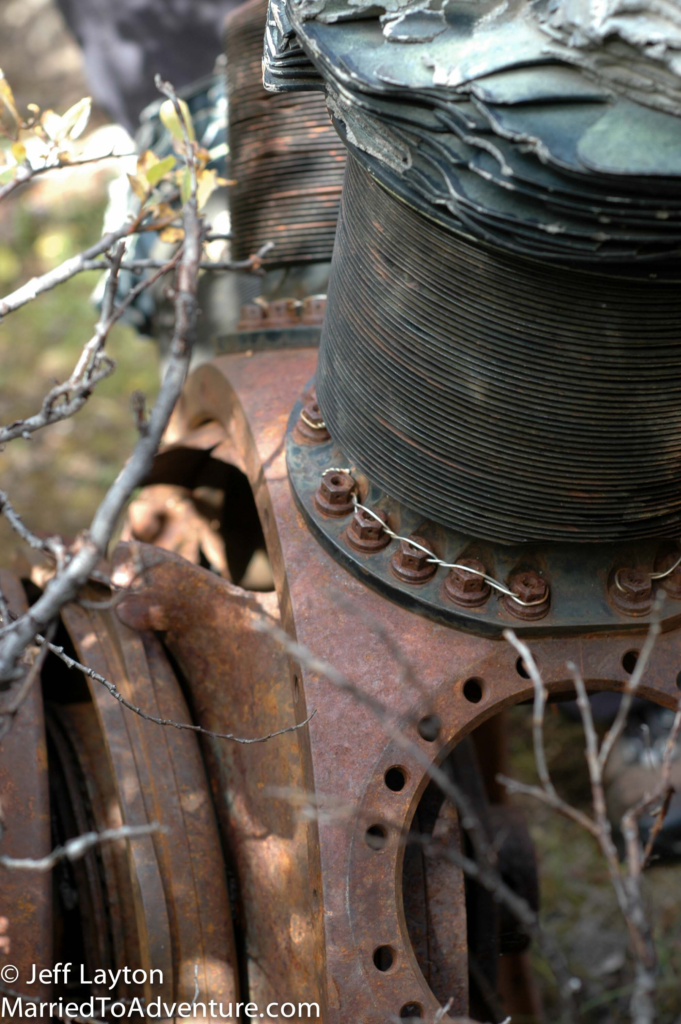


If you scour the hillsides, you can find other wreckage indicating the path the plane slid as it moved downhill. A short walk into the brush beyond this photo we found another engine.
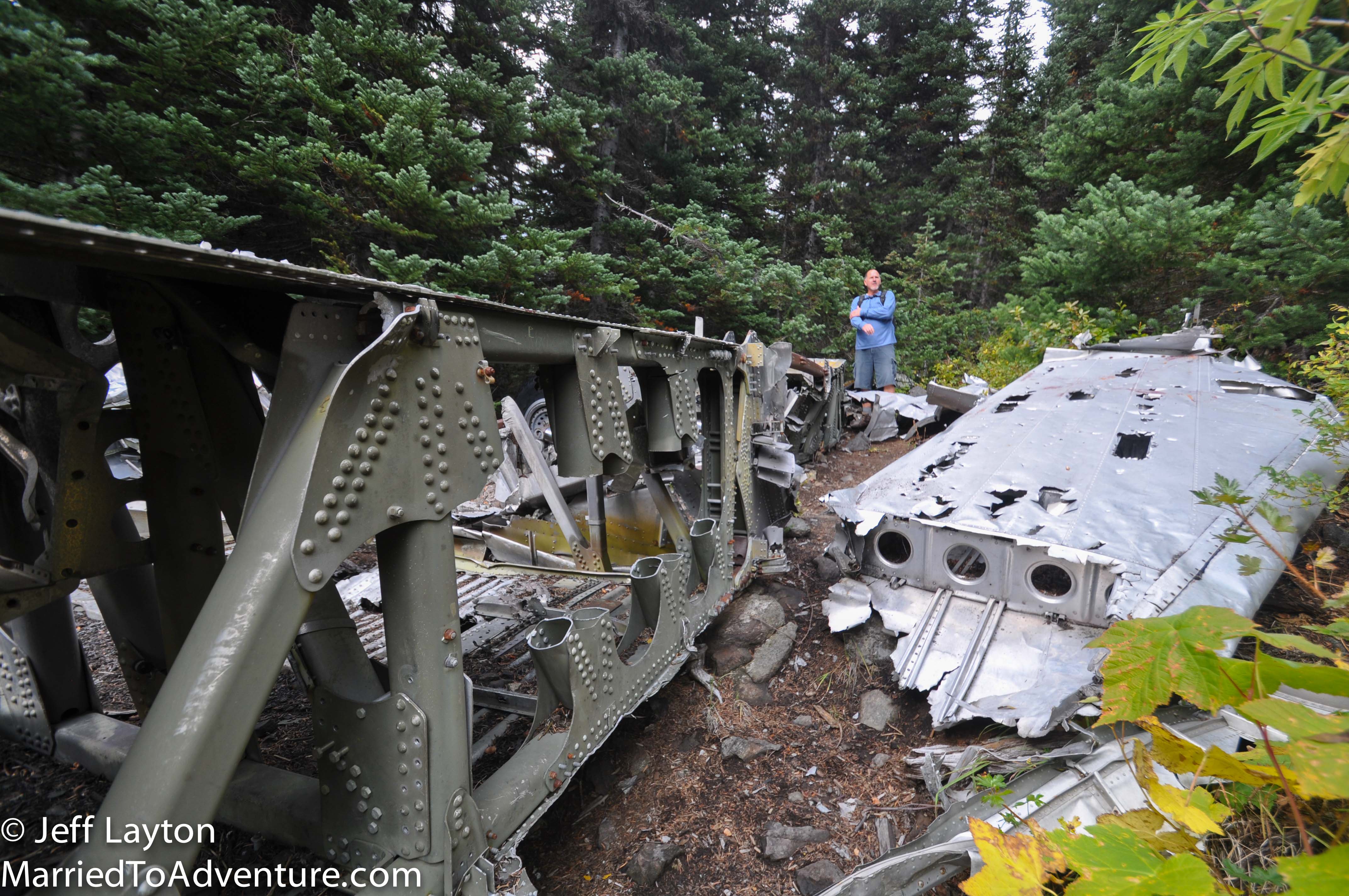
To reach the wreckage, it’s a 3.2 mile walk on the easy Tubal Cain Mine trail, and then another .6 miles up a steep side trail to Tull Canyon.
The B-17 crash site lies near a former mining claim known as Tubal Cain. The mines themselves are still privately owned but reside within the National Forest. Open mine shafts like this one penetrate the mountain, sparking the imagination with folklore imagery.

Old mining equipment litter the landscape near the Tubal Cain Campground. We thought this one looked like a huge allen wrench

Jeff and Ian check out a mine shaft that travels nearly 3,000 feet into the mountain. The stream exiting the mouth gives it an extra-eerie feeling

Copper and Manganese ore found in the mine tailings

Ian is embracing his inner dwarf and begging to explore the mine shaft
If You Go:
The trailhead is about an hour from Sequim, WA driving on 16 miles of unsealed forest service road. To reach the B-17 crash site, take the Tubal Cain Mine trail 3.2 miles (with easy grade) to the Tull Canyon turn off. From there it’s a grueling .6 miles uphill to reach the site.
To reach the main mine shaft area and Tubal Cain Campground, continue on the main trail another .5 miles. This hike can be done in a single day hike or an easy overnight journey. No-fee campsites are available at the trailhead, the B-17 crash site and at Tubal Cain mine. A Forest Service Pass is required to park.
The mine shafts are unsafe for exploration (rock falls are evident in places) so use caution when entering.