


The North American Aviation P-51 Mustang was a key fighter of the United States Army Air Forces (USAAF) in the Second World War. By the time WWII came to an end, the USAAF (now the United States Air Force) claimed to have destroyed some 4,950 enemy aircraft in the air. That is a higher number than claimed for any other USAAF fighter in the European theater. So, how many Mustangs did the USSAF/USAF have in service?
During the conflict, the Air Force was not established as an independent branch and was attached to the Army. Soon after the conclusion of the war, the Air Force was split off from the Army in 1947. The Air Force inherited almost all of the Army’s aircraft, including the Mustangs. Mustangs remained in Air Force service for around a decade, serving in the Korean War before they were phased out as they were replaced by jet fighters.
A Legendary USAAF Fighter
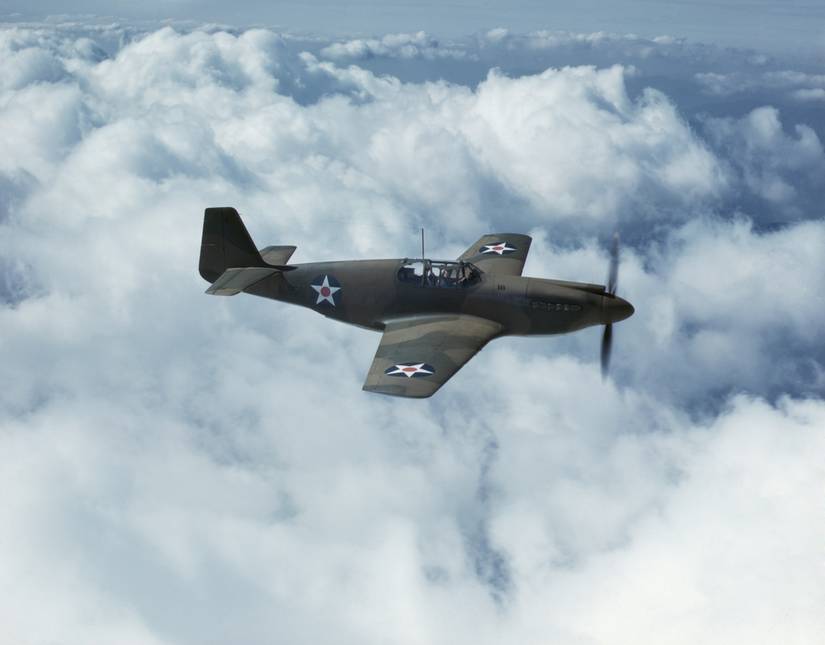
One of the most notable fighters of WWII was the North American Aviation P-51 Mustang, which had an epilogue in US Air Force service in the Korean War. The Mustang was a single-seat fighter and fighter bomber that helped the Allies achieve air superiority in 1944 over Europe. Besides Europe, the Mustangs were extensively used in North Africa, the Mediterranean, Italian, and Pacific theaters.
As the conflict ended, many WWII fighters found themselves obsolete and were quickly retired. However, the Mustang continued as an important American fighter until early in the Korean War, when the fighters started to take over. At that time, the Mustang became a specialized fighter-bomber in the conflict. Early in the conflict, they were able to hit targets in Korea that the early short-ranged F-80 jet fighters were still unable to hit.
Mustangs continued in service until they were finally phased out and largely replaced by F-86F jet fighter-bombers in the 1950s. While its early role in the Korean War is overshadowed by the coming of age of jet fighters, its role in WWII was enormous. It enabled the resumption of strategic bombing after Allied bombers had suffered heavy losses in 1943.
From An RAF To A USAAF Fighter
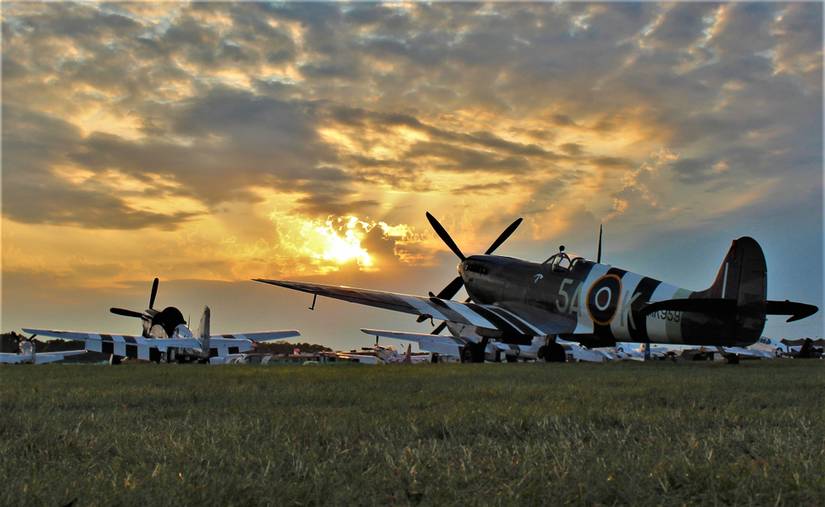
North American Aviation initially developed the Mustang for the British, who approached the company in 1940 to build license-built Curtiss P-40 fighters for the Royal Air Force. Instead of doing that, North American chose to develop and offer the British its own fighter, initially designed as the NA-73X before being named the Mustang I by the British. Soon, the USAAF took an interest in the new fighter and took its first Mustangs in the summer of 1941, designated as the XP-51.
The USAAF later retained 55 Mustangs from a British order, with most of these becoming F-6A photo-reconnaissance aircraft. These allowed the first Army Air Forces units, the 154th and 111th Observation Squadrons, to be equipped with the Mustangs. These first saw action in 1943 in the North African Campaign. The first production USAAF P-51A Mustangs were accepted by the Army in March 1942 and soon found themselves in the Burma theater.
The Mustang saw a major improvement later in 1942 when it was fitted with British Merlin engines, with which it could fly 441 mph at 29,800 ft,100 mph faster than the P-51A. Soon, the Merlin-engine equipped P-51B/Cswere providing badly needed long-range and high-altitude escort for US bombers over Germany. The P-51D improved the fighter even more and became the most produced variant with around 8,000 examples built. These arrived in Europe in the spring of 1944.
How Many P-51 Mustangs Were Operated By The US Army Air Force?
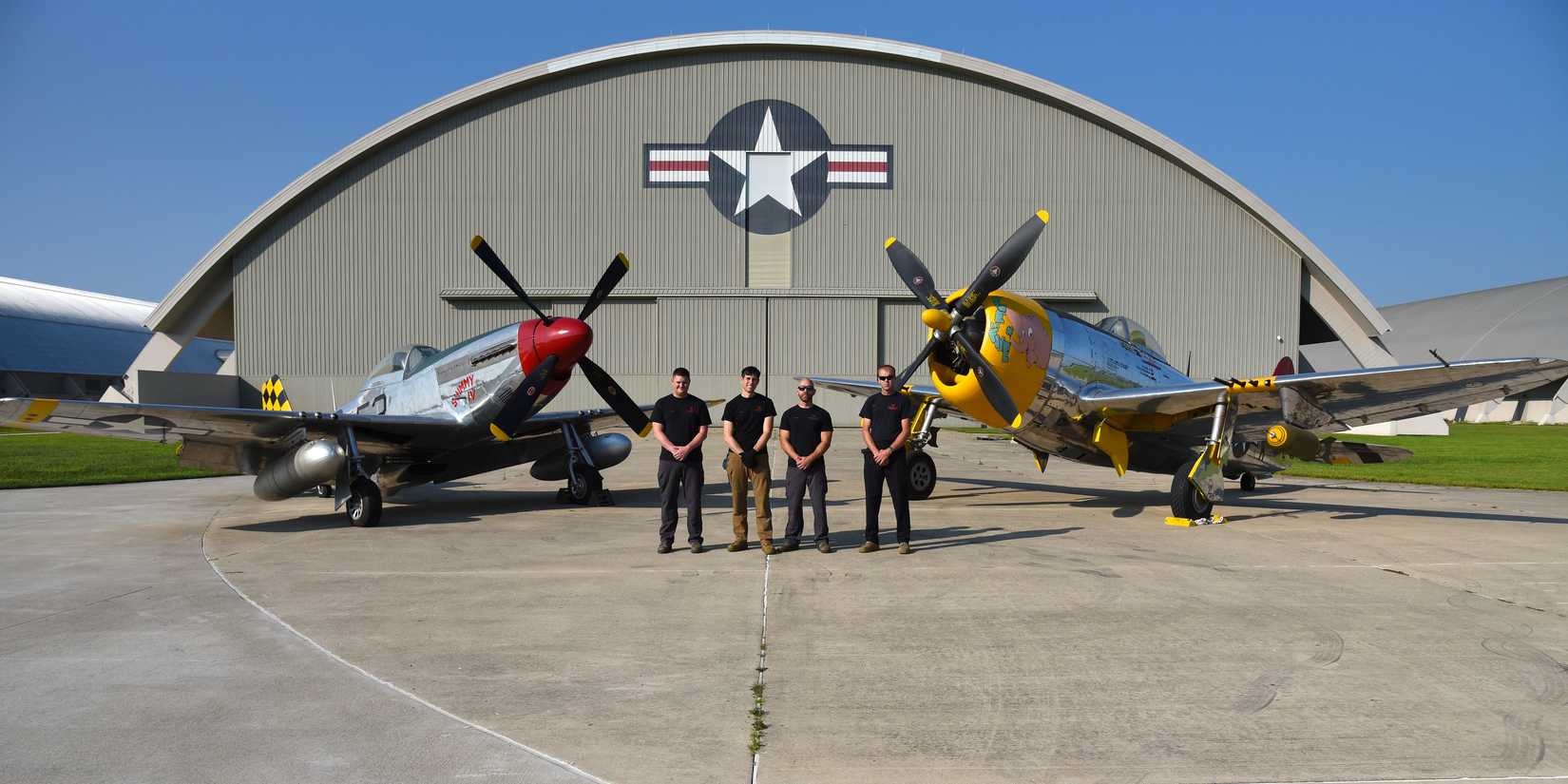
A total of 15,586 P-51 Mustangs were produced in total across all variants. The estimated numbers for the Mustang include around 310 P-51As, 1,988 B models, 1,750 C models, 8,156 D models, and around 555 H models. The D models came with the iconic bubble canopy, while the P-51H came late in the war and saw little combat use.
In addition, there were a few other early models like the dive-bomber A-36 Apache variant, some reconnaissance variants like the F-6, and a few prototypes. The vast majority of these were operated by the US Army Air Forces, although around 1,000 Mustangs were operated by the Royal Air Force for whom the type was originally developed.
Apart from these RAF fighters, the Army Air Forces operated almost all the Mustangs. The Army Air Forces inventory likely peaked at over 10,000 units in 1945. Other air forces like Australia, Canada, South Africa, and Nationalist China also operated them, and some of these were acquired post-war. Australia licensed built its own P-51s called the CAC Mustang, but these weren’t introduced until June 1945, just weeks before victory in the Pacific.
Post-War US Army Air Force P-51 Usage
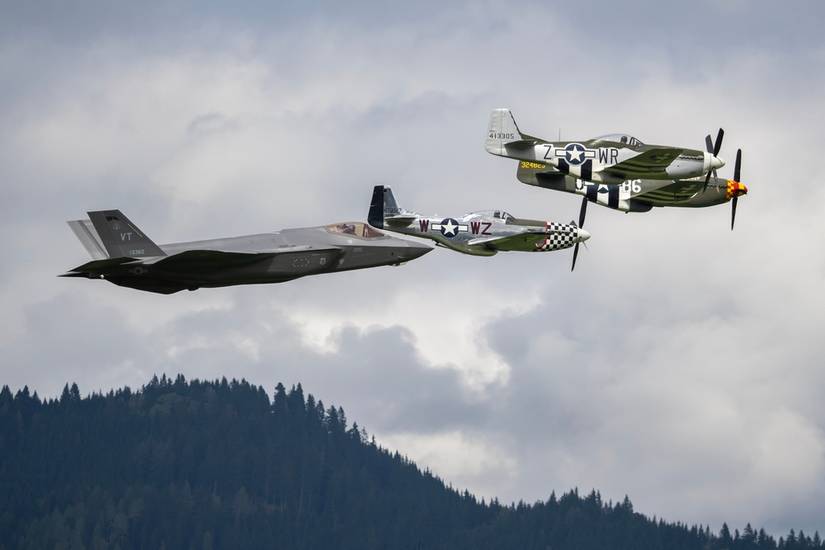
Around 2,500 to 3,000 P-51s are estimated to have been lost during World War II due to combat and accidents. The US Army Air Forces persisted for two years following the conclusion of WWII. As the war ended, the massive Army Air Forces had around 70,000 or 80,000 aircraft of various types in service and moved quickly to downsize.
Thousands of Mustangs were scrapped or transferred to other nations, while thousands more were retired and scrapped. Soon after the end of WWII, the Army Air Forces likely had around 5,000 to 6,000 P-51s in active service. These numbers were quickly whittled down to the point that only 99 examples were active in 1950.
| North American Aviation P-51 Mustang | |
|---|---|
| Total produced | 15,586 |
| Number operated by the RAF | Around 1,000 |
| Number operated by the USAAF | Most non-RAF Mustangs |
| Peak number in USAAF service | Over 10,000 |
| Number lost | 2,000-3,000 |
| Number operated by the USAF | Around 1,000 (during the Korean War) |
In September 1947, the US Air Force was established and inherited the Army’s aviation. In US Air Force service, the P-51 was redesignated as the F-51 with ‘F’ signifying a fighter. By the time the Korean War broke out, the Air Force is estimated to have had over a thousand F-51s in service. Most of these F-51s were the later F-51D as the Air Force had divested of the older variants.
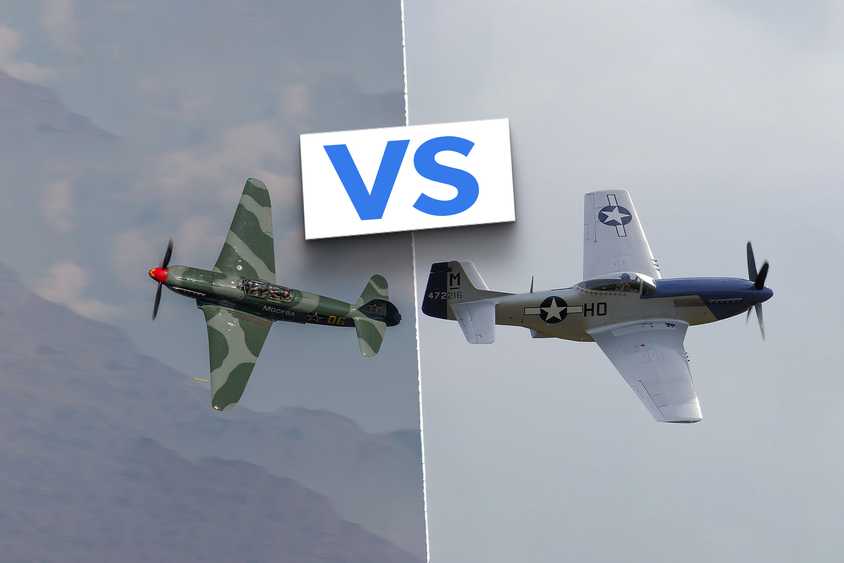
F-51s In US Air Force Service
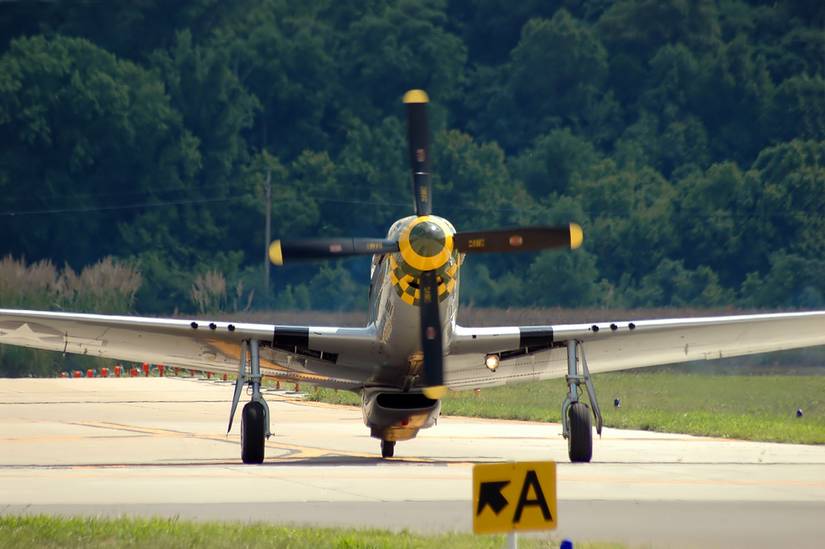
As the Air Force inherited the Army Air Forces’ aircraft, some Mustangs were placed in reserve, while others were sold off to other countries. At this time, the Air Force likely had around 2,000 to 3,000 F-51s. The peak usage for the Air Force of the Mustangs was in 1947, as it inherited the Army’s inventory. They continued in service for a decade, with the final F-51s being retired in 1957. The Mitchell Institute for Aerospace Studies offers an inventory of the US Air Force inventory starting in 1950.
In 1950, the Air Force had 1,006 F-51s in service, with this figure including 99 active units and 907 in reserve. In 1951, as a response to Korea, active F-51s had grown to 987 aircraft and just 146 Mustangs in reserve for a total of 1,133 aircraft. After that, in 1952, the quantity declined to 785 in active service and 324 in reserve for 1,109 aircraft. In 1953, the number of active Mustangs cratered to 196 aircraft, with the ANG having 85, and 503 in reserve.
| The Final years of the Mustang in the Air Force Inventory | |||||||
|---|---|---|---|---|---|---|---|
| 1950 | 1951 | 1952 | 1953 | 1954 | 1955 | 1956 | |
| Active F-51s | 99 | 987 | 785 | 196 | 40 | 6 | 1 |
| Air National Guard F-51s | 85 | 60 | |||||
| Reserve F-51s | 907 | 146 | 324 | 503 | 547 | 258 | 143 |
| Total | 1,006 | 1,133 | 1,109 | 784 | 647 | 264 | 144 |
In 1954, active Mustang numbers were just 40 aircraft, while the ANG’s aircraft fell to 60 aircraft, and the reserve increased to 547 for a total of 647. In 1955, the number of active aircraft was just six, with none in the ANG and 258 in reserve. Finally, the last year came in 1956 with one active and 143 in reserve. None are listed for 1957.
From The Second World War Into The Cold War
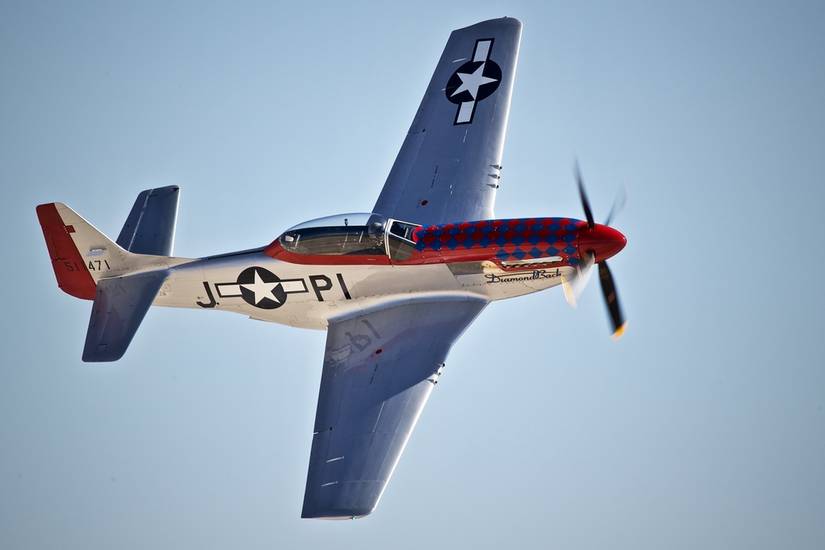
In all, the US Army Air Forces likely operated around 90% of the P-51 Mustangs produced, with most of the remainder being operated by the Royal Air Force. Many of the other Mustangs operated by other air forces were ex-USAAF or ex-USAF aircraft. Around 13,000 or so Mustangs were operated by the USAAF, with a couple of thousand of these being lost to accidents and enemy action. By the time the US Air Force was formed in 1947, between 2,000 and 3,000 Mustangs remained in service.
When the Korean War broke out in 1950, only around 99 were still active. However, the Air Force brought Mustangs out of reserve and retirement and had almost a thousand active units once again in 1951. As the aircraft was superseded by jet fighters, the Mustang finally disappeared from the US inventory in 1957. Overall, US Air Force active fighter numbers (of all types) increased from a low of 1,821 in 1950 to 3,440 in 1951.
This means in 1951, Mustangs represented around 30% of US fighters. Total US fighter numbers peaked at 7,746 active fighters in 1957, and by this time, the Mustang was gone. The Mustang outlived other propeller-driven fighters from WWII. For example, the Air Force retired the last of its Republic P-47 (F-47) Thunderbolts in 1954. Meanwhile, the first jet fighter, the P-80 (F-80) Shooting Star, survived in low numbers until 1962.