



An Iron Age household in central Spain relied on old livestock, hunted deer, and special animal meals, according to a study of more than 5,000 bones.

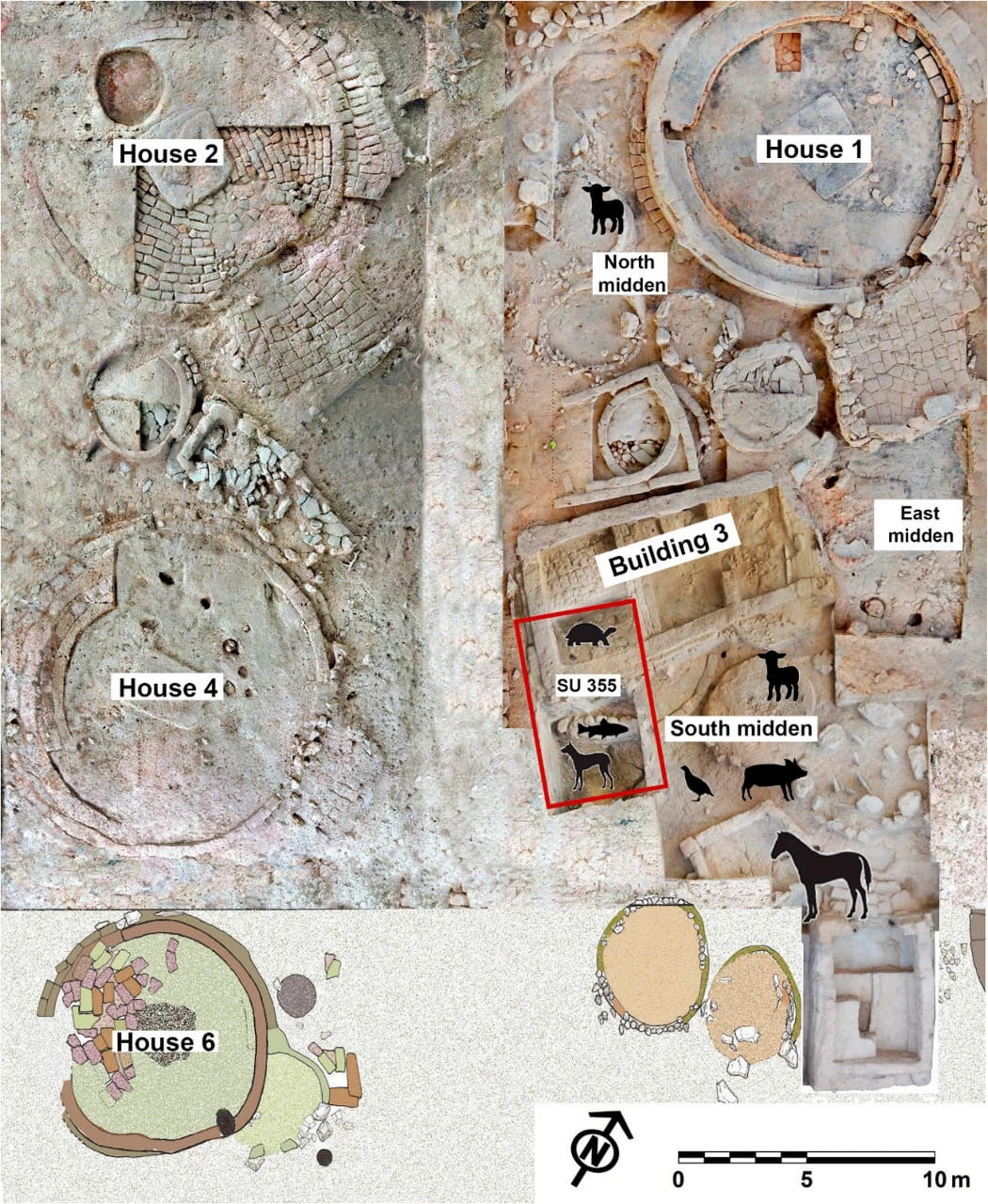
The evidence comes from Cerro de San Vicente near Salamanca, a walled village occupied from about 900 to 500 BCE. Researchers focused on a 600-square-meter area used mainly between 650 and 500 BCE.
The team studied 5,212 animal remains from houses, buildings, and outdoor refuse dumps. Researchers identified 1,784 pieces by species and body part. The remains represent at least 301 individual animals.
Sheep and goats formed the largest group among domestic animals. Their bones made up 43.5% of the identified remains and 41.2% of the minimum number of animals. Cattle followed with 21.1%, while pigs accounted for 15.5%.

Most animals were adults when slaughtered. This pattern points to livestock use focused on products gained during an animal’s life, rather than meat alone.
Cattle were often kept to an advanced age. Worn teeth and mature bones fit a herd used for labor and other products before slaughter. Sheep and goats also supplied resources such as wool and milk.
Young animals tell a different story. Young sheep, goats, pigs, cattle, horses, and deer appear in the deposits, but young caprines were strongly linked with two buildings known as Buildings 3 and 7.
Those structures weren’t ordinary homes. Researchers interpret them as domestic shrines. House 1 also showed signs of intense social activity. All three buildings opened toward a courtyard where people likely prepared food and held group feasts.
The location of young animal remains suggests slaughter for special meals. Such meat wasn’t part of the usual household diet. The pattern points to feasting with a social or ritual role.
Hunting was also important at Cerro de San Vicente. Red deer supplied 12% of the identified bone remains, a share similar to cattle. Deer represented 21% of the individual animals, putting them ahead of cattle in this measure.

People brought complete deer carcasses back to the village. Bones from the head, body, and limbs all occur at the site. Deer also supplied antler for making objects, showing use beyond meat.
Smaller game appears less often. Rabbits and hares account for 2.8% of identified remains. Birds were rare. The settlement also produced seven turtle shell fragments, some with burning marks.
Fish and river shellfish were occasional foods. Researchers identified one salmon bone and shells from five river clams. These finds show use of several local food sources, though livestock and hunting provided most animal food.
Horses had a special place in the settlement. Equid remains account for 3.3% of identified bones, but at least three young animals were killed before adulthood beneath Building 3.
One horse had marks from skinning, cutting, and removing meat. The evidence points to occasional horse-meat consumption. Building 7 also contained a horse jaw beside an entrance post and horse bits made from red deer antler.
A large dog was also present. Researchers identified a jaw along with three bones found during earlier work. One earlier dog bone had marks from skin removal. The evidence doesn’t establish whether people ate the dog or used its hide.
The bone study shows how one Iron Age household managed animals for food, work, wool, milk, and other goods. Daily meals relied on domestic herds, while deer and other wild animals added hunted meat.
The strongest difference appears around the shrine buildings. Young animals, horses, and other unusual foods gathered there point to meals with a special social or ritual role.