


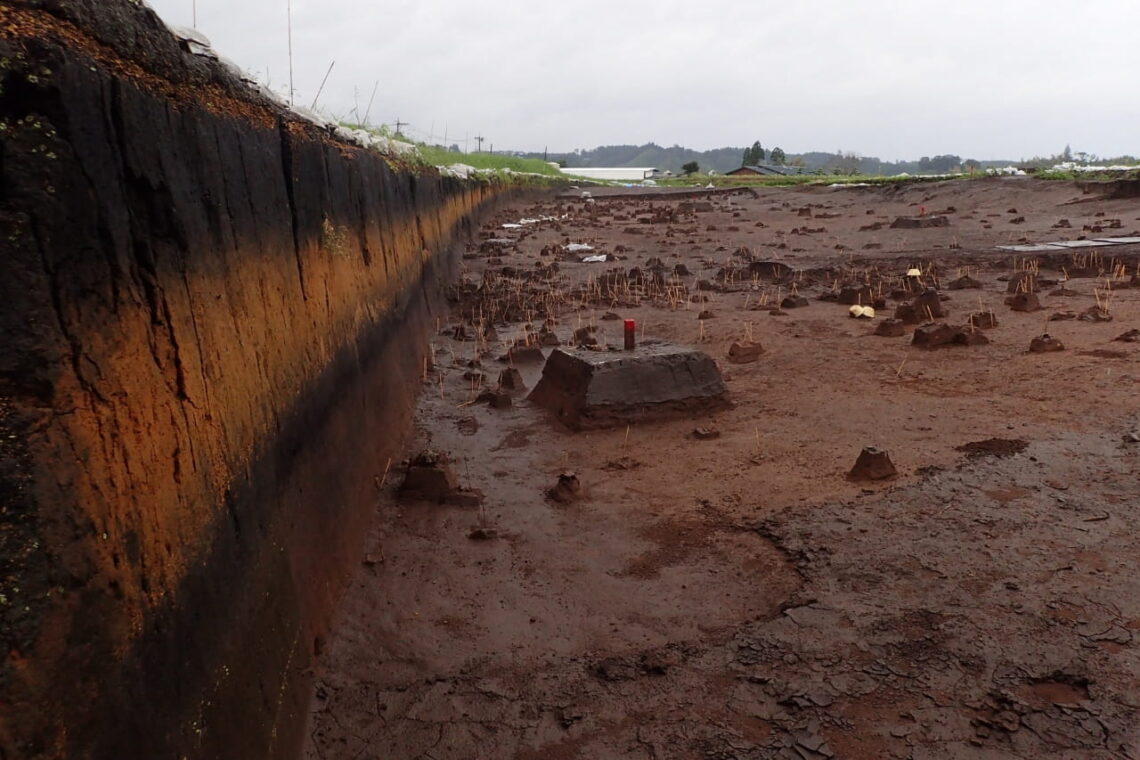

Seven thousand three hundred years ago, a volcano exploded out of the sea floor near southern Japan. The Kikai-Akahoya eruption was one of the largest of the last 11,700 years. It sent powerful earthquakes and huge tsunamis across the islands, then buried the land under meters of ash. Jomon hunter-gatherers lived there at the time.

For decades, archaeologists have argued about what happened next. Some pictured an apocalypse that wiped out all human life near the blast. Others claimed people survived even close to the eruption. A new international study led by Lund University says both sides got it wrong.
The team used statistical models to track population changes across the Japanese archipelago before and after the eruption. Most earlier work looked at the disaster alone. This study placed it inside long-term population trends, and the picture came out messy.
Southern Kyushu, the area closest to the volcano, saw a real collapse. But its Jomon population was already shrinking long before the eruption. Only small, highly mobile groups visited the region by then, so the disaster hit a place with few people left to lose.
Northern Kyushu told a different story. Its population had been growing, and that growth kept going straight through the eruption and the years after it, even though ecosystems took heavy damage. The authors suggest refugees fleeing the worst-hit areas helped drive this trend. Survivors from inland areas seem to have moved to the northern coasts, where marine ecosystems bounced back fast. People there likely built new ways of living around the rich resources of the sea, and that may have sped up population growth.
Distant parts of Japan showed the biggest surprise. These areas had been growing before the eruption, then stalled or even shrank afterward. Nobody had spotted this far-reaching effect before. The researchers point to a few possible causes. The eruption may have triggered short-term climate change. Deer and boar, two main food sources for the Jomon, may have suffered severe tooth wear from grazing on ash-covered ground, which would have cut food supplies. Other volcanic effects on human health could also have played a part.

Lead author Enrico Crema of Cambridge University says the disaster caused major loss of life. Survivors migrated, formed new social ties, and developed new kinds of economy. They appear to have found ways to live, and later thrive, in the changed landscape.
Peter Jordan, senior author and archaeology professor at Lund University, says the work shows how unpredictable the aftermath of a huge disaster is. In his view, even people in dire situations still have choices. They have to act, adjust, work together, and build new connections.
The findings push back on the old framing of the eruption as a single event that changed the course of Japanese prehistory. Some regions collapsed, some grew, and some far from the blast suffered quietly in ways no one had noticed. Looking at population data over long stretches of time gives a clearer view of how ancient communities handled sudden shocks.