HomeUncategorizedJunkers Ju 87 Unveiled at Flying Heritage & Combat Armor Museum Hangar...

Junkers Ju 87 Unveiled at Flying Heritage & Combat Armor Museum Hangar Opening

On Saturday, November 10th, the late Paul G. Allen’s Flying Heritage & Combat Armor Museum (FHCAM) held a grand opening ceremony for their third hangar. The new building increases their indoor display area to more than 90,000 square feet. Many fascinating displays and artifacts are on show within, but perhaps the most interesting to our readers will be the presence of the collection’s extremely rare Junker Ju 87R-4 Stuka, which has quietly been under restoration for several years now. Although a lot of the structure is clearly newly-manufactured, when it is done, this Stuka will be only the third complete example of the breed in the world, with the other two being Ju 87G-2 wk.nr.494085 at the Royal Air Force Museum in London, England and Ju 87R-2/Trop wk.nr.5954 at the Museum of Science & Industry in Chicago, Illinois. However, the substantial remains of at least three other Stukas exist in other museums presently, and a couple of largely intact wrecks remain underwater in the Mediterranean.
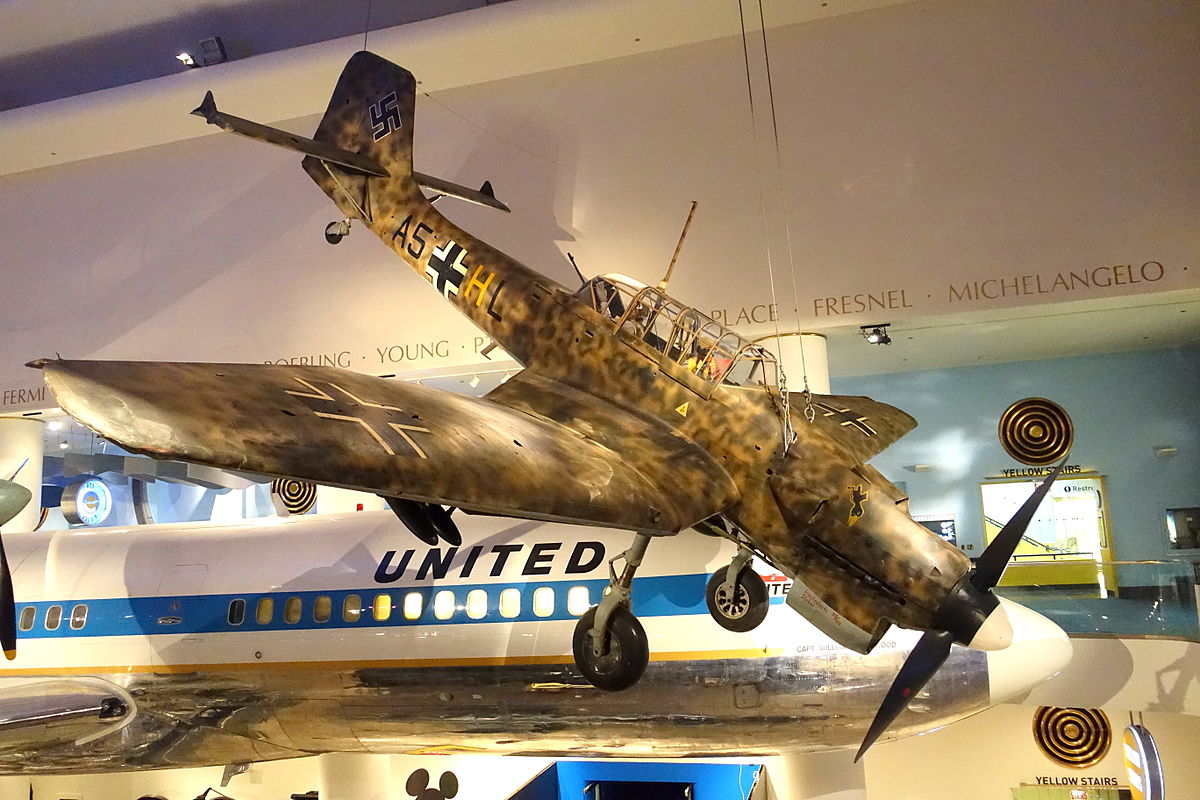
1200px Stuka dive bomber captured by Allies in North Africa 1941 Museum of Science and Industry Chicago DSC06304
 The Stuka at the Museum of Science and Industry in Chicago, Illinois. This aircraft was recovered in North Africa by British troops during WWII, and still wears her original wartime paint. (photo via wikipedia)
Stuka Kroatien
 A substantially intact submerged Stuka wreck was discovered off the Croatian coast a few years ago. (photo via wikipedia)
1200px German Museum of Technology Berlin 2017 284
 Junkers Ju 87R-2 wk.nr.5856 at the Deutsches Technikmuseum, Berlin. (photo via wikipedia)
1200px Junkers Ju87G 2 ‘494083 RIJK’ 17006248019
 The RAF Museum’s Junkers Ju 87G-2. (photo via Wikipedia)
Junkers Ju 87 wreck Auto und Technikmuseum Sinsheim
 The substantial remains of another saltwater Stuka recovery are on display at the Auto-und-Technik Museum in Sinsheim, Germany. This is Ju 87B-2 wk.nr.1301643 raised from 60m down off the coast of St.Tropez, France in 1982. (photo via wikipedia)
Luftwaffe Ju 87 22Stuka22 Hellenic Air Museum Tatoi Dekelia
 The substantial wreck of Ju 87D-3/Trop wk.nr. 100375 was recovered from the Aegean Sea near the island of Rhodes in 2006. It is on outdoor display at the Hellenic Air Force Museum in Athens, Greece. (photo via Wikipedia)

The Flying Heritage & Combat Armor Museum’s Stuka includes parts from a number of wrecks, but is largely based around the remains of Ju 87R-2 wk.nr. 5709. The R model of the Stuka was essentially a long-range variant of the Ju 87B. The ‘R’ designator was short for ‘Reichweite’, the German word for ‘Reach’, referring to the aircraft’s extended operational range. The modifications included an additional oil tank and fuel lines to hard points on the outer wings to allow the aircraft to carry 300 litre (79 gal) drop tanks under each wing, boosting range by as much as 220 miles. The R-2 variant also had a stiffened fuselage, enabling it to withstand higher-speed dives (up to 370mph). Ju 87Rs were primarily intended for the anti-shipping role, but this quickly evolved to other missions as needs required.

46024651 2372769842750659 5028948194382315520 o
 The disassembled Stuka with her pair of wheel spats sitting to the front. (photo by Randall Malmstrom)
45776070 2372768902750753 5824245909898133504 o
 The Stuka as she sat in the new hangar at the Flying Heritage and Combat Armor Museum. (photo by Randall Malmstrom)
45826252 2372768909417419 799901679938961408 o
 The Stuka’s firewall. (photo by Randall Malmstrom)
45736032 2372769949417315 8047313015143399424 o
 The Stuka’s fuselage. (photo by Randall Malmstrom)
45901930 2372769706084006 2995931841501855744 o
 A nice three-quarters view of the Stuka’s freshly restored fuselage. (photo by Randall Malmstrom)
45977068 2372769746084002 7542836279793156096 o
 A view of the Stuka’s cockpit superstructure. (photo by Randall Malmstrom)
45831346 2372769442750699 6049798668658147328 o
 The Stuka’s rebuilt rear fuselage. (photo by Randall Malmstrom)
46007481 2372778739416436 9209128507962032128 o
 A nice three-quarter rear view of the restored fuselage. (photo by Randall Malmstrom)
45835143 2372769419417368 8804562113600159744 o
 The Stuka’s brand-new outer wing panels sitting behind a section of original wing structure still bearing the sandy brown paintwork of an aircraft used in the Luftwaffe’s desert campaign in North Africa. (photo by Randall Malmstrom)
46053414 2372778609416449 6525892941561462784 o
 Another view of the wings, with the fuselage to the rear. (photo by Randall Malmstrom)
45768983 2372769729417337 8394615482426064896 o
 A nice view of the mounting point for Stuka’s outer wing panels. The standard Junkers four-bolt is clearly in evidence here. (photo by Randall Malmstrom)
46096838 2372769996083977 847816068805165056 o
 The Stuka’s characteristic fixed-gear wheel spats which were such a trademark for the aircraft. Early model Stukas had a wind-powered siren attached to the top portion of the gear, which created the infamous screaming sound to terrorize opponents on the ground during the dive bombing run. These sirens were discontinued after the Ju 87B model, so will not be present on the FHCAM’s example. (photo by Randall Malmstrom)
45714980 2372779292749714 2627007503828779008 o
 A Bordkanone 3,7 BK 3,7 37mm cannon pod. Some Stuka variants had one of these slung under each wing, and used them to great effect attacking Soviet tanks on the Eastern Front. The Bordkanone will remain on display in Everett.(photo by Randall Malmstrom)
45917285 2372769569417353 2342489534198972416 o
 Part of the Stuka’s original rear fuselage. You can see signs of sandybrown paint, which is why the FHCAM believe the aircraft was originally destined for the North African campaign. (photo by Randall Malmstrom)
46022118 2372778999416410 945547757567868928 o
 One of the battered wings from Stuka wk.nr.5709 which was used as a resource for the rebuild. Note the letter ‘Z’ on the wing. At the time of her recovery, this was believed to be the original factory identification letter. The wing will remain on display in Everett (photo by Randall Malmstrom)

Werke Numer 5709 was built under license by Weser Flugzeugbau GmbH in Bremen, rolling off their production line during May, 1940. According to FHCAM, this Stuka was originally intended for service in North Africa, but instead it wound up taking part in the invasion of the Soviet Union. Here the Stuka saw a lot of action. However, she eventually fell in battle, crashing close to Motowski Bay in the Murmansk region of present-day Russia on May 28th, 1942 while serving with I./St.G.5 (marked as L1+KU). Her pilot, Lt. Eberhardt Klauck, and observer, OGefr. Hans Hüllen, reportedly survived the incident and made it back to German lines, although there is some evidence that Hüllen became a POW. They likely bailed out of their stricken aircraft as it was badly wrecked in the ensuing crash. The battered remains of this Stuka lay largely undisturbed for the next five decades until someone rediscovered them during 1996. A recovery then took place, with the wreck being imported to Britain in 1998. According to FHCAM, the Deutsches Technikmuseum in Berlin acquired the remains a short while later, one of several Stuka projects that they have owned over the years. Wk.nr.5709 is believed to have moved on to FHCAM sometime in 2004.

As is typical for FHCAM aircraft, the restoration has taken place largely out of sight over the past several years. With the airframe’s structural rebuild now largely done, the museum will take up the remainder of the work in house, with a tentative completion to flying condition slated for sometime in the next two years. Mike Nixon’s Vintage V12s in Tehachapi, California has been responsible for the restoration of the rare Junkers Jumo 211 engine, which will likely be the first of its kind to power an aircraft in more than half a century once the Stuka is flying again. We look forwards to this momentous date with great anticipation.