
Research, text, photos: Stylianos Kampouris
March 14, 1942, Saturday.
A German Junkers 88 A5 bomber, serial number (Wr.Nr.) 8280, takes off from Elefsina air base bound for Lemnos.
The plane’s crew consists of:
-Commander, Lieutenant Commander Hans Umschaden from Linz, Austria, born on 29.06.1920.
-Co-pilot, Petty Officer Helmut Lachmund from Hamburg, born on 24.03.1914.
-Radionavigator- Flight Engineer, Petty Officer Helmut Plate from Osnabrück, born on 26.11.1919.
-Weapon Systems Operator, Petty Officer Heinrich Neumaier from Frankfurt, born on 30.04.1921.
Regarding this particular plane, there was testimony from a local resident.
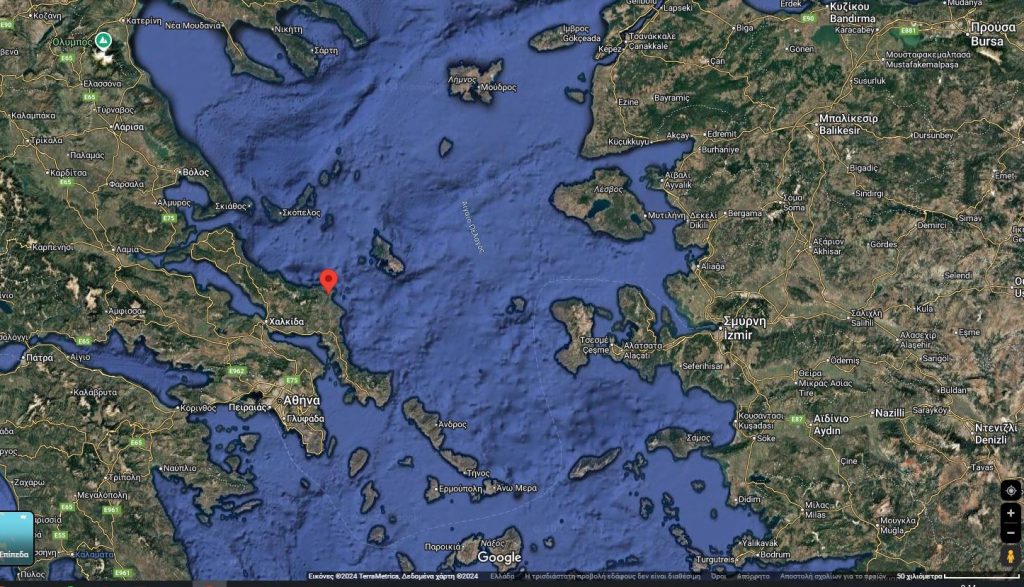
The plane appeared to be flying in a north-northeasterly direction, over the Stomio area and not at a high altitude, burning at its rear.
Based on historical evidence, in March 1942 there was still no organized resistance or allied units in Evia, therefore the plane was apparently not shot down but there was a mechanical failure that led to the fire.
As the plane began to lose altitude, its tail broke off off the Gulf of Kymi, took a sharp turn to the left, flew along the entire eastern coast of Kymi and crashed in Thapsa, just above the coast.
In 1942, there was a German air force unit at the Kymi High School, consisting of approximately 50 men, who were responsible for operating the coastal surveillance radar. In March, and specifically on the day the plane crashed, there was also a special forces unit in Kymi – Gebirgsjäger (Mountain Hunters). The following page provides evidence of the report regarding the small German air force unit that was camped at the Kymi High School for the purpose of operating the radar. The page comes from the report of the German forces that arrived in Kymi on September 27, 1943 after the capitulation and withdrawal of the Italians.
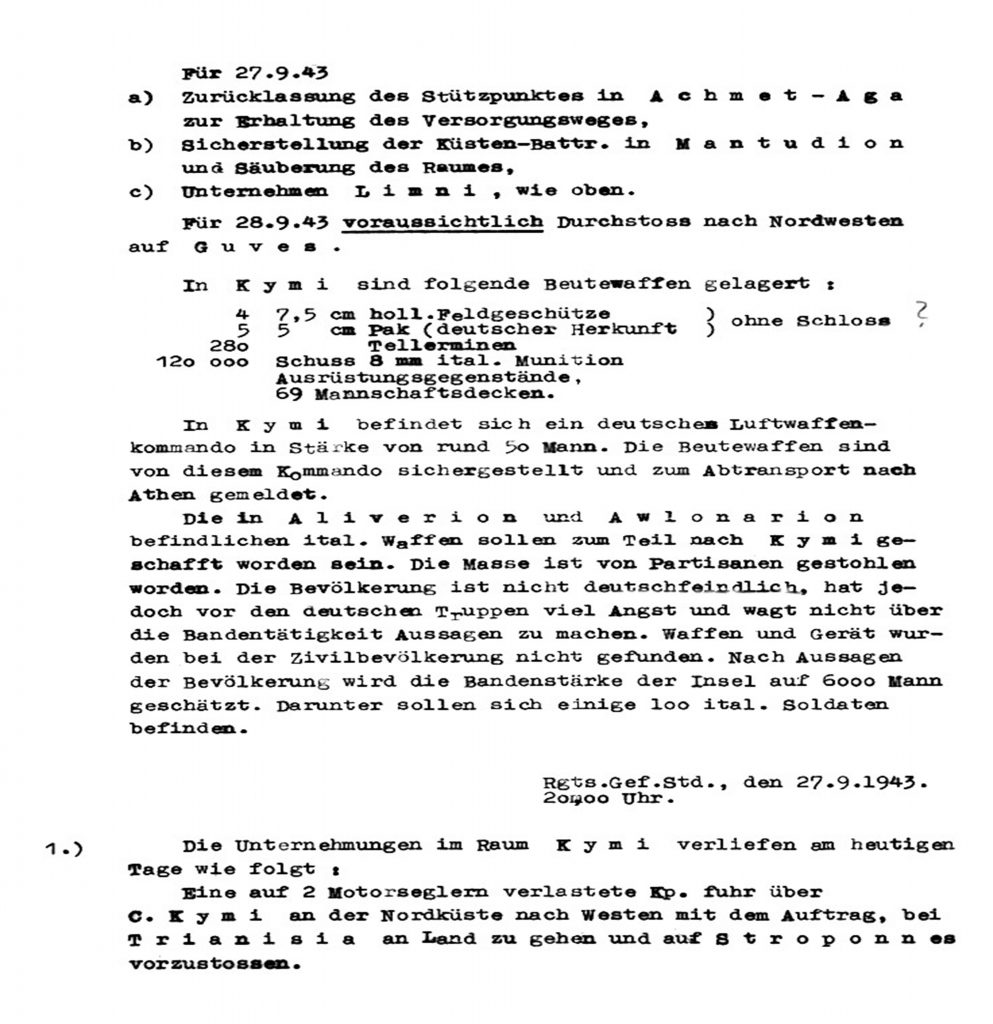
I assume that the plane’s crew contacted the unit at the High School and informed them of the malfunction and the possible impending crash.
The Mountain Hunters unit immediately began its march north-northeast of Kymi with the help of local residents.
The wreckage of the plane was found in the afternoon in Thapsa along with the dead crew.
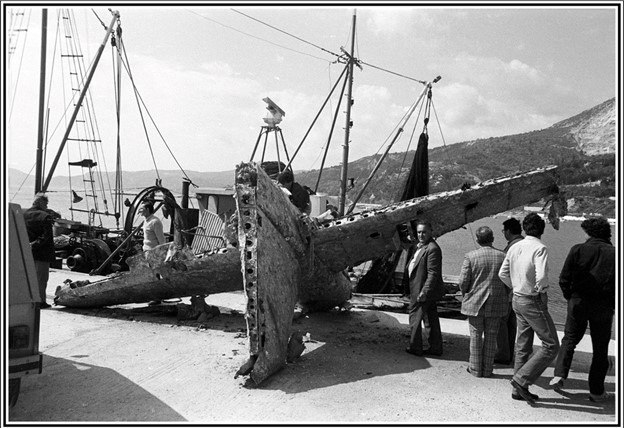
In the 80s, a fishing boat retrieved the tail of the plane and left it in the port of Kymi.
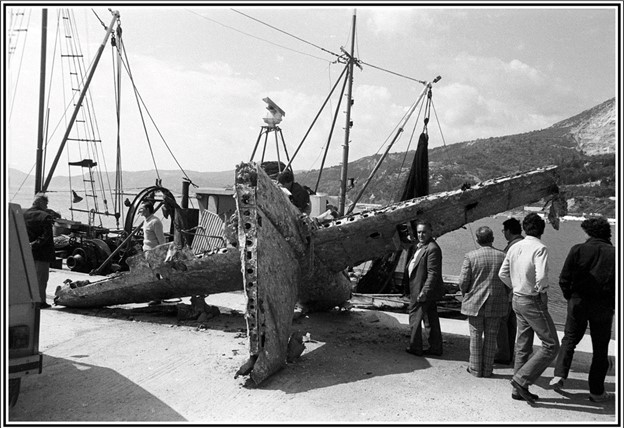
I was unable to find where the tail of the plane ended up, which does not belong to an English plane, but certainly to a Ju. 88 A5 bomber.
The crew members were first buried in the Cemetery of St. John in Chalkida, until in the 1950s their bones were transferred to the German cemetery in Rapentosa.
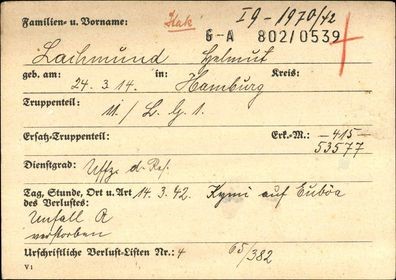
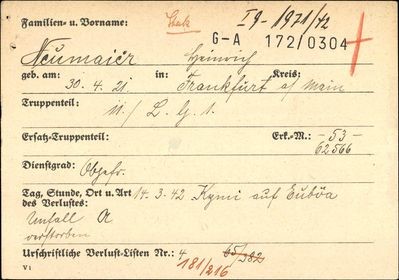
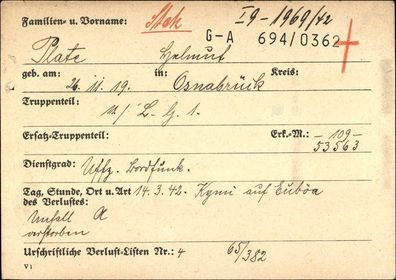
I was unable to find the death certificate of Governor Hans Umschaden.
When I asked a group that deals with this particular type of plane why they didn’t abandon the plane with parachutes, they told me that it is very difficult to get out of this plane if it tilts, because the entrance and exit were in the belly of the plane and not at the top.
I managed to find a little information about Petty Officer and Flight Engineer Helmut Plate.
He was born in Osnabrück on November 26, 1919. His parents’ house was located at Belmerstr. 11.
His father was a turner and had a daughter, Wilhelmina.
In 1943, his father dies, and on the same day his niece is born, whom they named Wilma.
Wilma married someone named Jung and they lived in the town of Oberursel Taunus.
After contacting the relevant authorities in Germany, I found her address and, thinking that she would be the only one from the family who could give me more information about her uncle, I sent a letter, explaining the whole story surrounding the plane crash. Unfortunately, after about 3 months, the city post office informed me, having stuck a yellow tape on my letter, that the recipient of the letter had passed away on 26.11. 2015. (Strange coincidence, his niece died on the same date that Helmut was born).
So far I have not been able to find any other relatives of either Helmut Plate or the other crew members, so that the investigation can be completed.
The investigation continues.