


The day after a peculiar Israeli attack on Iranian interests, supposedly centering on the airport in Isfahan, although other sites in Iran could have been targeted as well, we are seeing a highly interesting relic that appears to have been left behind in Iraq. We have pored over images available of the missile carcass, and while we find similarities with multiple Israeli weapons, the exact identity of this missile remains unclear, although we have a good idea what it likely is.
Check out the images of the wrecked missile below:
What’s the most visible feature in the imagery is the lug arrangement, where the missile attaches to the aircraft’s pylon. This is often a key identifier of different missiles and bombs, especially advanced ones that can use unique airframe protrusions to harden this area for aerial carriage. In this case, we see two standard lugs, but if you look closely you will see they are mounted on two bulges in the airframe of the missile. Conformal reinforced lug areas are not uncommon, but they can have somewhat distinct configurations.
After viewing the images, the first thing that came to mind is Israel’s Rampage, an air-launched adaptation of the EXTRA guided artillery rocket that we profiled in the past.
In the simplest terms, Rampage is like taking an American M31 Guided Multiple Launch Rocket System (GMLRS) artillery rocket, famously fired by the HIMARS and M270 launchers, and strapping it on a fighter aircraft. The altitude and speed of the launching aircraft can greatly expand the rocket’s range and overall kinematic performance compared to its ground-launched progenitor. In low-altitude release mode, an aircraft flying nap of the earth to avoid enemy air defenses can pop up and launch it, after which it can fly an optimized ballistic-like arc to quickly take out key targets like enemy air defenses. Rampage is a ‘fire and forget weapon’ — after it’s launched, the aircrew can turn and run.
Rampage has an elongated conformal reinforcement area for its lugs, which was part of its adaptation to air-launched applications. Rampage also has rear fins shaped like what we see in the image of the crashed weapon’s empennage. At first glance, this seemed like Rampage, but there is one problem: the elongated bulge area does not match, nor does it protrude far enough back past the rear lug. The missile in the photo has two distinct lug reinforcements and also seems shorter and fatter than Rampage, with lugs that are farther toward the tail than what’s seen on the more slender Rampage.
Rampage also has small canard-like control surfaces on its nose cone. There is an image of a fin section that appears to be broken off that could be this, although it more likely that is part of the tail section that has become detached.

A quick aside on that tail section seen in the crash photos. The empennage looks tapered. This, combined with the shape of the fins and other features we can see, does not align with anything we have know of in Israel’s inventory. Although, it does fit loosely with Ice Breaker, an Israeli cruise missile concept, the developmental state of which isn’t clear. But other features on Ice Breaker don’t match, the biggest being there is no air inlet visible where it should be and it has a thinner body. Also, we don’t even know if this weapon exists in reality at this time.
Upon closer examination of the photos, it looks like the nozzle area may have been crushed to some degree, which makes sense as it is the weak, open end of the missile body. The impact and collapse out of round could give it a tapered look. Still, tapering of the tail section, especially on ballistic missile-like types, is a well established design trait.
With all this in mind, the general shape of this weapon would point more directly toward it being Rocks, which is an air-launched ballistic missile we also profiled in the past that was developed from Israel’s line of Sparrow ballistic missile test targets. Similar to Rampage, Rocks benefits from air launch, especially at high altitude and speed, giving it far better reach than if a similar weapon was launched from the ground. While Rampage would be a good choice for taking out enemy air defenses closer to the Iranian border, Rocks would be a good choice for hitting targets deeper inside Iran, even somewhat fortified ones. Its high speed and maneuvering trajectory make would make it very hard to intercept too, especially with the capabilities that Iran has on hand. It uses GPS/INS navigation and electrooptical seeker that can also be coupled with an anti-radiation seeker for improved terminal guidance, especially against air defense sites.
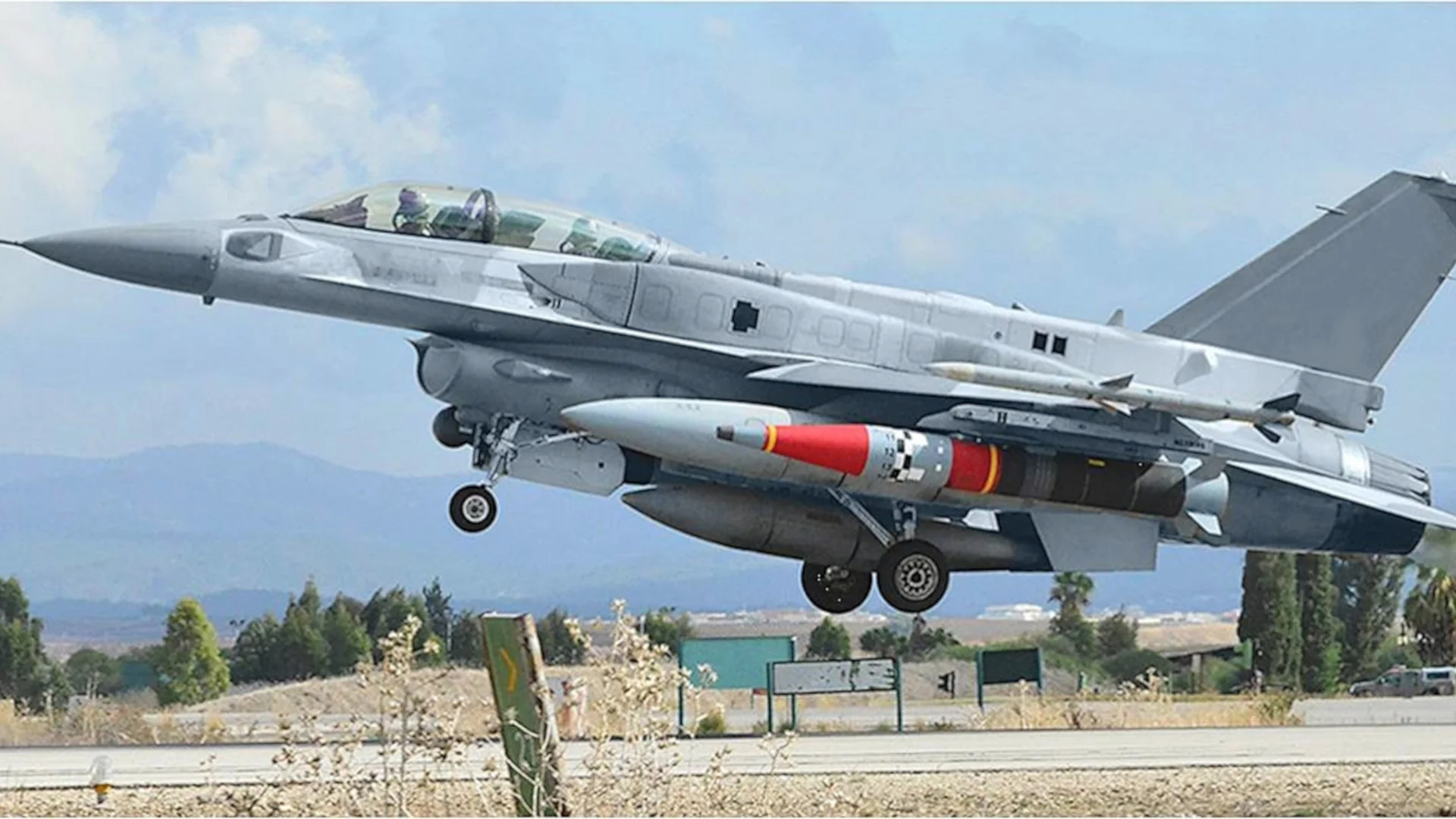
The lug locations are much more in line with Rocks, but we don’t know if this weapon uses the conformal reinforcement area for its lugs. Imagery of its Sparrow family of predecessors do point to this being the case, but with some noticeable differences among variants. But Rocks is likely to have been optimized when it went into production as an offensive weapon, and streamlining these areas and optimizing the design for serial production techniques could have been a key factor in such revisions that may have resulted in what we see in the images.