


The U.S. military used some new capabilities in the joint strikes with Israel against Iran on Saturday, including “one way attack drones” as part of a “multi geographic command and control,” according to Fox News’ chief national security correspondent Jennifer Griffin.
Why It Matters
The United States and Israel said they carried out coordinated attacks on Iranian military and strategic targets early Saturday, with officials describing the action as a pre‑emptive operation. Explosions were reported in Tehran amid what the Israel Defense Forces (IDF) and U.S. military described as strikes against sites they said posed threats to their security.
The attacks mark a sharp escalation following recent nuclear talks between Washington and Tehran and raise the risk of a wider regional conflict. President Donald Trump and Israeli Prime Minister Benjamin Netanyahu have said Iran‘s Supreme Leader Ayatollah Ali Khamenei was killed in the strikes.
What To Know
Griffin reported the U.S. carried out nearly 900 strikes in the first 12 hours of what officials have called “Operation Epic Fury,” which they said could continue over the next couple of weeks.
The U.S. launched the strikes from land, air, and sea for a complex, layered attack that “effectively suppressed” Iranian air defense systems, and that the Iranian response has been “ineffective.”
The strike consisted of one-way attack drones, known formally as Low-Cost Unmanned Combat Attack System (LUCAS) drones but nicknamed “kamikaze” drones, which were prepared ahead of the strikes. The drones cost only about $35,000 to produce compared to the multi-million-dollar MQ-9 Reaper drones, according to U.S. Central Command (CENTCOM).
The U.S. also used Tomahawk missiles in the first volley of strikes, according to Griffin—the same weapons used last year when the U.S. struck multiple Iranian nuclear sites as part of Operation Midnight Hammer.
In a later post, citing reporting from colleague Liz Friden, Griffin added the U.S. also used High Mobility Artillery Rocket Systems (HIMARs), patriot missiles, and Terminal High Altitude Area Defense (THAAD) batteries—or mobile missile launchers—in the strikes, while deploying ship-launched Standard Missiles for air defense.
The U.S. also used “standoff weapons,” which are munitions launched from aircraft or sea vessels, including submarines, far beyond the range of the enemy’s weapons.
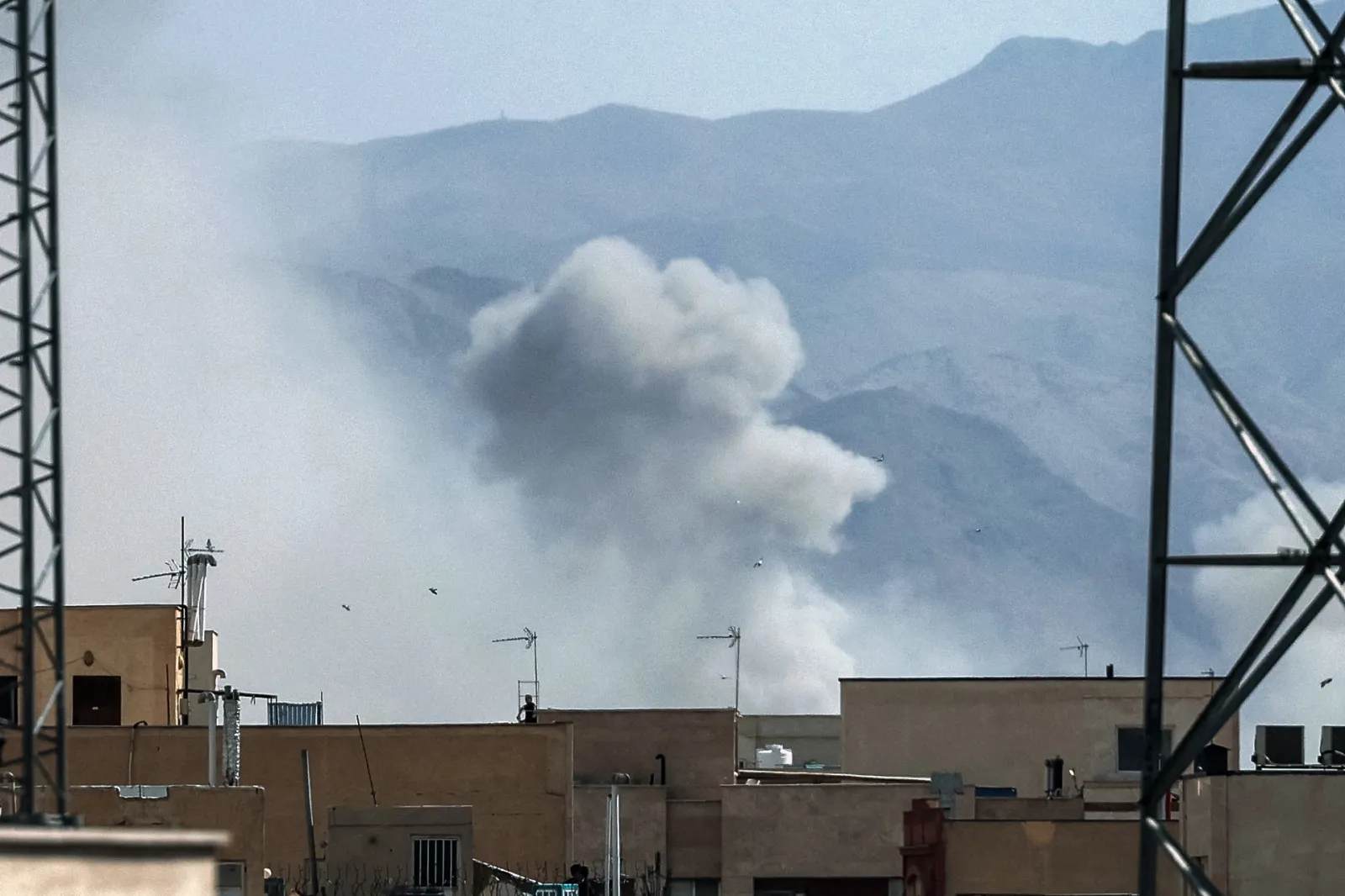
A plume of smoke rises following a reported explosion in Tehran on February 28. (Photo by AFP via Getty Images)
Why Did the U.S. Attack Iran?
An official told Fox News that the goal of the attack was to leave Iran without the capability to attack its neighbors: “No drones, no missiles, no Navy.”
The official also claimed that the U.S. knows where Iran’s enriched uranium is but admitted that it is “hard to get to.”
What Happens Next
In a Truth Social post on Saturday afternoon, Trump wrote that “the heavy and pinpoint bombing” in Iran “will continue, uninterrupted throughout the week or, as long as necessary to achieve our objective” of peace throughout the Mideast and world.