


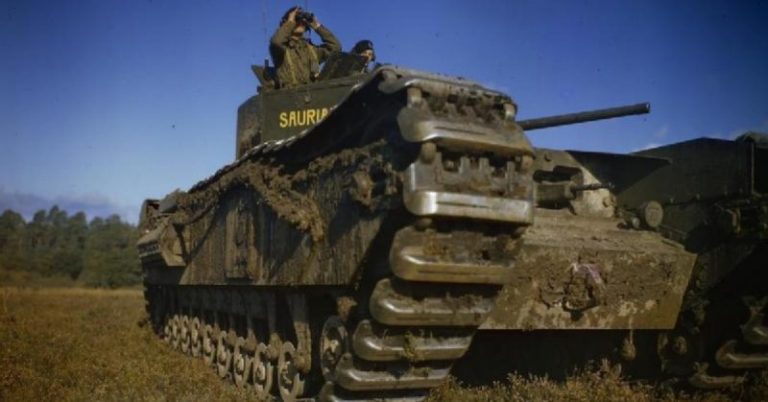
Vickers Medium Tank Mark 2
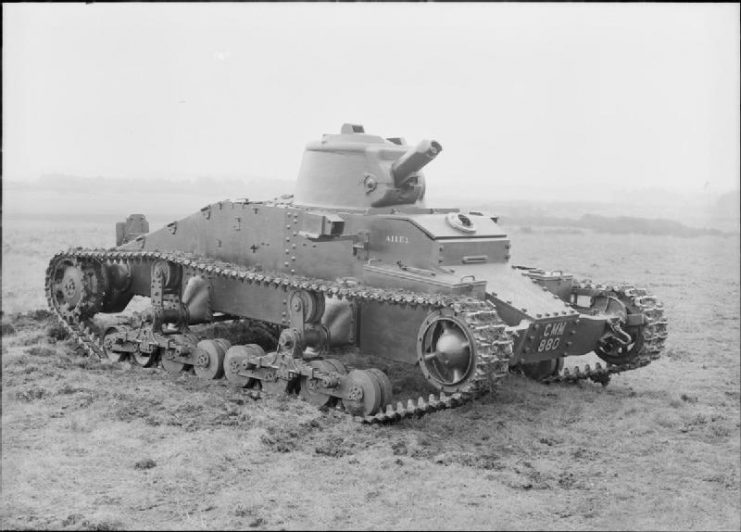
The standard British tank of the inter-war years, the Vickers Medium Mark 2 was based on a design from not long after World War I. Its box-like hull was topped with a turret that carried a 3-pounder gun and coaxial Vickers machine gun.
Two other Vickers machine guns could be thrust through firing ports in the sides of the hull.
By 1939, this tank was out of date but still in use. It was mostly used for training, though a few were used against the Italians in the Middle East.
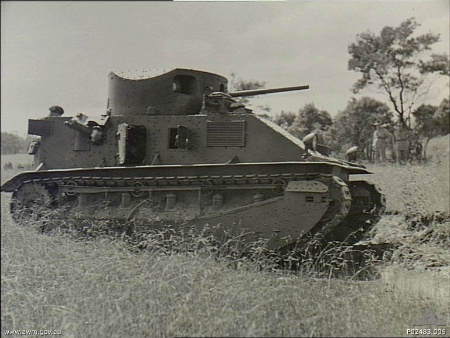
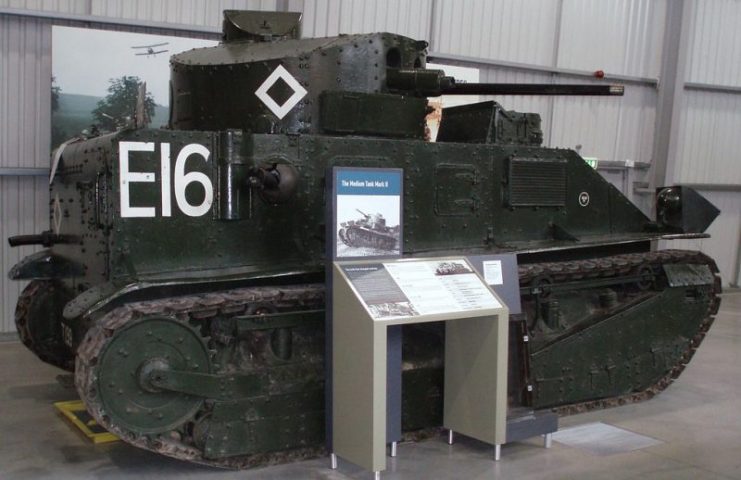
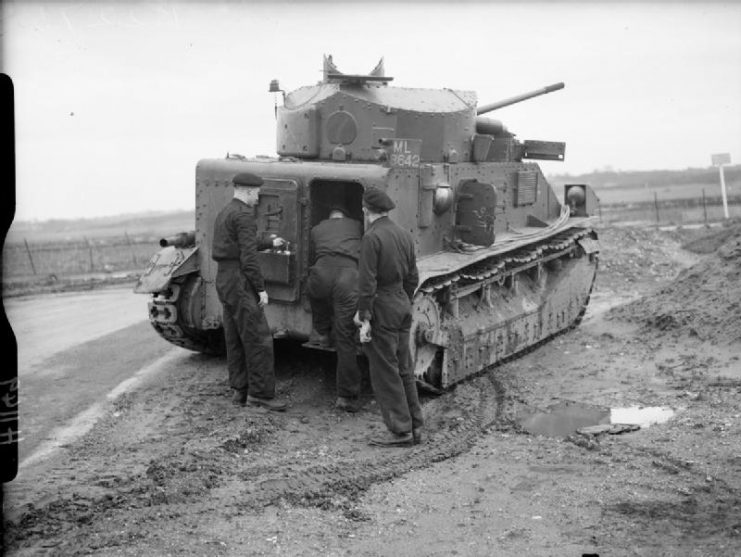
Vickers Medium Mk II tank of the Royal Tank Regiment at Farnborough, 1940.
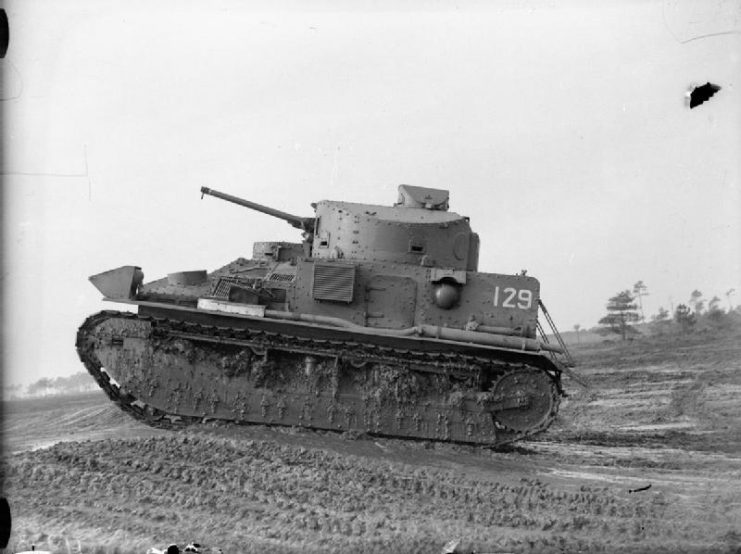
Vickers Medium Mk II tank of the Royal Tank Regiment on manoeuvres at Bovington Camp, Dorset, November 1939.
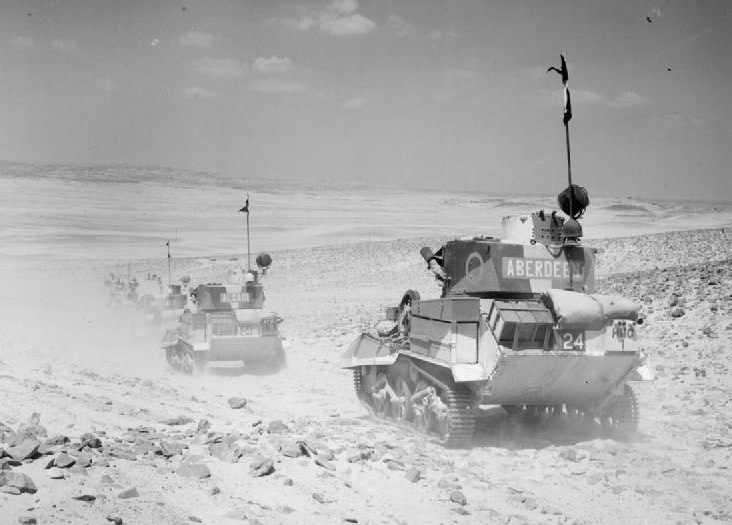
Vickers Light Tank Mark 6
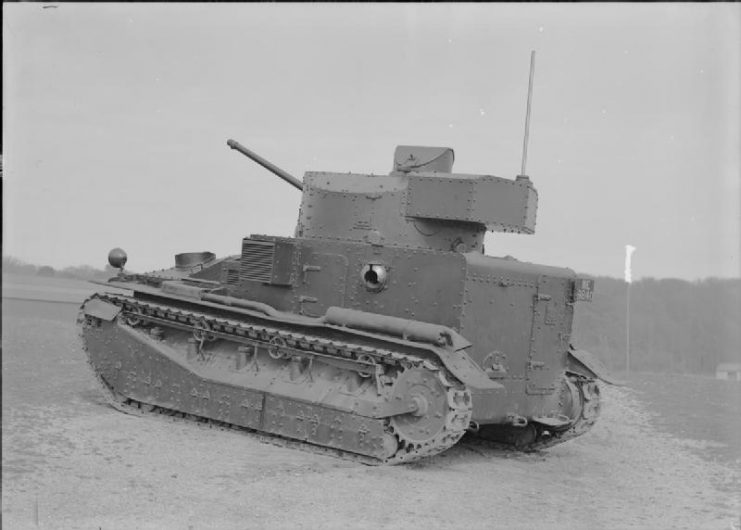
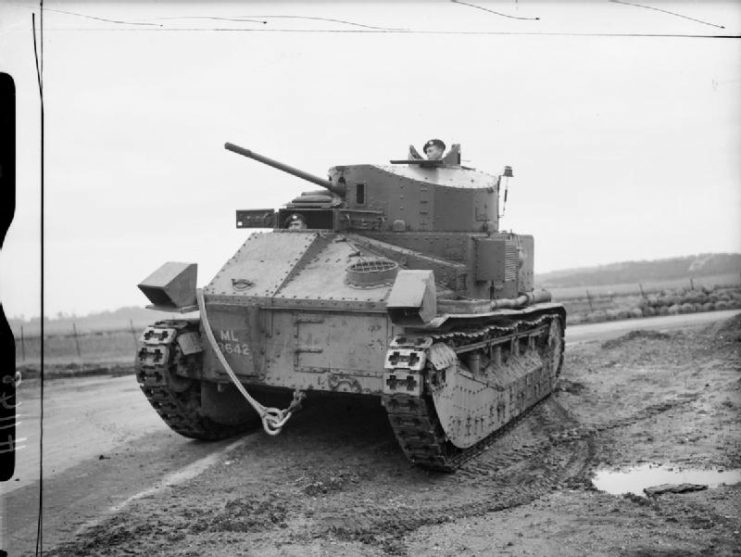
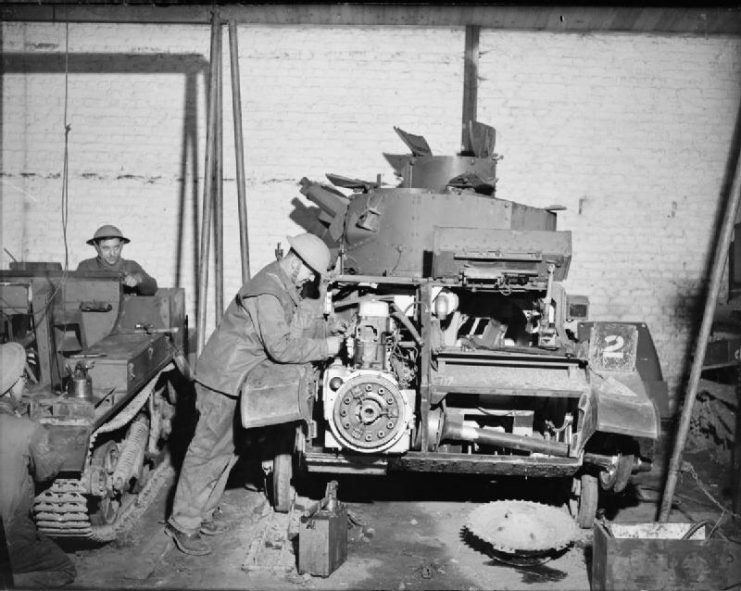
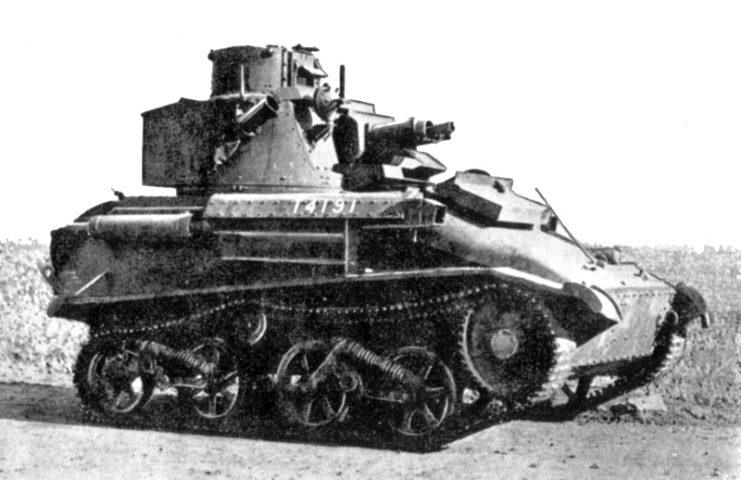
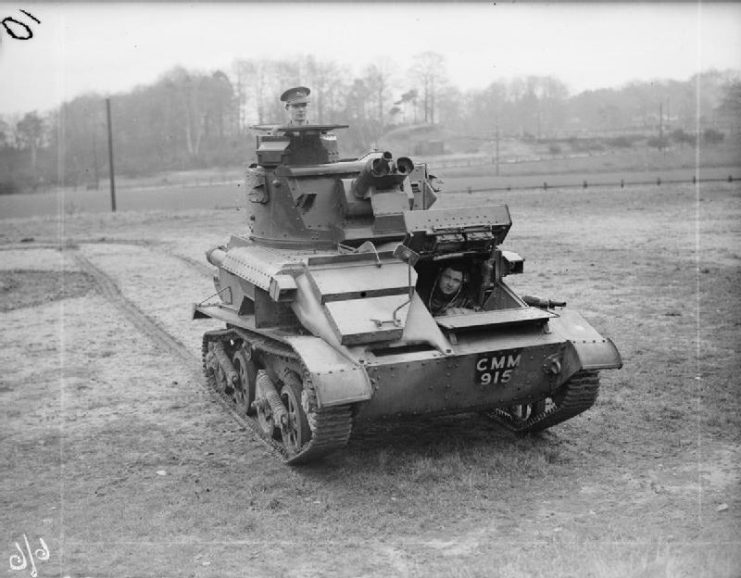
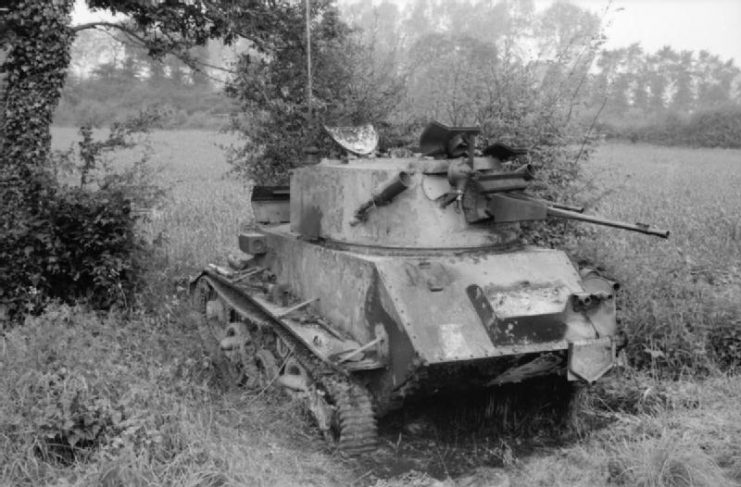
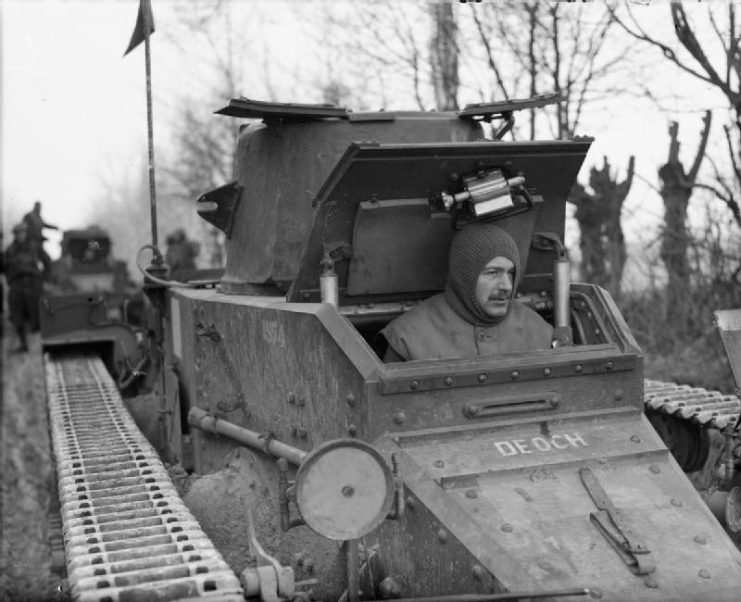
The last in a series of light tanks developed by Vickers in the 1930s, the Vickers Mark 6 had relatively thin armor and was armed only with machine guns.
Many of them were used in the Battle of France in 1940, where the world learned that light tanks were too weak and vulnerable in modern warfare. It was a lesson that came at a great cost for the crews of the Mark 6.
Matilda
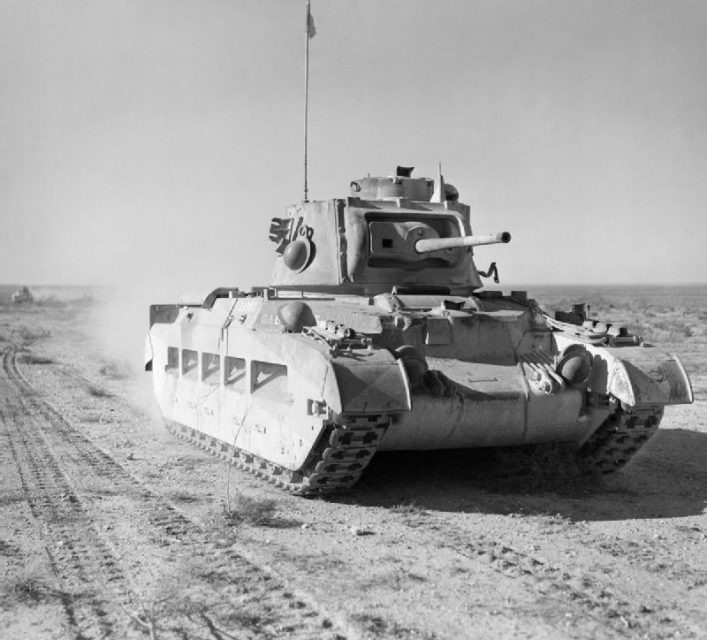
Many British military thinkers expected a similar sort of combat to WWI, so they developed a slow, heavily-armored tank–the Matilda–designed to escort infantry as they advanced over open, broken ground.
Already in use at the start of the war, Mark 1 and 2 Matildas fought in the Battle of France, where their heavy armor provided effective protection against German guns. Equipped only with machine guns, the Mark 1s was phased out during the war.
The Mark 2 was the only British tank to serve throughout the conflict, seeing action in Europe, Africa, and East Asia.
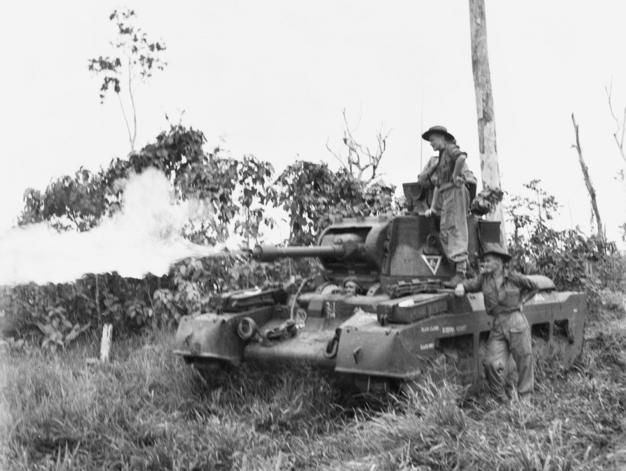
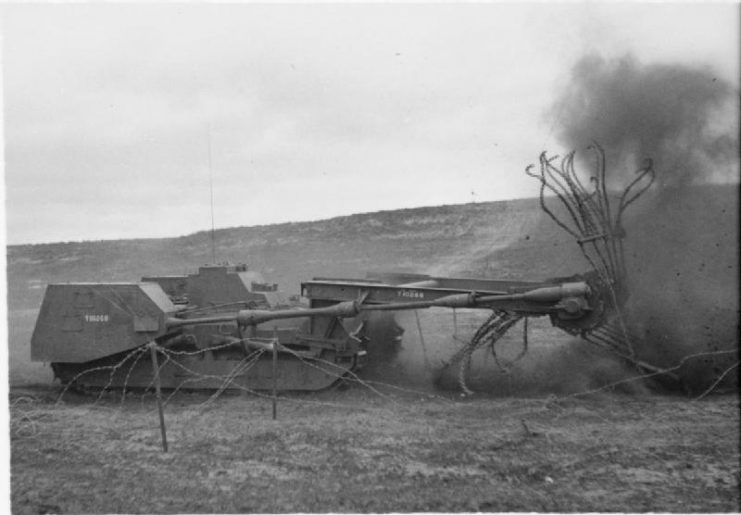
A Matilda Frog being demonstrated on Morotai, June 1945
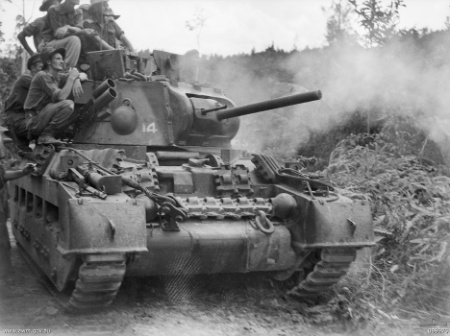
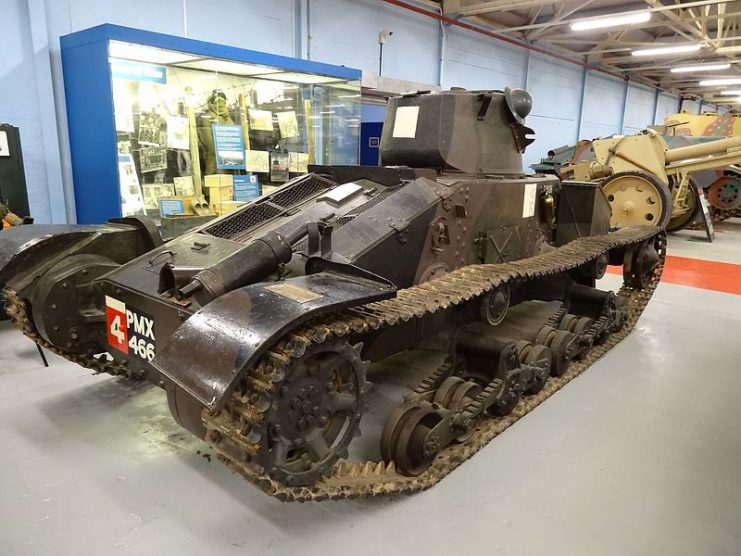
Matilda I tanks in the Bovington Tank Museum.Photo Jonathan Cardy CC BY-SA 3.0
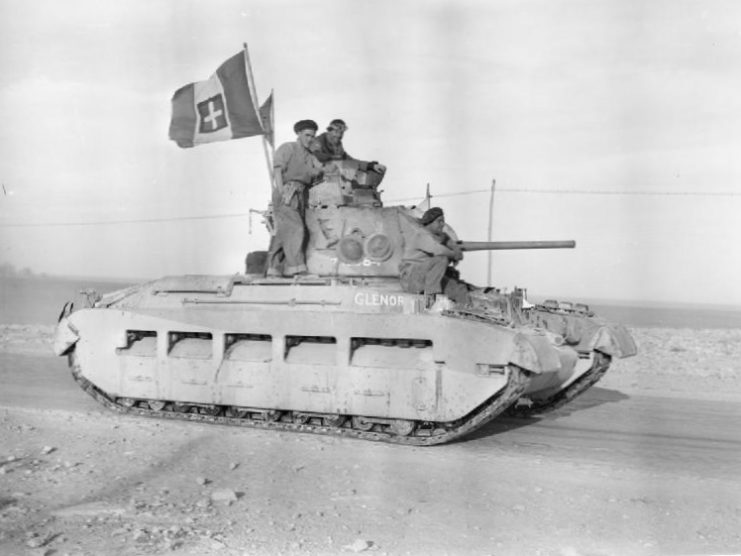
Matilda II.A Matilda’s crew display a captured Italian flag as they enter Tobruk, January 1941
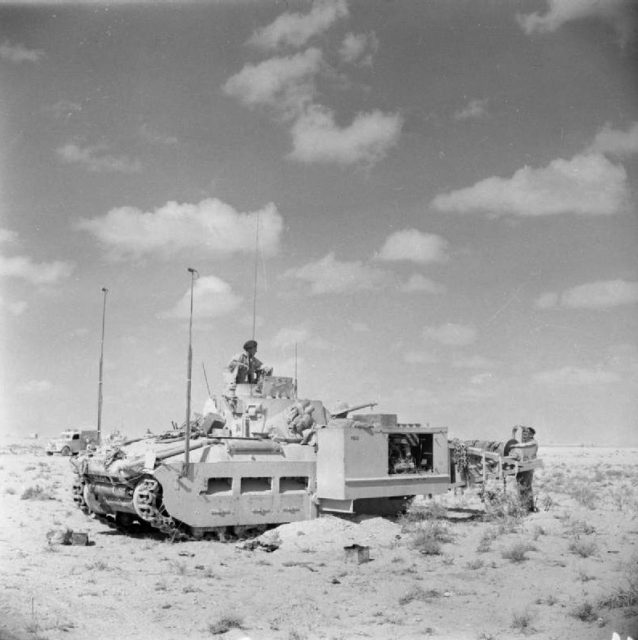
Matilda Scorpion in North Africa, 1942
Valentine
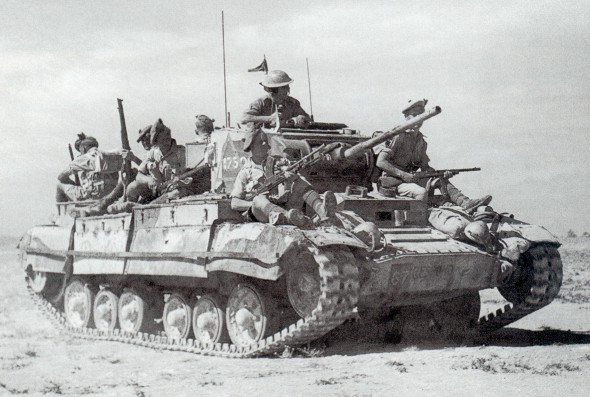
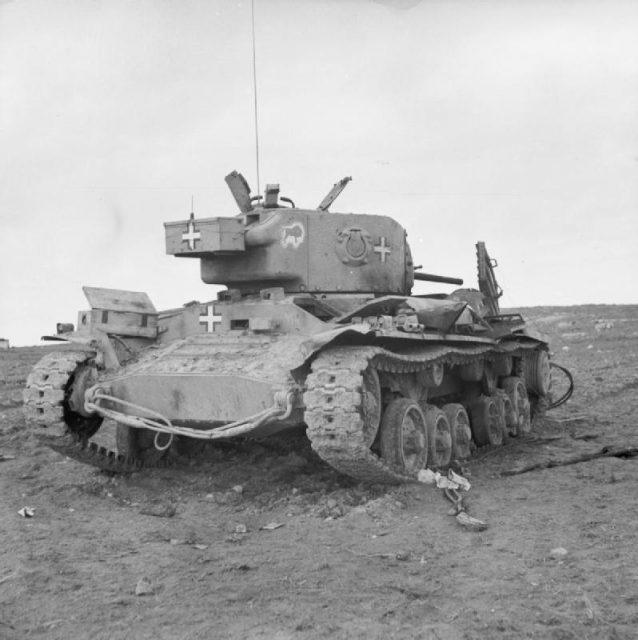
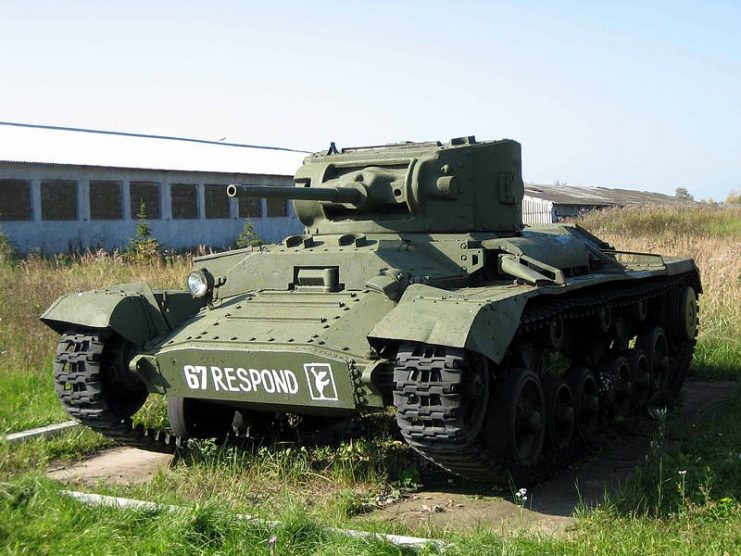
Designed by Vickers-Armstrong as an alternative to the Matilda, the Valentine was rushed into production as war approached. Despite being cramped, difficult to drive, and having visibility problems, it was popular with its crews thanks to its reliability and robustness.
A series of weapons upgrades kept it relevant through much of the war, but by 1944 it had become obsolete.
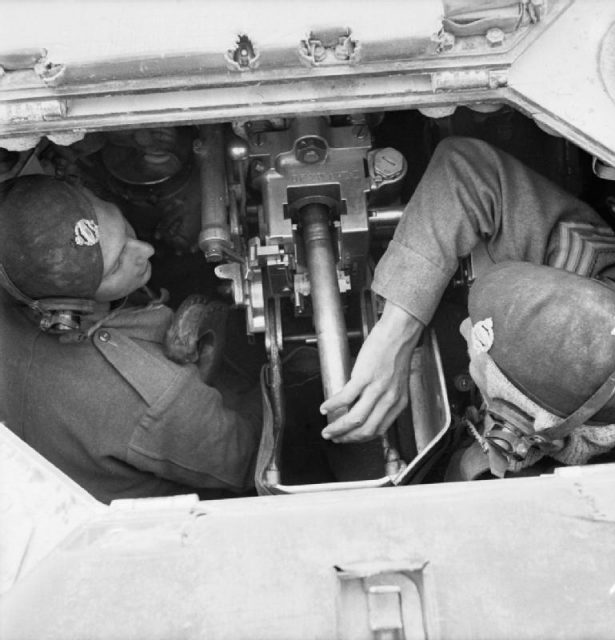
Crew inside a Valentine tank loading the 2-pounder gun
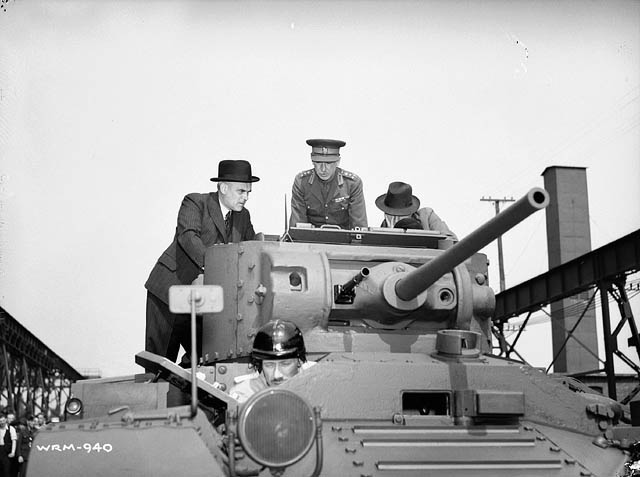
The first tank to be manufactured in Canada, a Valentine VI, being inspected by C D Howe the Canadian Minister of Munitions and Supply in May 1941
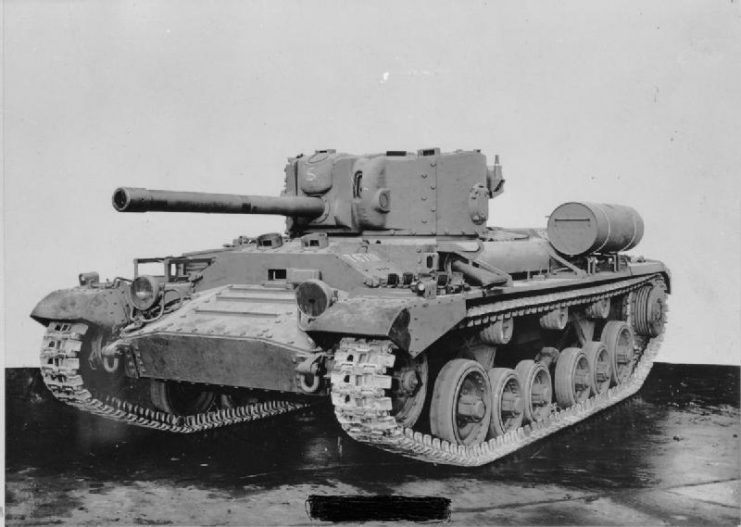
The Valentine IX. This was armed with the QF 6-Pounder gun with many of these being sent to Russia under Lend Lease
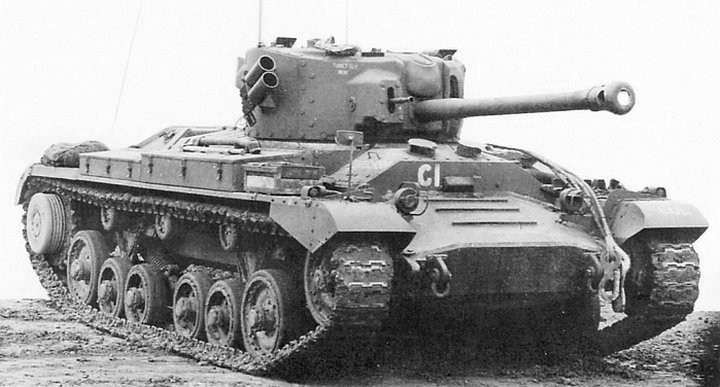
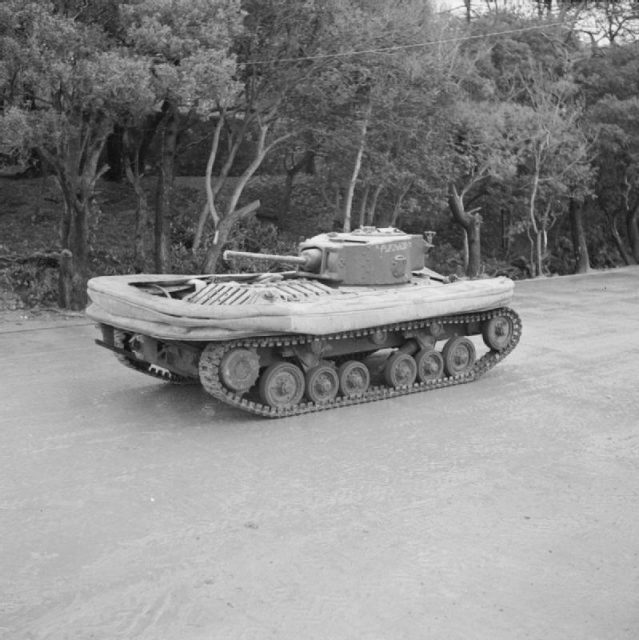
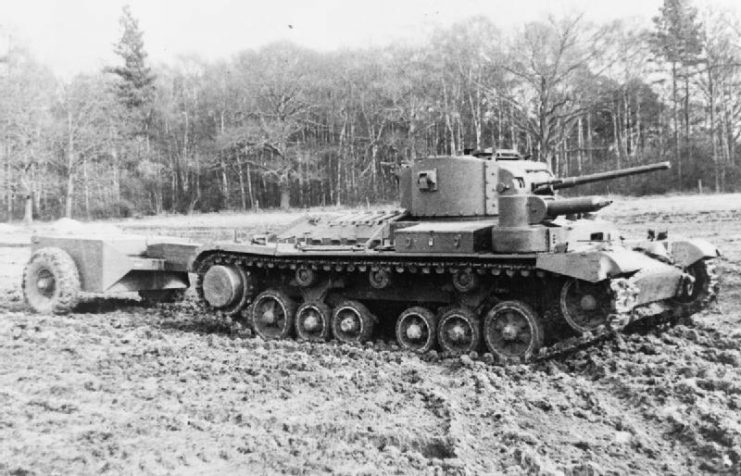
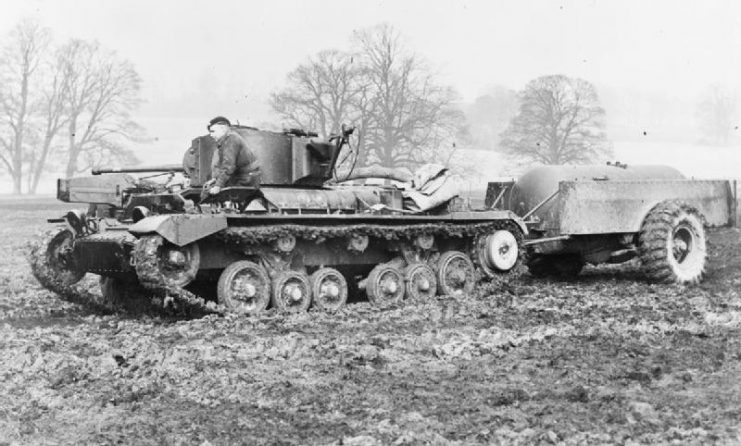
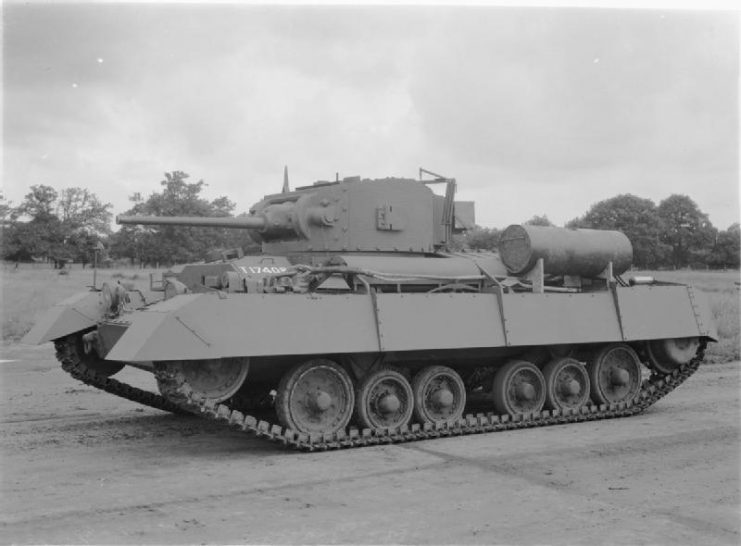
Valentine II
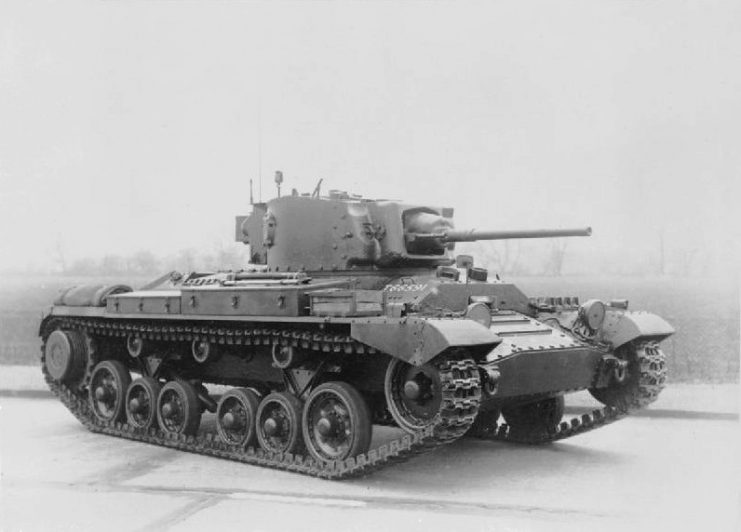
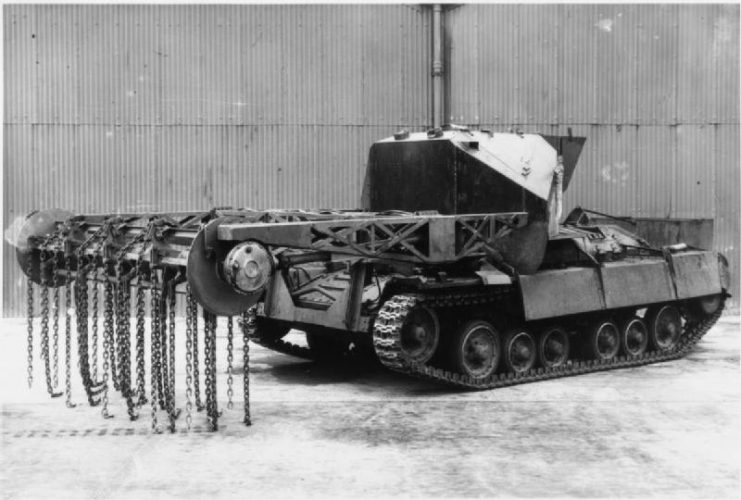
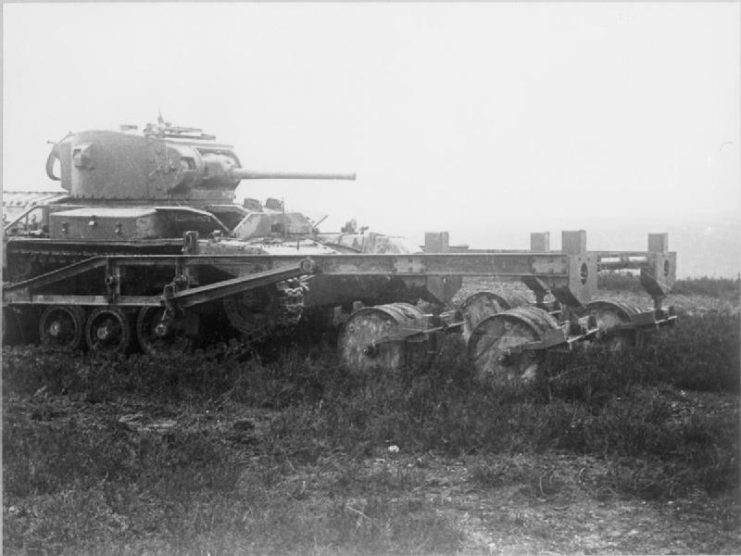
Valentine with AMRA
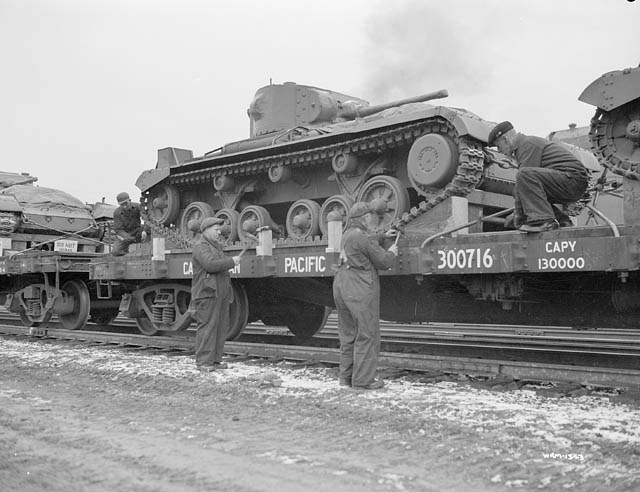
Churchill
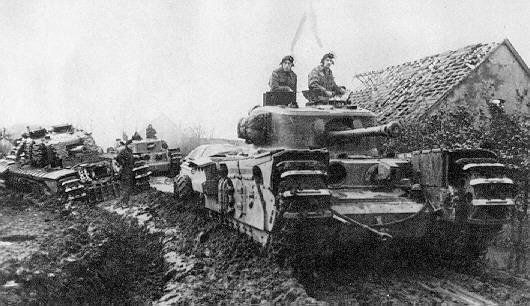
Another infantry tank, the Churchill became a British mainstay. With its hull-high tracks and deep-set front, it was initially built to carry only a 2-pounder gun in its turret and a 3-pounder howitzer in the front of the hull. This weaponry was steadily upgraded until some carried 95mm howitzers.
First used in the disastrous Dieppe Raid of 1942, the Churchill served successfully in other theatres, including on the Eastern Front, and provided the basis for many specialist armored vehicles.
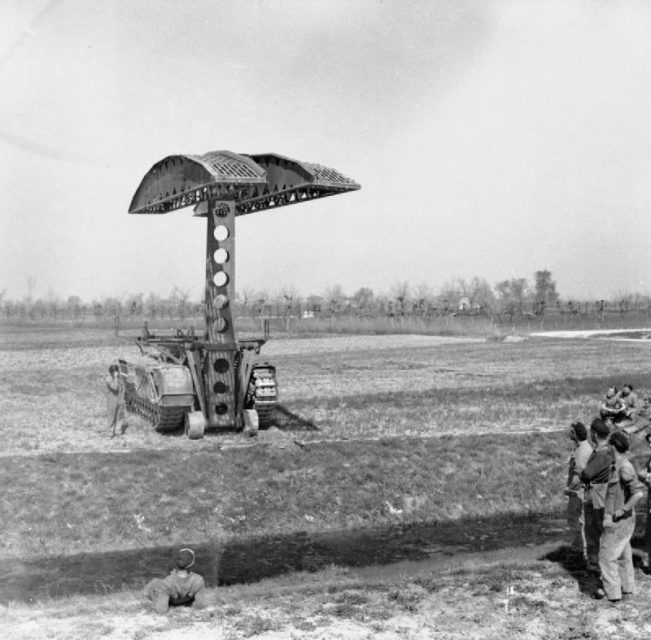
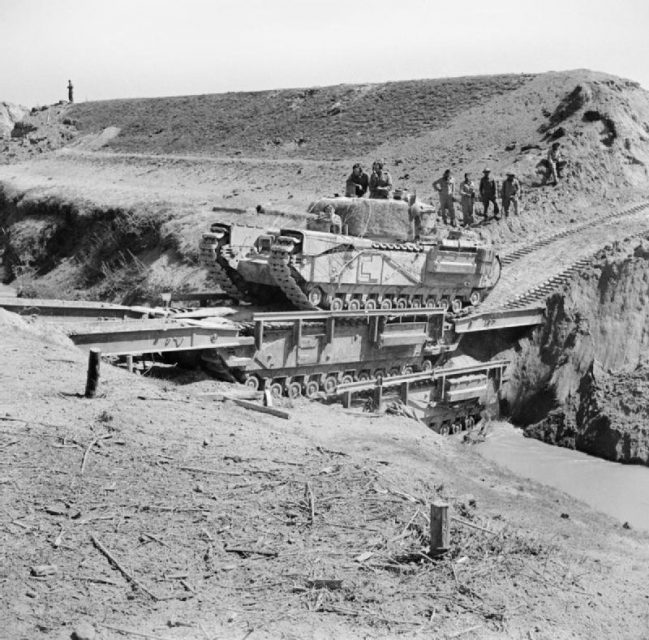
A Churchill tank of the North Irish Horse crossing the Senio in Italy on two stacked Churchill ARKs, April 1945
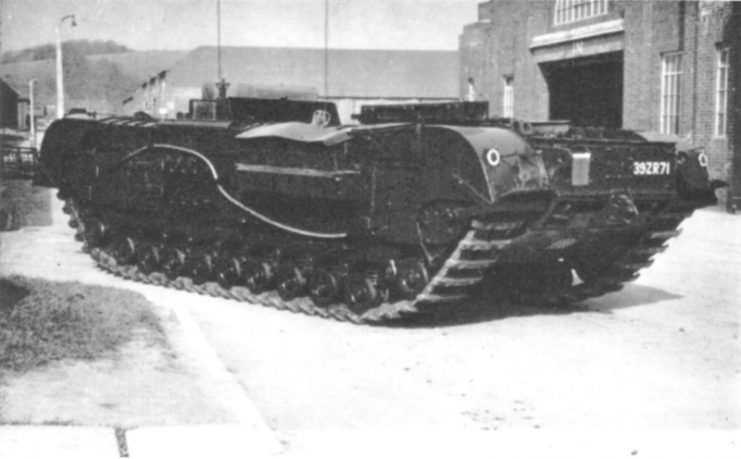
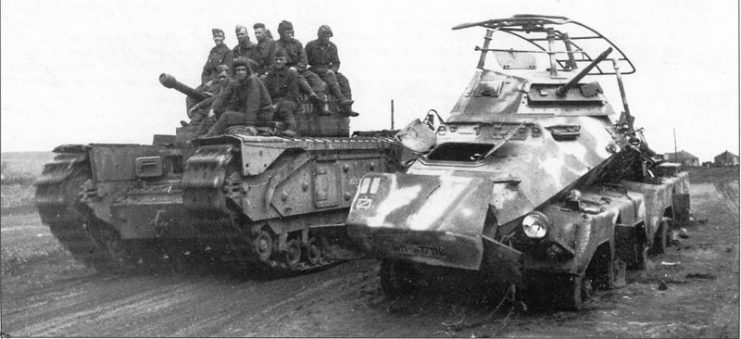
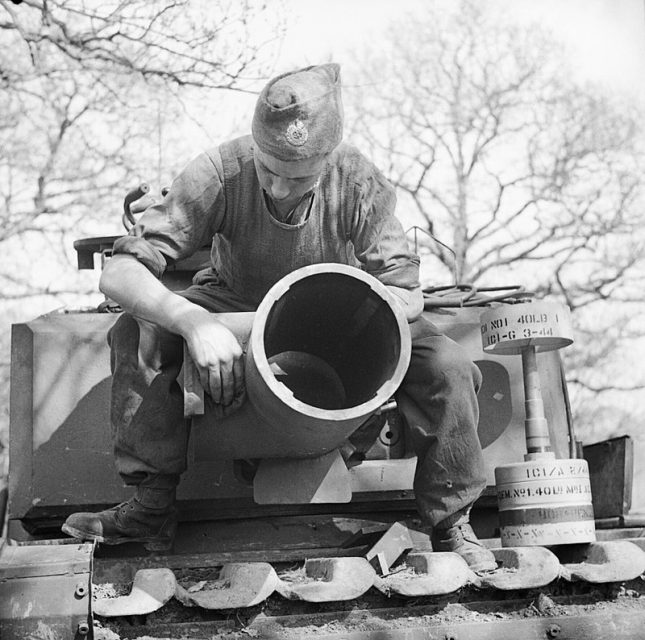
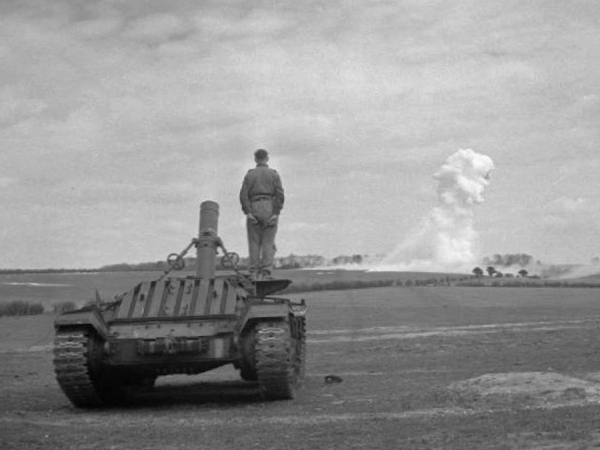
AVRE 290mm Petard Mortar and its ammunition (projectile standing on its flat nose, with tail facing up, at right)
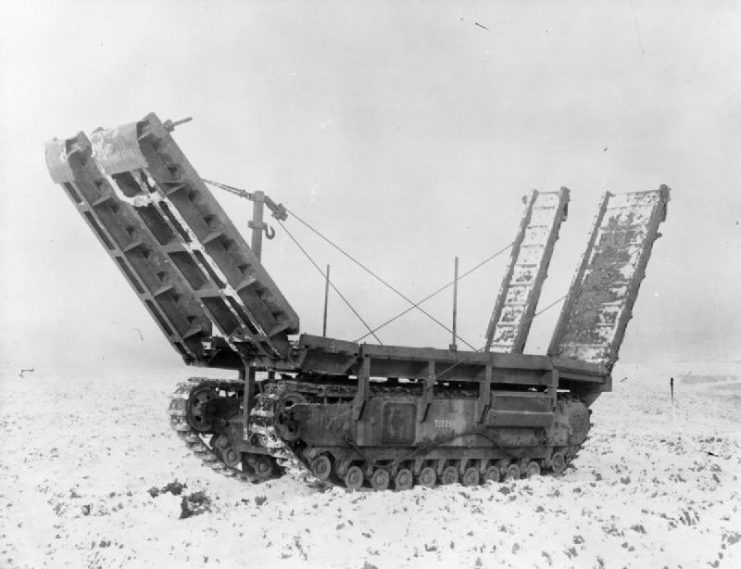
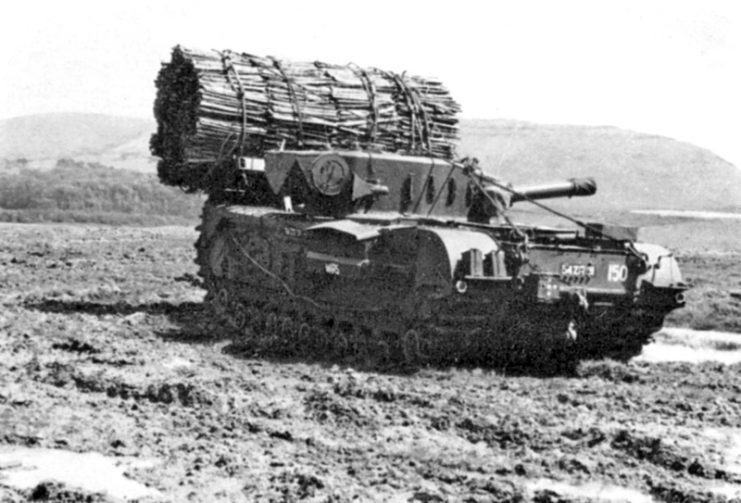
Churchill Ark Mk II (UK Pattern)Churchill Ark Mk II (UK Pattern)
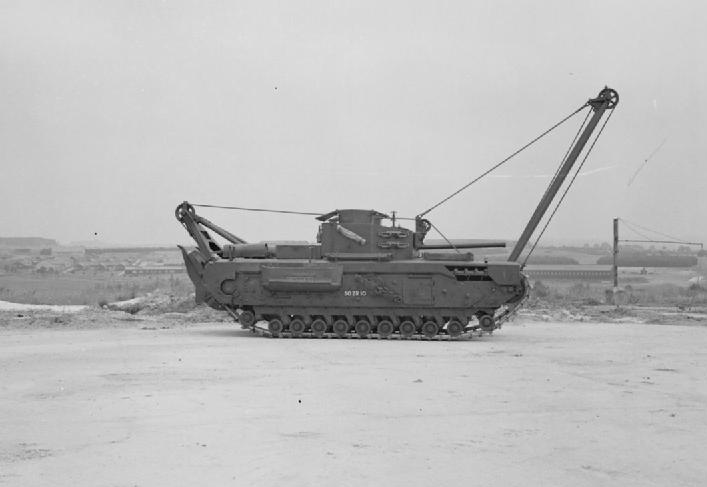
Churchill ARV Mk II with front jib erected
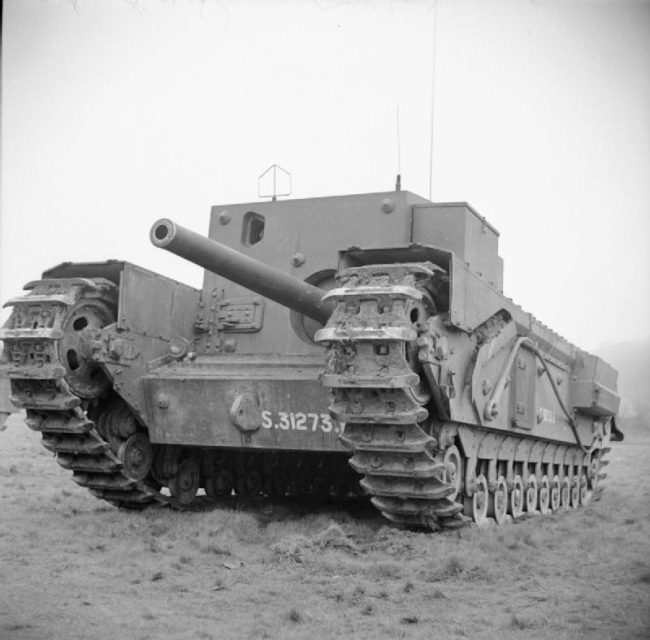
Churchill Gun Carrier in Dorset, 25 March 1943
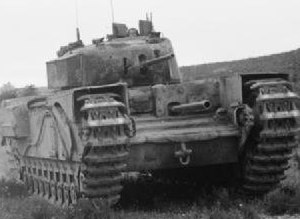
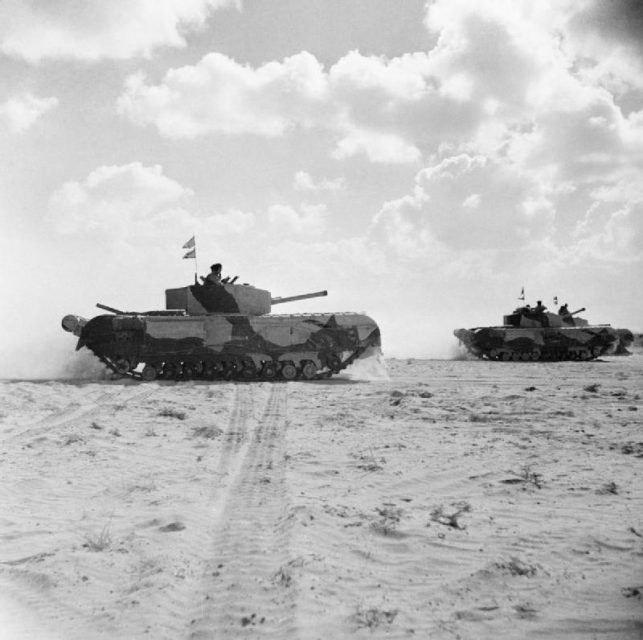
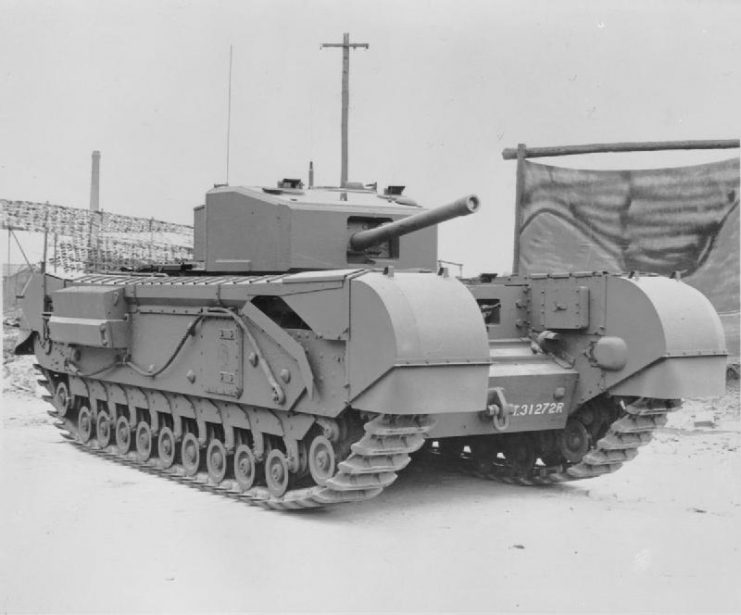
Churchill Mark III
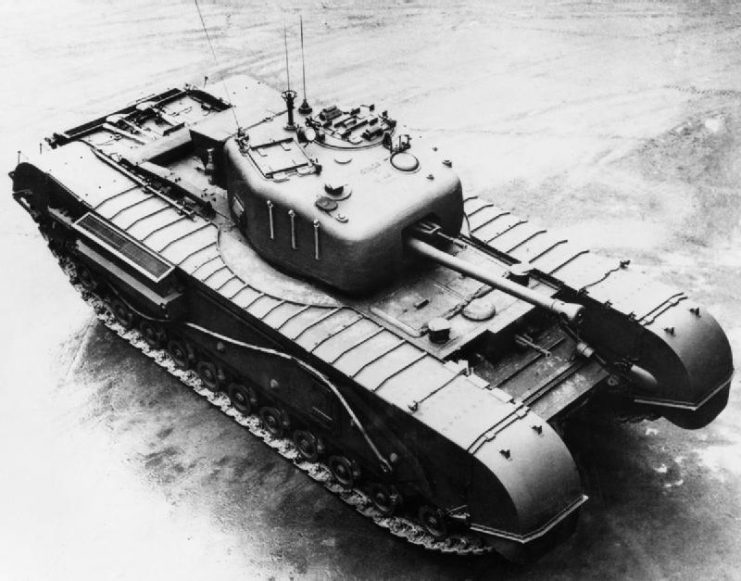
Churchill Mark VI
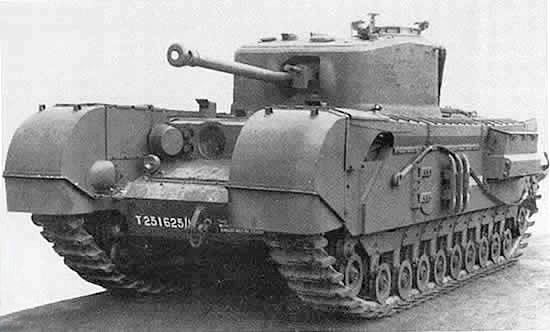
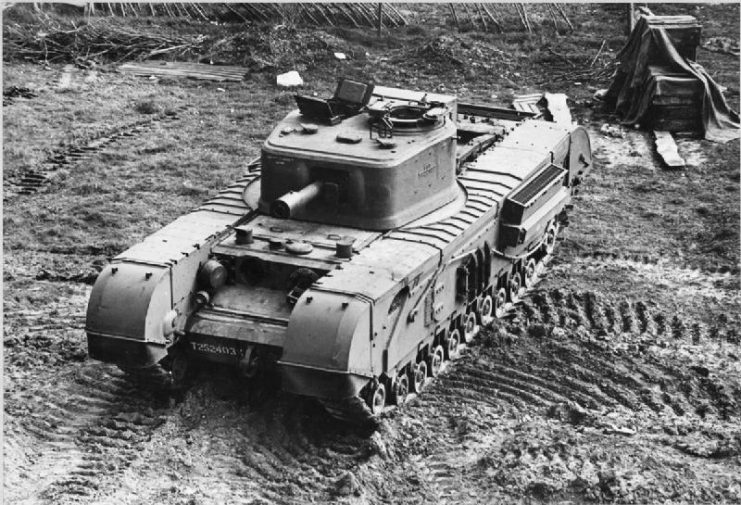
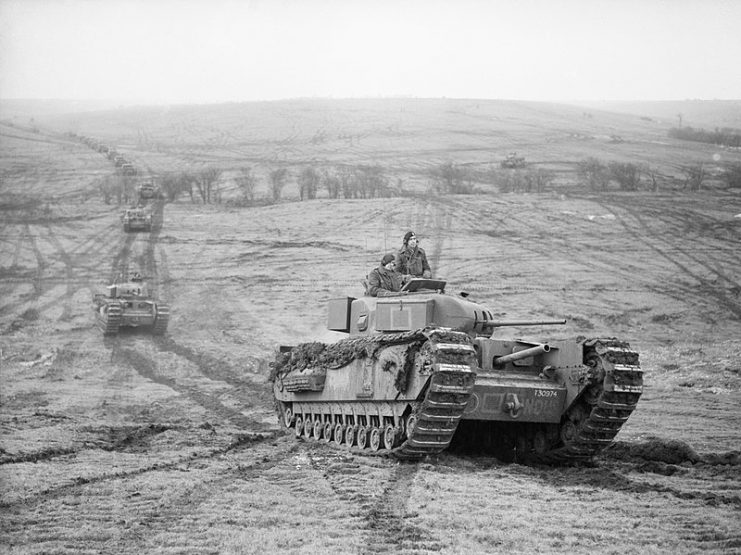
Churchill tanks of 9th Royal Tank Regiment during an exercise at Tilshead on Salisbury Plain, 31 January 1942
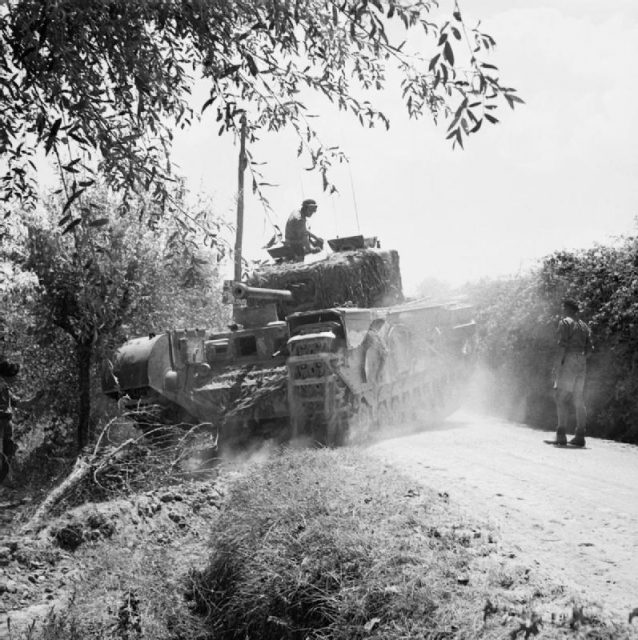
North Irish Horse Churchill advancing towards Florence, Italy. 23 July 1944
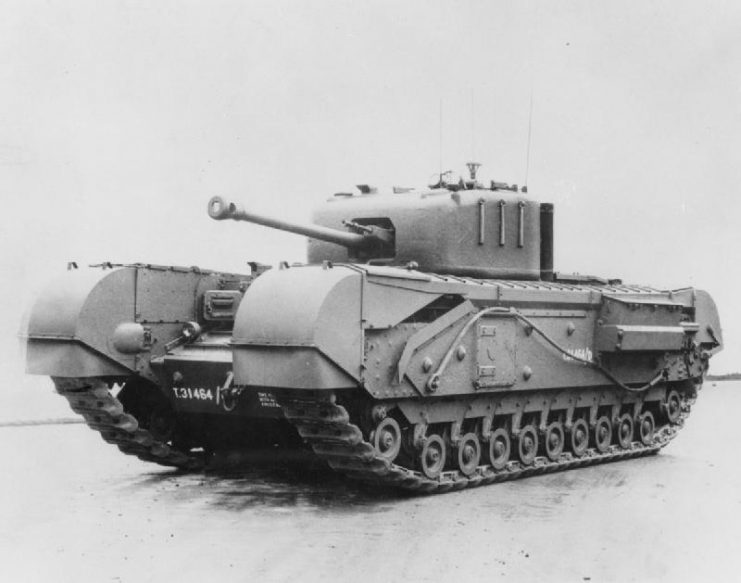
Cruiser Mark 4
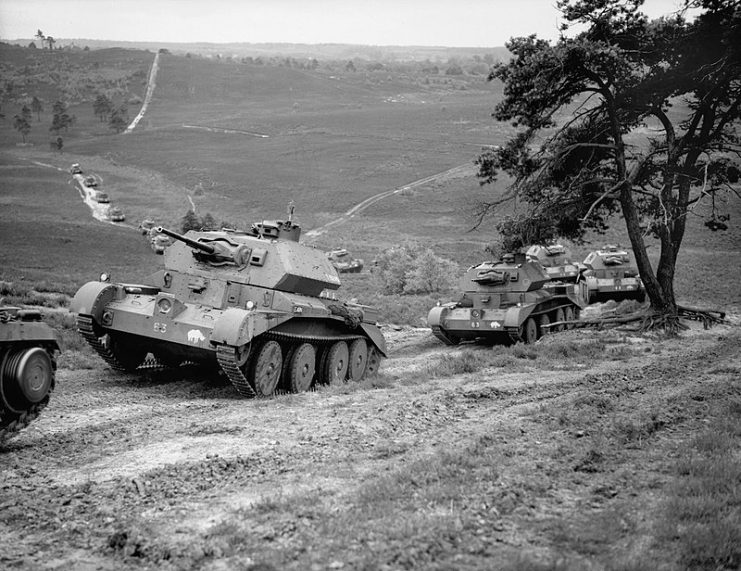
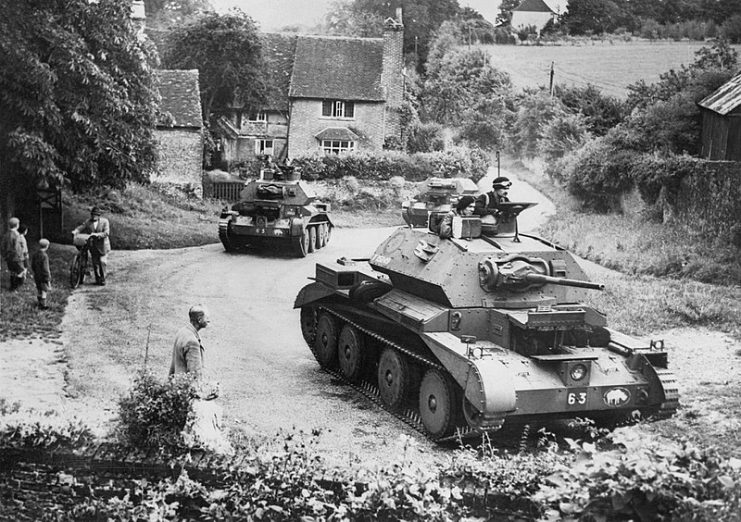
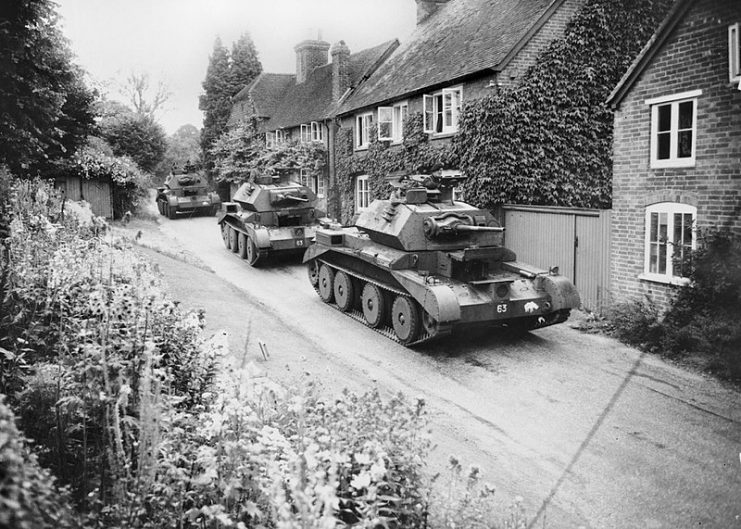
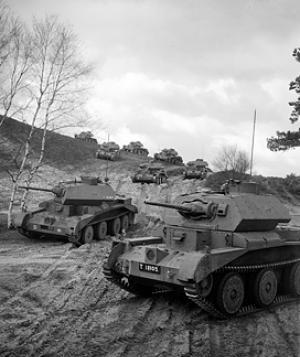
Between the world wars, military thinkers developed the idea of the cruiser tank: a relatively fast-moving machine that would sweep around enemy flanks and into the rear. By 1939, this led to the Cruiser Mark 4.
The Mark 4 fought in France and the Western Desert. But the idea of flanking cruisers did not match the reality of war, and its 2-pounder gun was underpowered for modern tank fighting.
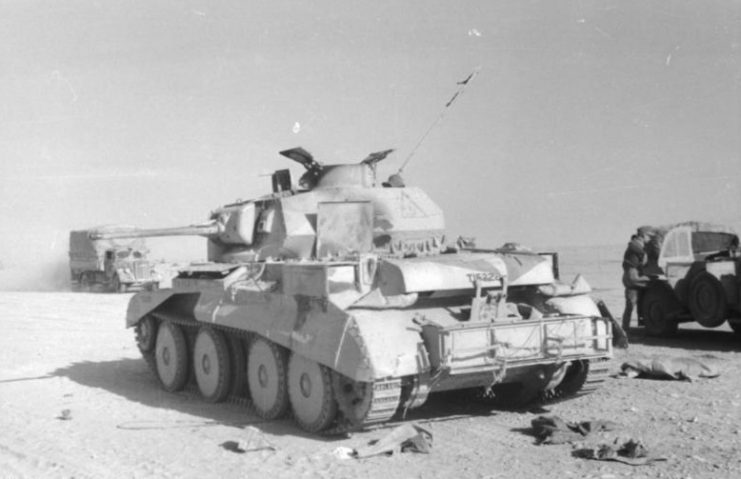
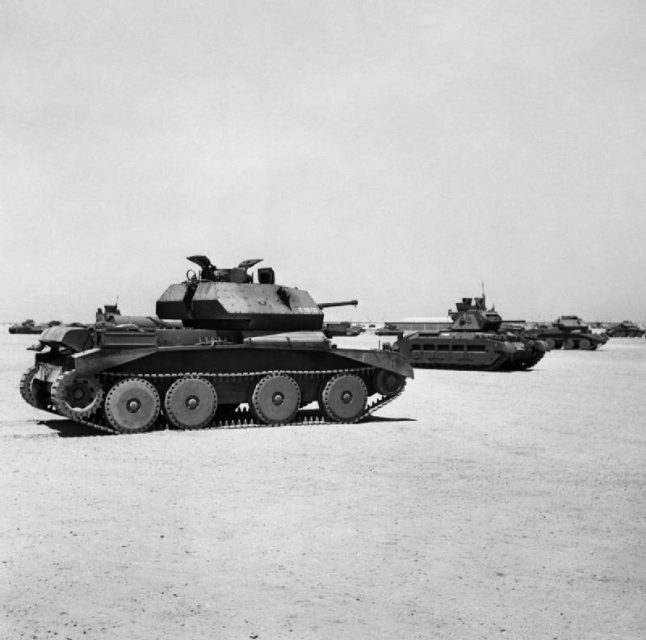
An A13 Cruiser Mk IV and a Matilda tank at a depot in Egypt, 5 September 1941.
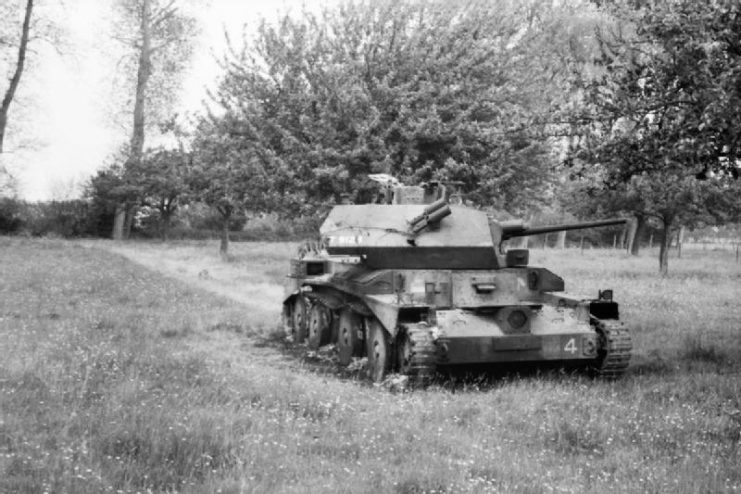
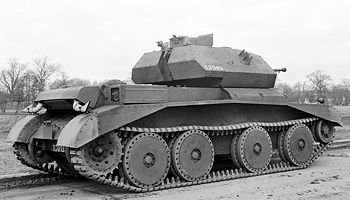
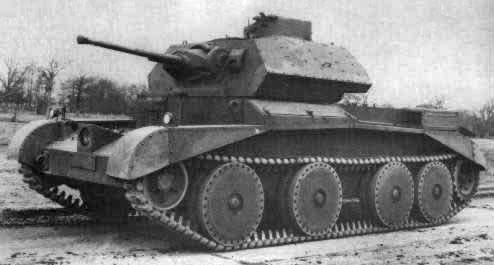
Crusader
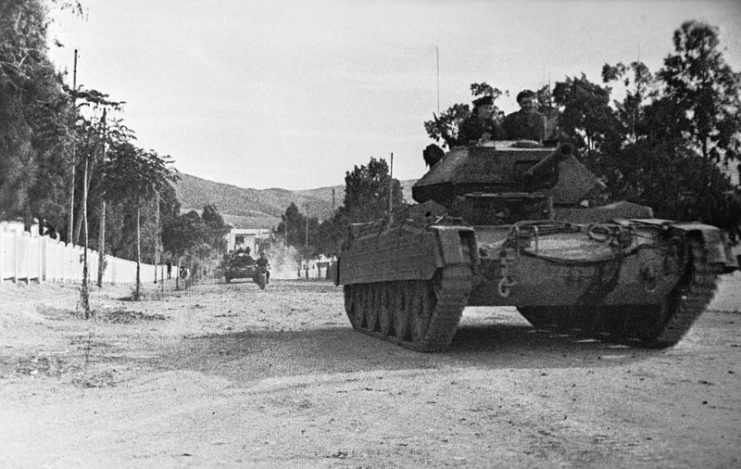
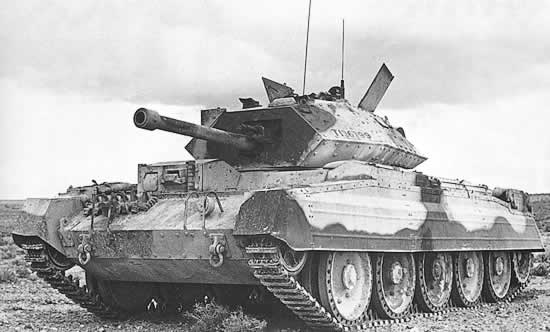
The last inter-war cruiser design, the Crusader retained the 2-pounder gun and so proved to be under-powered in combat. A version with a 6-pounder gun was developed in May 1942 and acted as the main weapon of British armored formations. They were replaced later in 1942 when the Americans supplied the British with Grant and Sherman tanks.
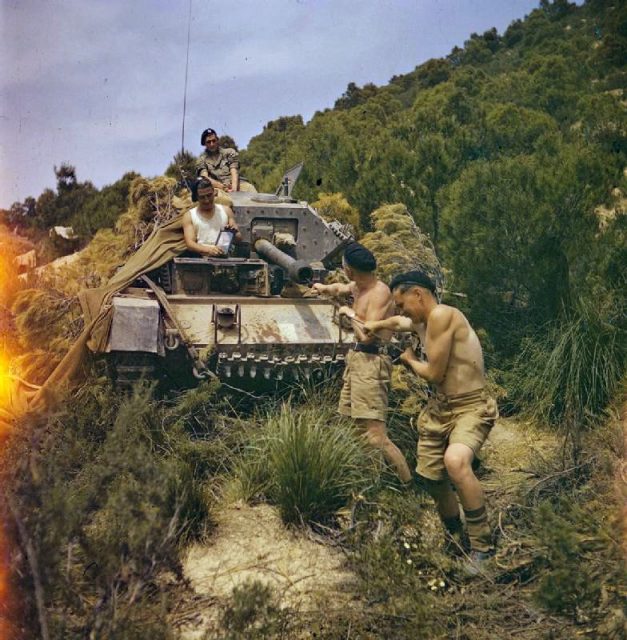
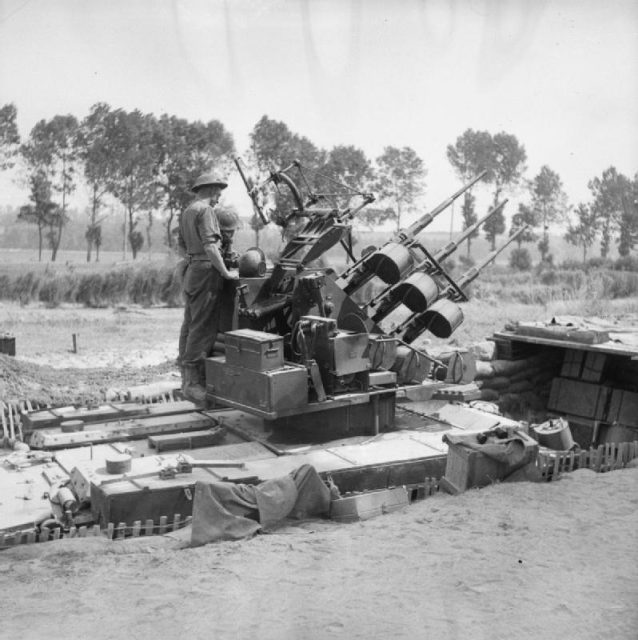
Crusader AA tank variant mounting a triple Oerlikon gun in a hull-down position, 19 July 1944
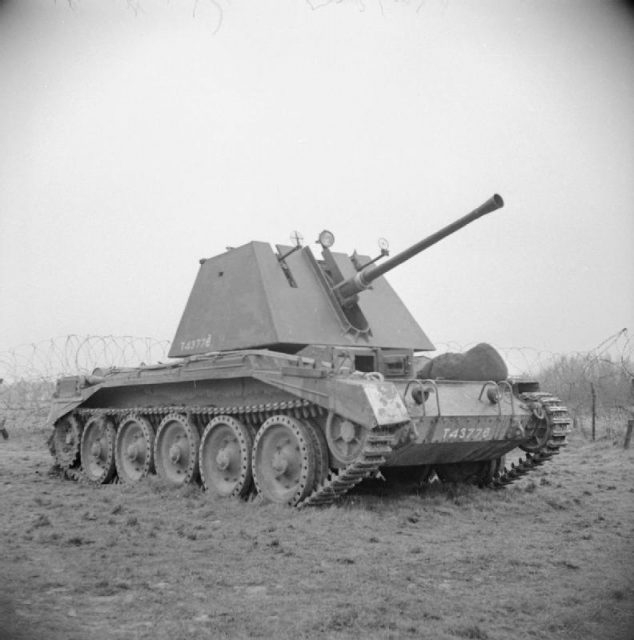
Crusader AA with 40 mm Bofors gun, at the Armoured Fighting Vehicle School, Gunnery Wing at Lulworth in Dorset, 25 March 1943
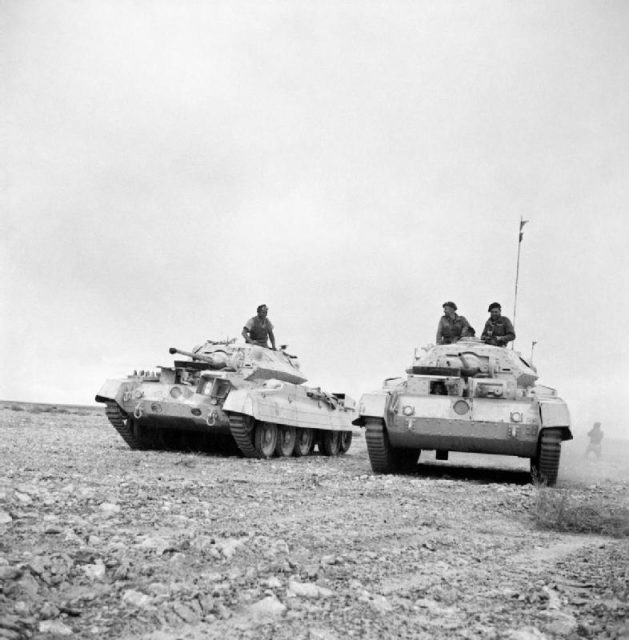
Crusader I tanks in Western Desert, 26 November 1941, with “old” gun mantlets and auxiliary Besa MG turret.
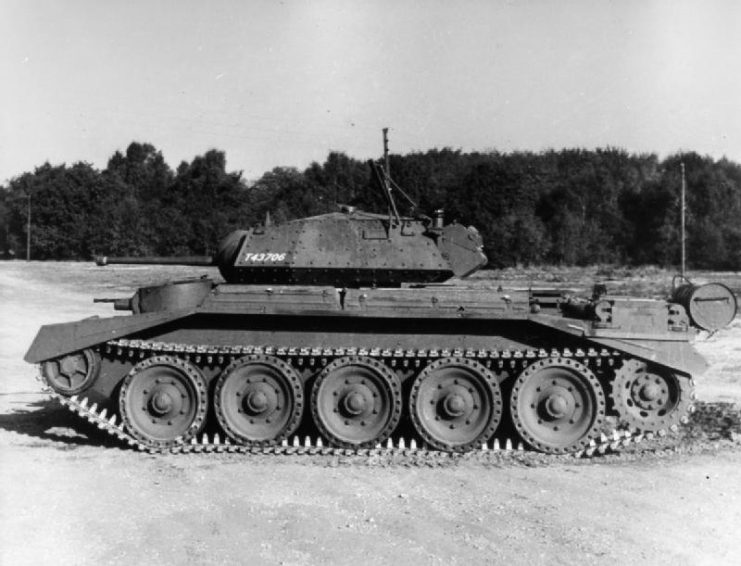
Crusader I with its auxiliary turret in place
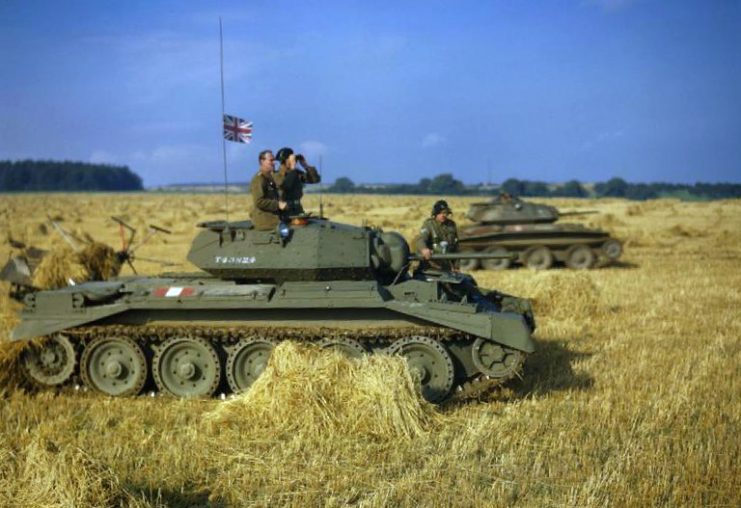
Crusader II, and Covenanter at rear, training in Yorkshire,
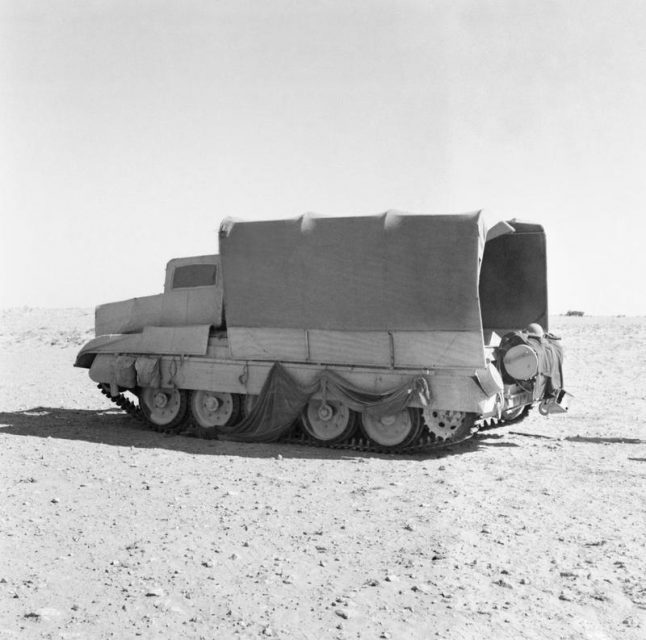
Crusader III before Alamein, with ‘Sunshade’ camouflage
Cavalier
Designed and put into production with ill-judged haste in 1941, the Cavalier was a cruiser tank with a 6-pounder gun, designed to provide something with more firepower and durability.
500 Cavaliers were ordered before the prototype was even tested. Many of its components were taken from the Crusader, so it inherited that tank’s mechanical problems. Due to their unreliability, they never saw battle as tanks, though some were converted to into recovery and command vehicles.
Covenanter
Another rush job, the Covenanter had good deflective armor but its tracks were too narrow and its engine cooling defective. Over a thousand were made, but it was never used in battle.
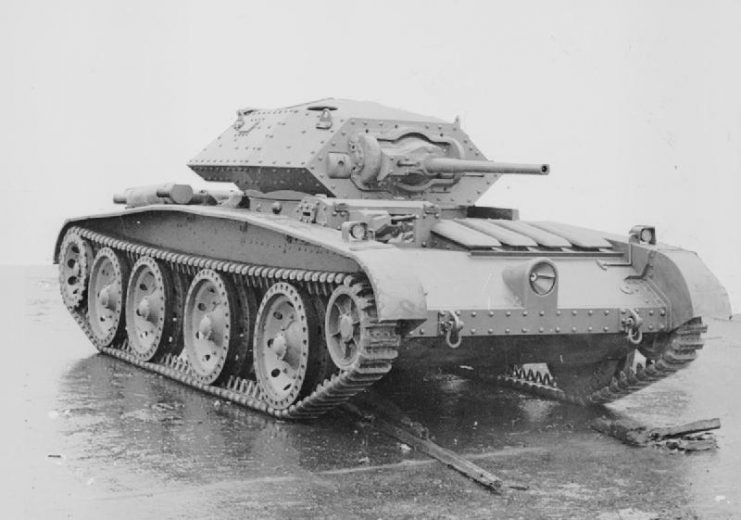
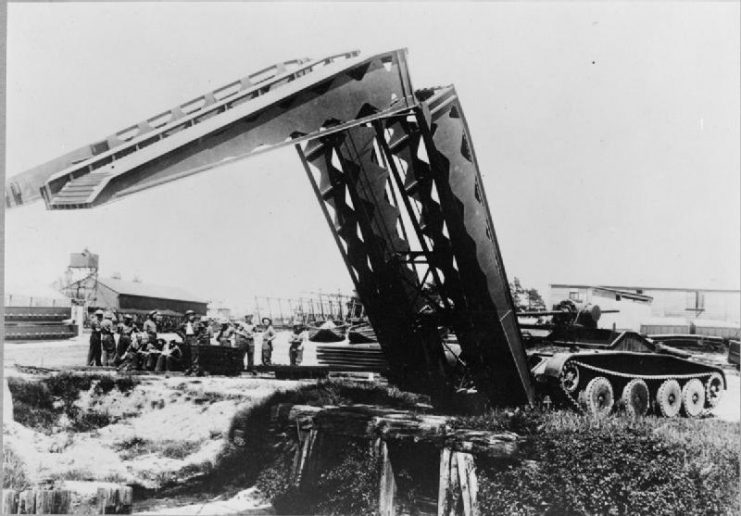
Covenanter bridgelayer with vehicle-launched span
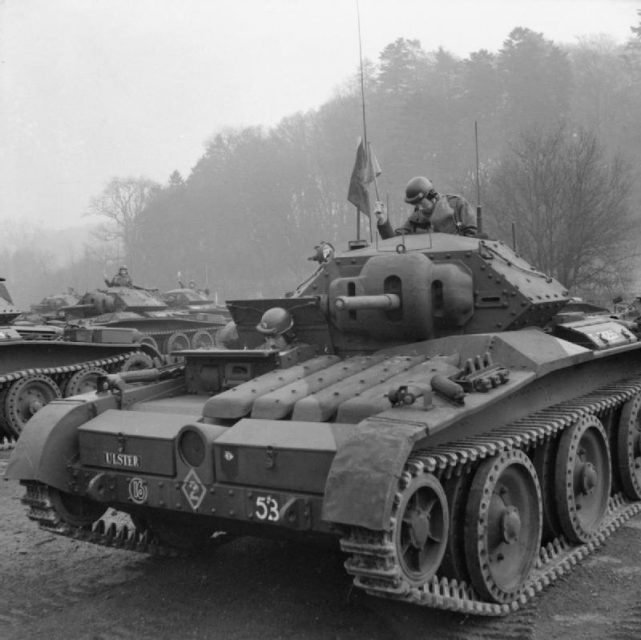
Covenanters of the 2nd (Armoured) Irish Guards, Guards Armoured Division, during an inspection (3 March 1942)
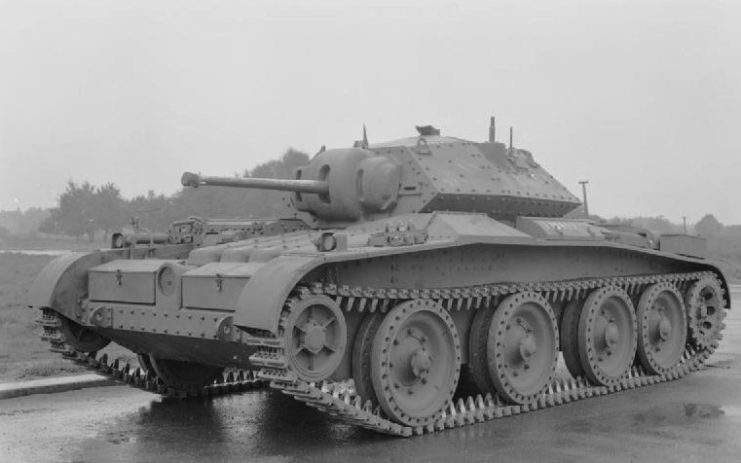
Centaur
Built in response to the same specification as the Cavalier but with less haste, the Centaur was more successful. A rectangular tank in the style of other British cruisers, it was equipped with a 6-pounder and later a 75mm gun. Its greatest successes came with the Mark 4, which carried a 95mm howitzer.
Marines fired these guns from landing craft in support of the D-Day landings, then brought them ashore to guard the beaches. They were successful as they carried on inland, serving as effective battle tanks.
Cromwell
The Cromwell was Great Britain’s last cruiser tank, built to make use of the newly developed Merlin Meteor engine. It initially carried a 6-pounder gun but was later upgraded to heavier weaponry.
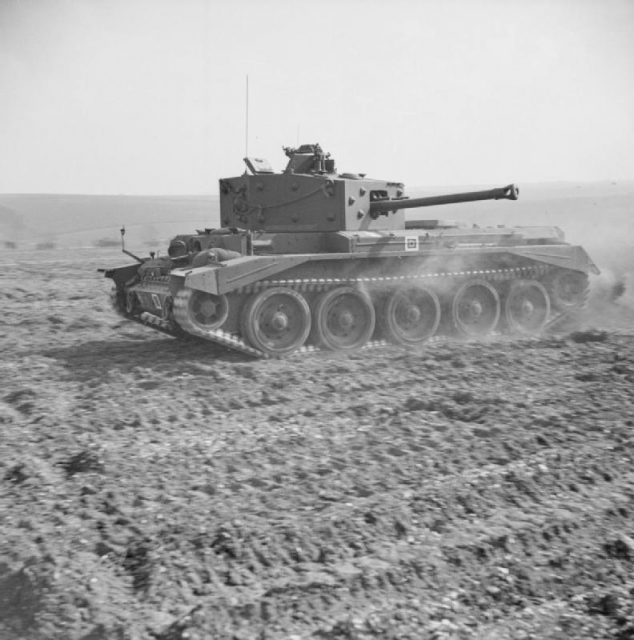
Sent into combat on the continent in 1944-5, it was under-gunned compared with German machines, but its agility and speed proved valuable, especially once the enemy were in retreat in the final months of the war.
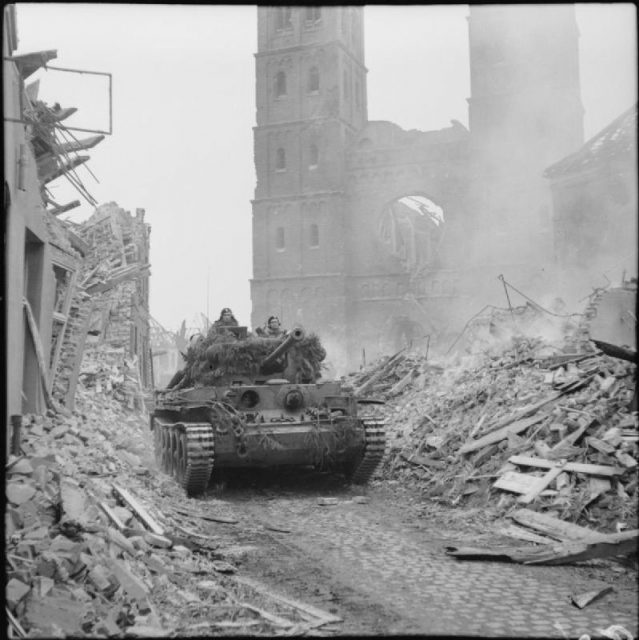
A King’s Royal Hussars Cromwell of the 11th armoured division advances through Uedem, Germany, 28 February 1945
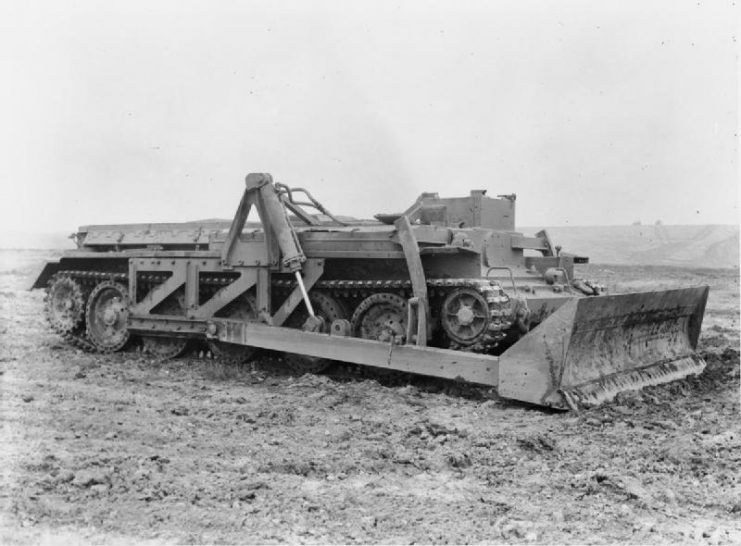
Centaur Dozer with hydraulic operated blade
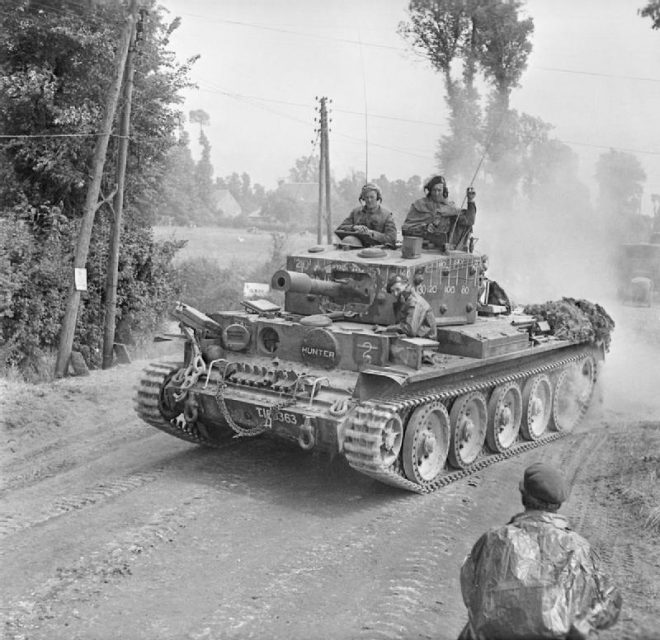
Centaur IV of Royal Marine Armoured Support Group, Normandy 13 June 1944
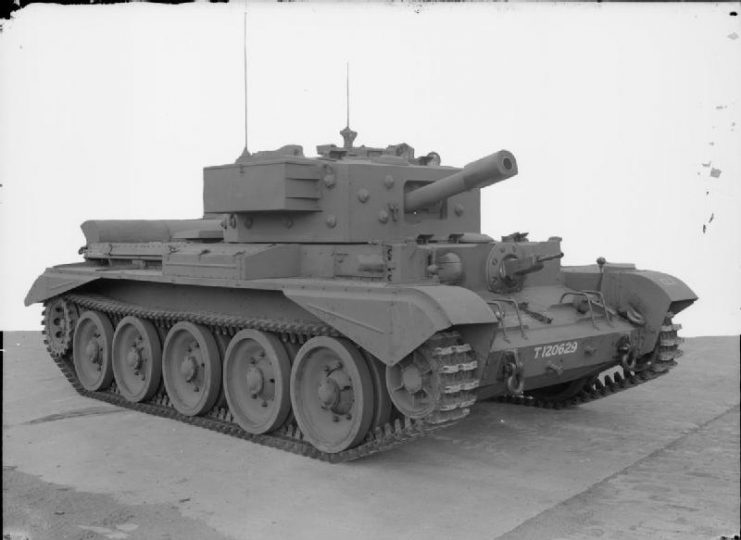
Cromwell VI with type F hull, showing driver’s side-opening hatch and turret storage bins
Challenger
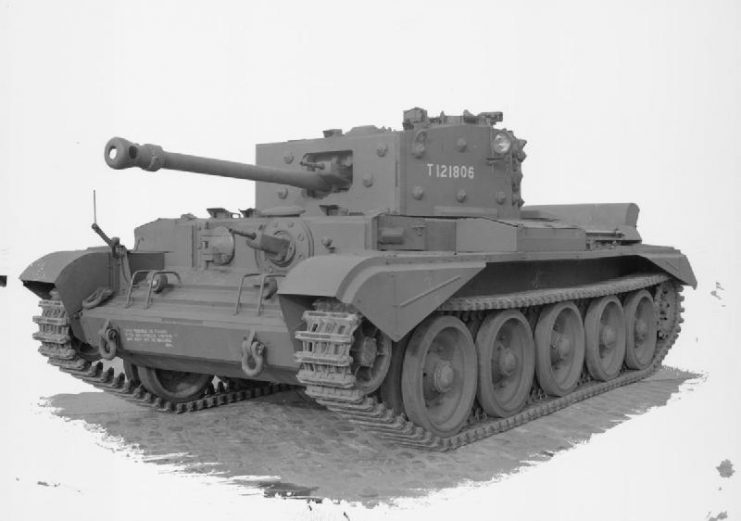
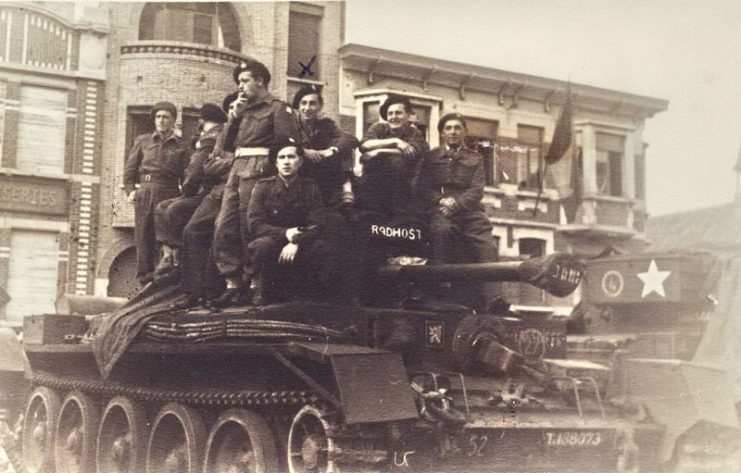
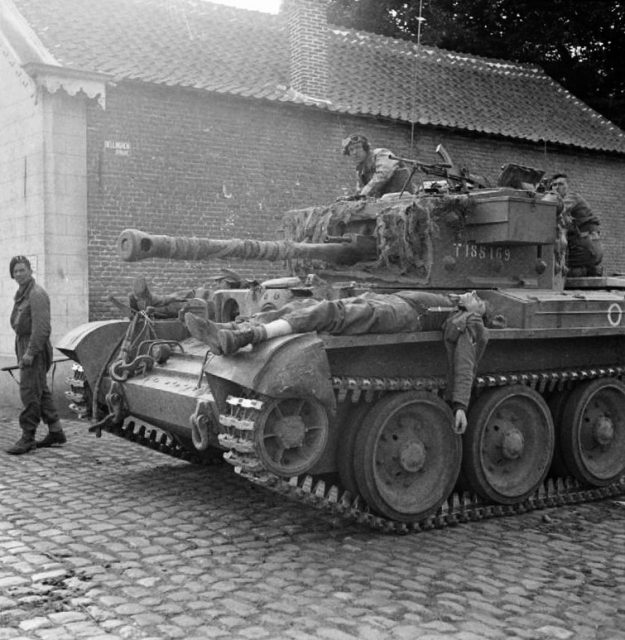
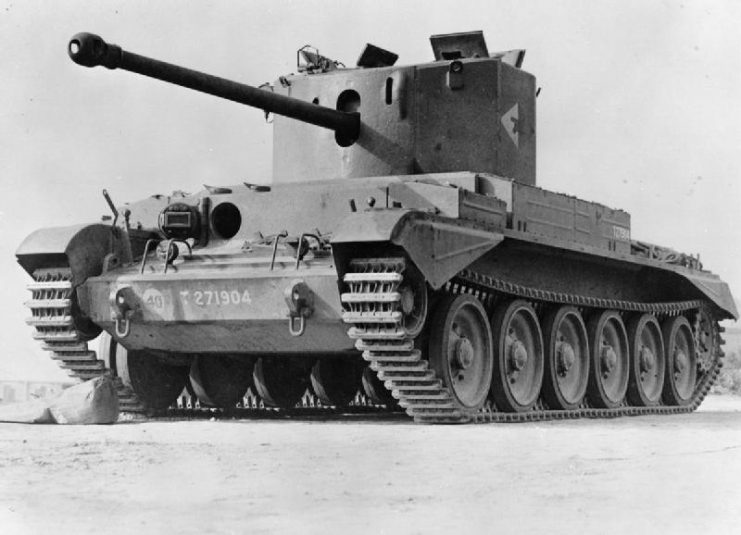
By 1942, one of the main problems with British tanks was their inadequate firepower. To counter this, the Birmingham Carriage & Wagon Company created the Challenger, which had a modified Cromwell chassis with a 17-pounder gun.
The turret had to be higher to house the weapon and the chassis was lengthened to accommodate this, with the extra weight impeding performance. As a result, the Challenger was vulnerable in battle, so it was generally used in support of other cruisers, using its heavy weapon as a tank killer.
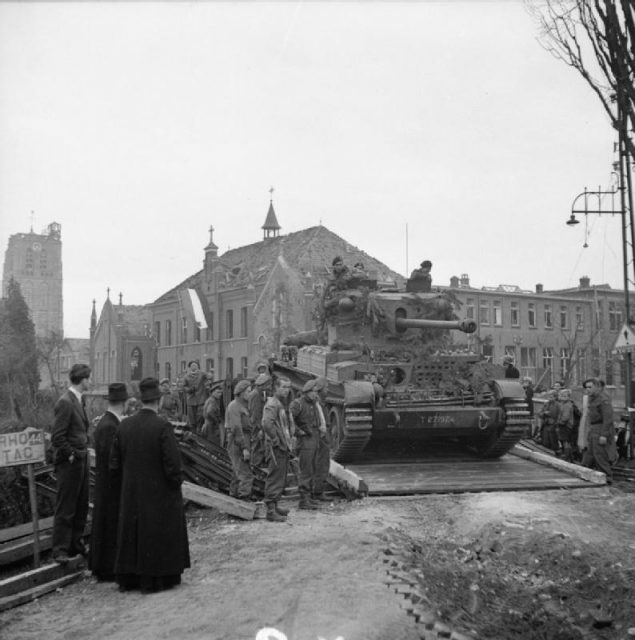
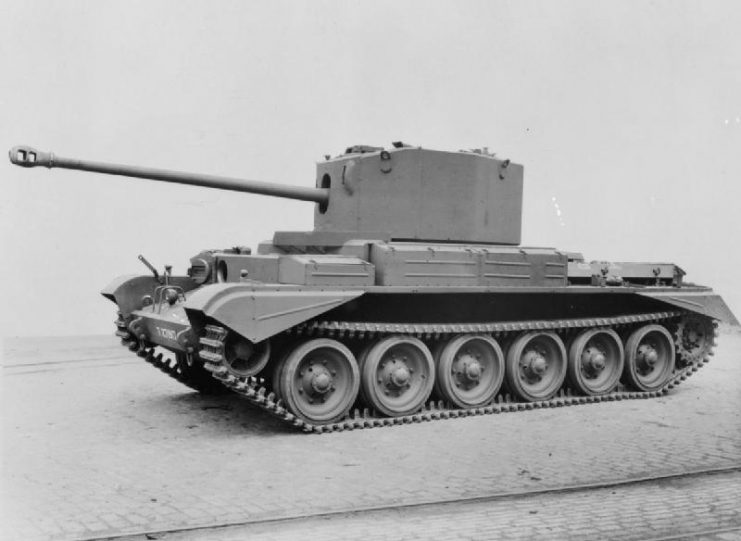
Cruiser tank Challenger (A30)
Comet
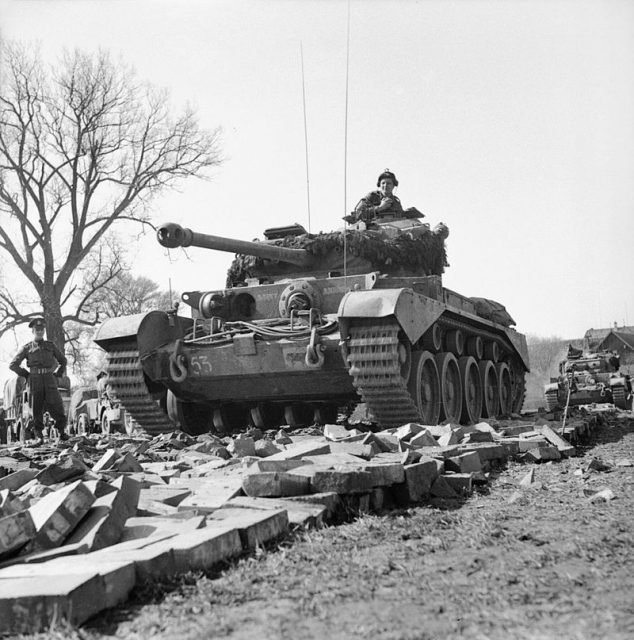
To counter the problems faced by the Challenger, another tank was developed, again fitting a new gun on top of a Cromwell chassis. This became the Comet, which carried a 77mm gun – effectively a lighter version of the 17-pounder. It didn’t enter combat until the final months of the war, but proved popular with crews, as it was reliable and agile.
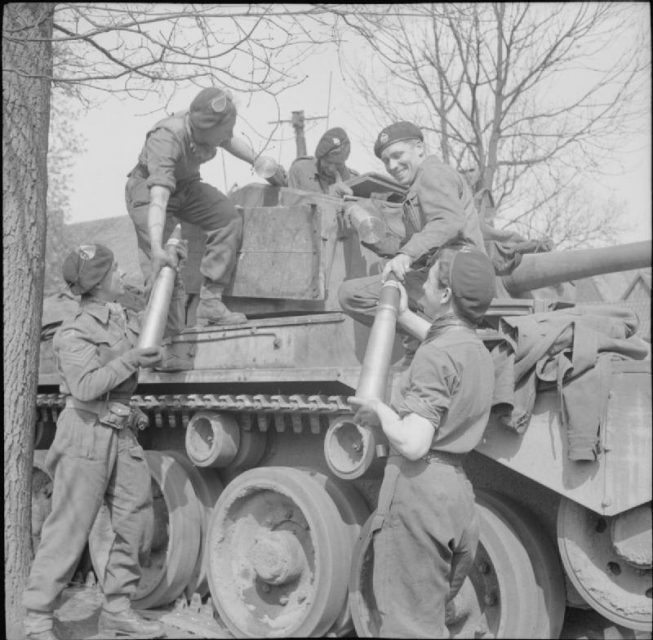
A Comet’s crew loading 77 mm HV ammunition into their tank.
Firefly
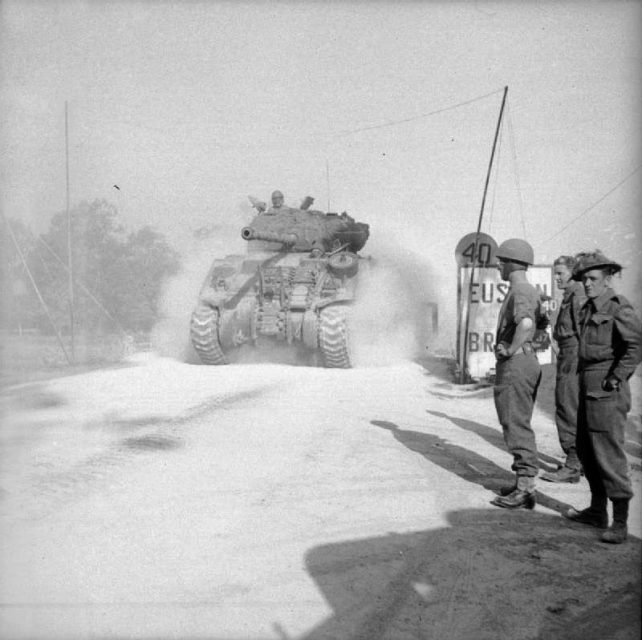
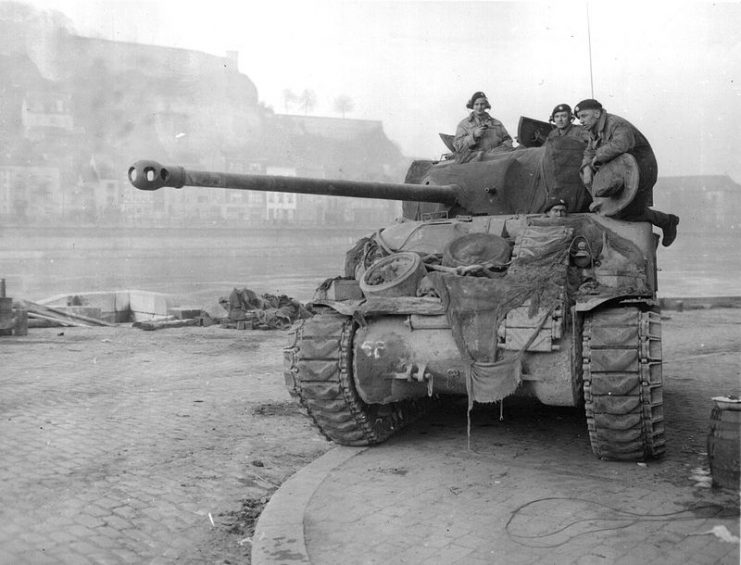
An American Sherman tank upgraded with a British 17-pounder gun, the Firefly was developed to help Allied tankers take on German Tigers and Panthers.
Used by both British and American forces in the invasion of Europe, it was so effective that it became a prime target for the Germans, so camouflage paint was used to disguise its long barrel.
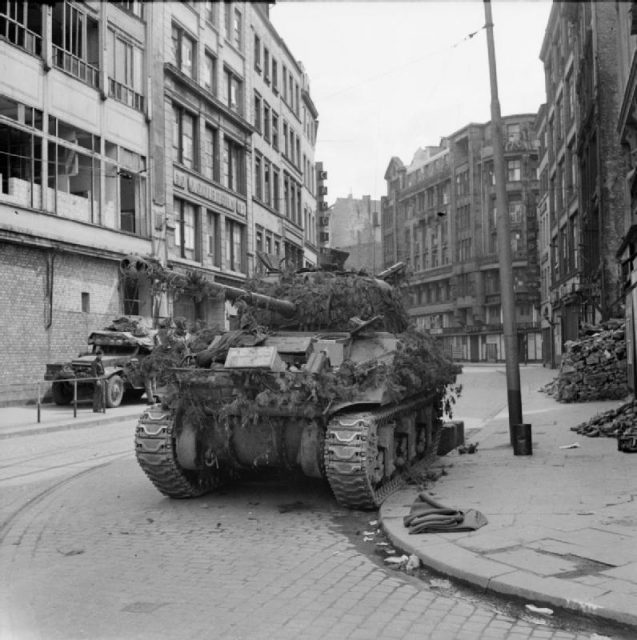
A Sherman Firefly of 7th Armoured Division in Hamburg, 4 May 1945
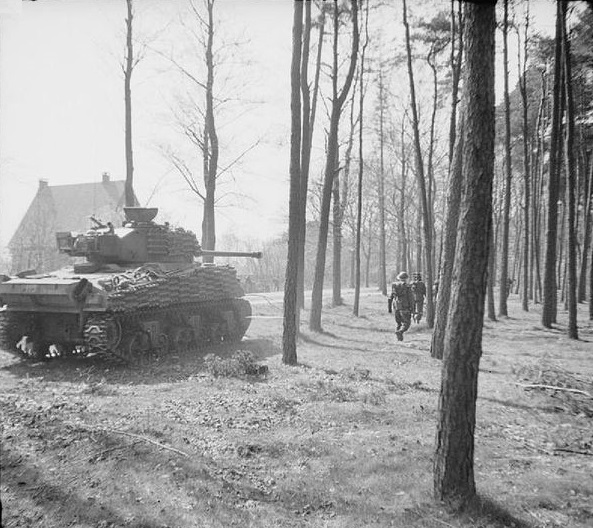
Firefly of 5th Canadian Armoured Division assists troops of 49th (West Riding) Division to clear the Germans from Ede, Netherlands, 17 April 1945
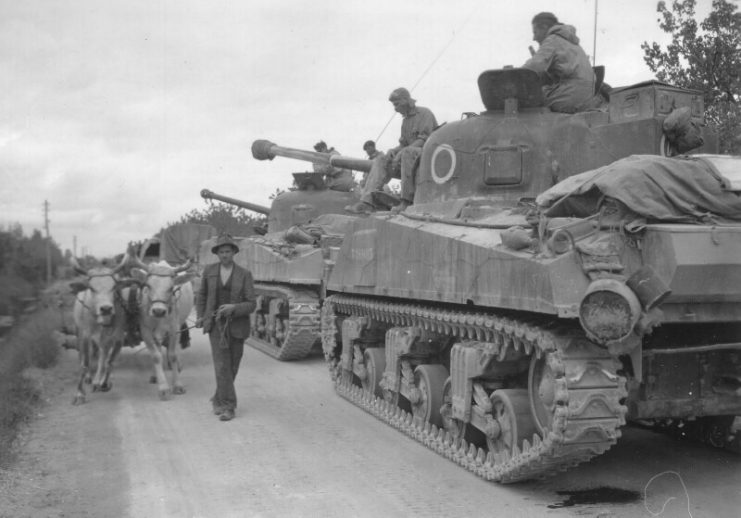
Firefly tanks of the South African Pretoria Regiment, Italy 1944
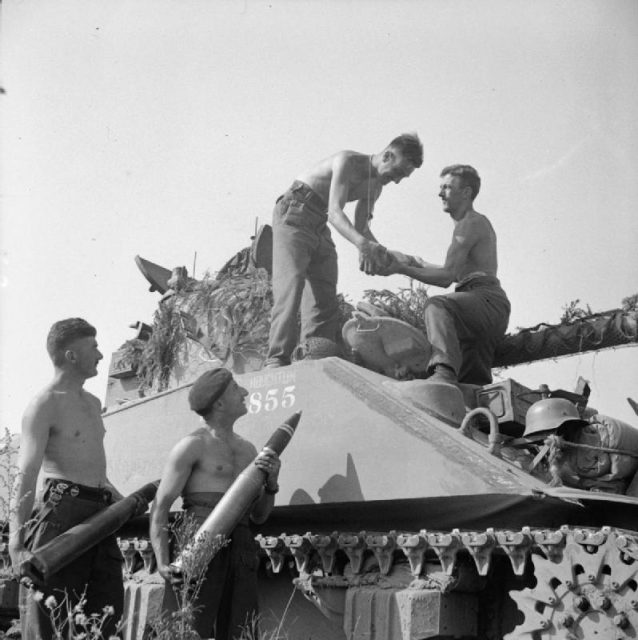
Loading 17-pounder rounds into a Firefly
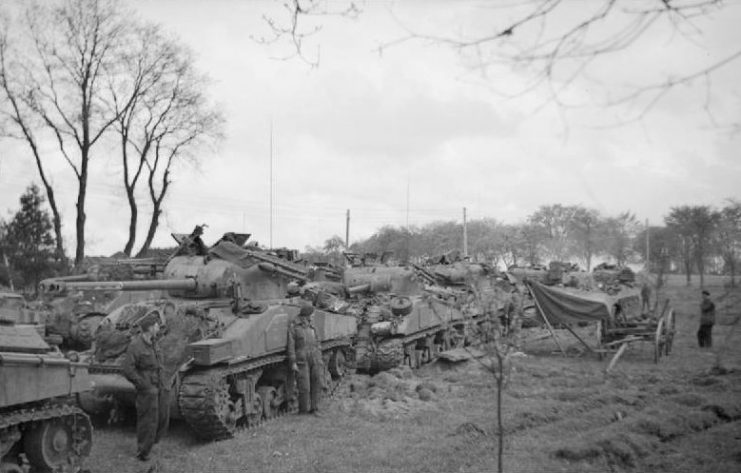
Sherman Fireflies with “60 lb” air-to-ground rockets on rails attached to the turret
Tetrarch
Light enough to be transported by air, the Tetrarch was carried into action by a Hamilcar glider. It was used in the invasion of Madagascar in 1942 and Normandy in 1944, giving airborne troops valuable armored support.
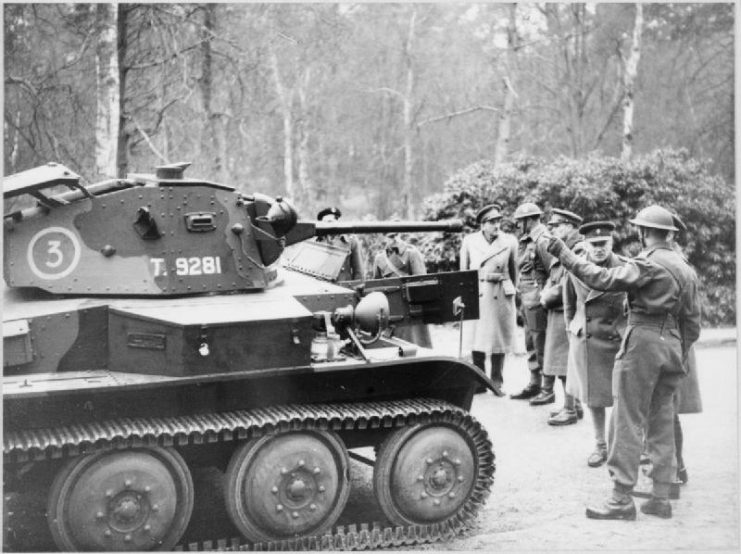
General Sir Alan Brooke, Commander-in-Chief Home Forces, inspecting a Light Tank Mk VII (Tetrarch) at the Army Staff College, 1941
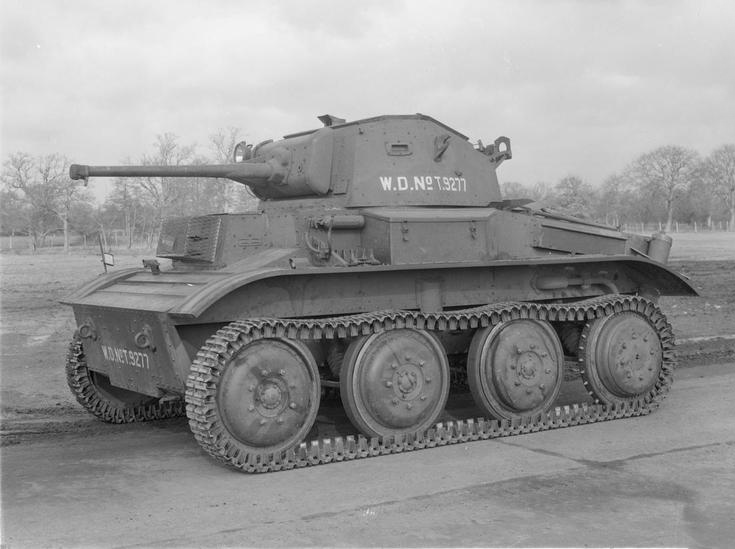
Mk VII Light Tank ‘Tetrarch’
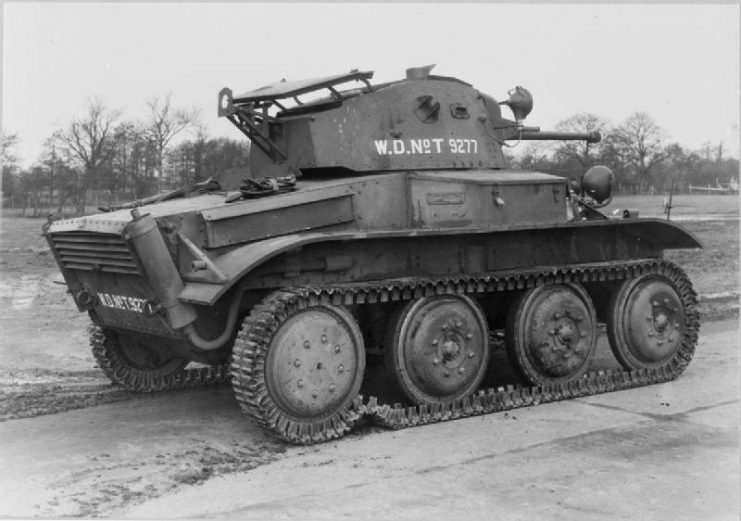
Side and rear view of a Tetrarch light tank
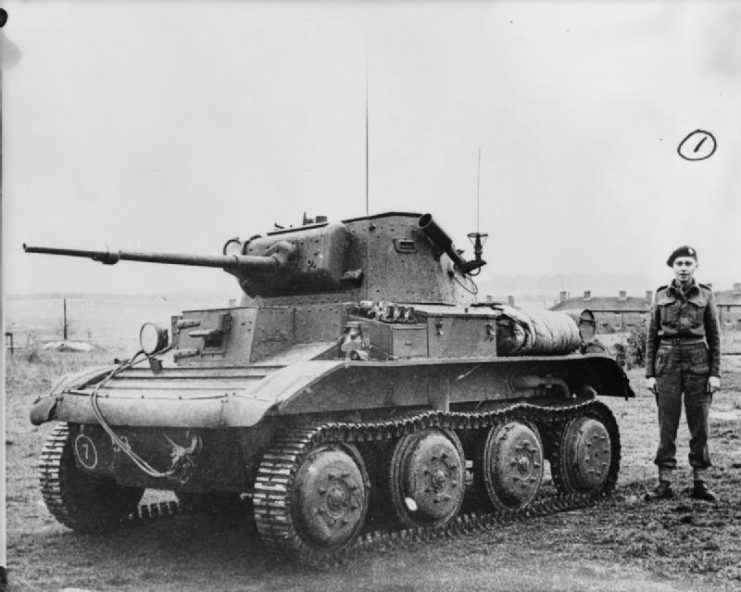
Tetrarch with Littlejohn (or Janeček) adaptor