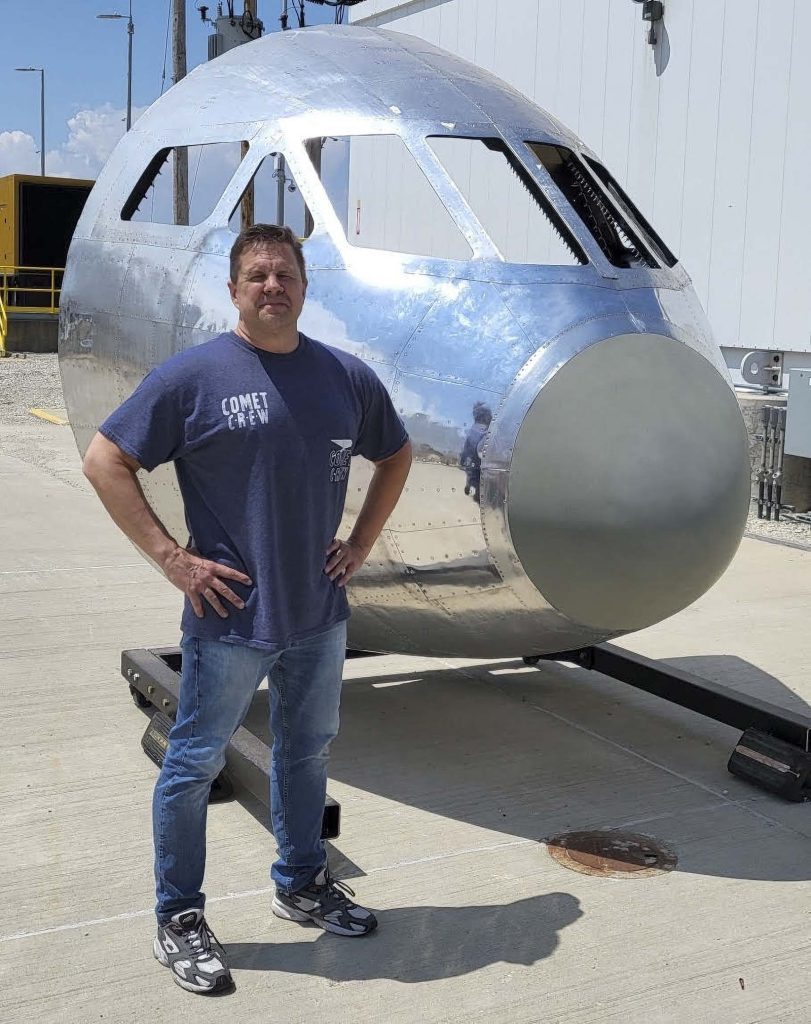
The de Havilland Comet revolutionized air travel as the world’s first commercial jet airliner, offering unmatched speed and comfort. Despite early successes, fatal design flaws led to catastrophic failures and its eventual decline. Today, its legacy lives on through a passionate effort to recreate the aircraft’s forward fuselage, preserving a pivotal chapter in aviation history.
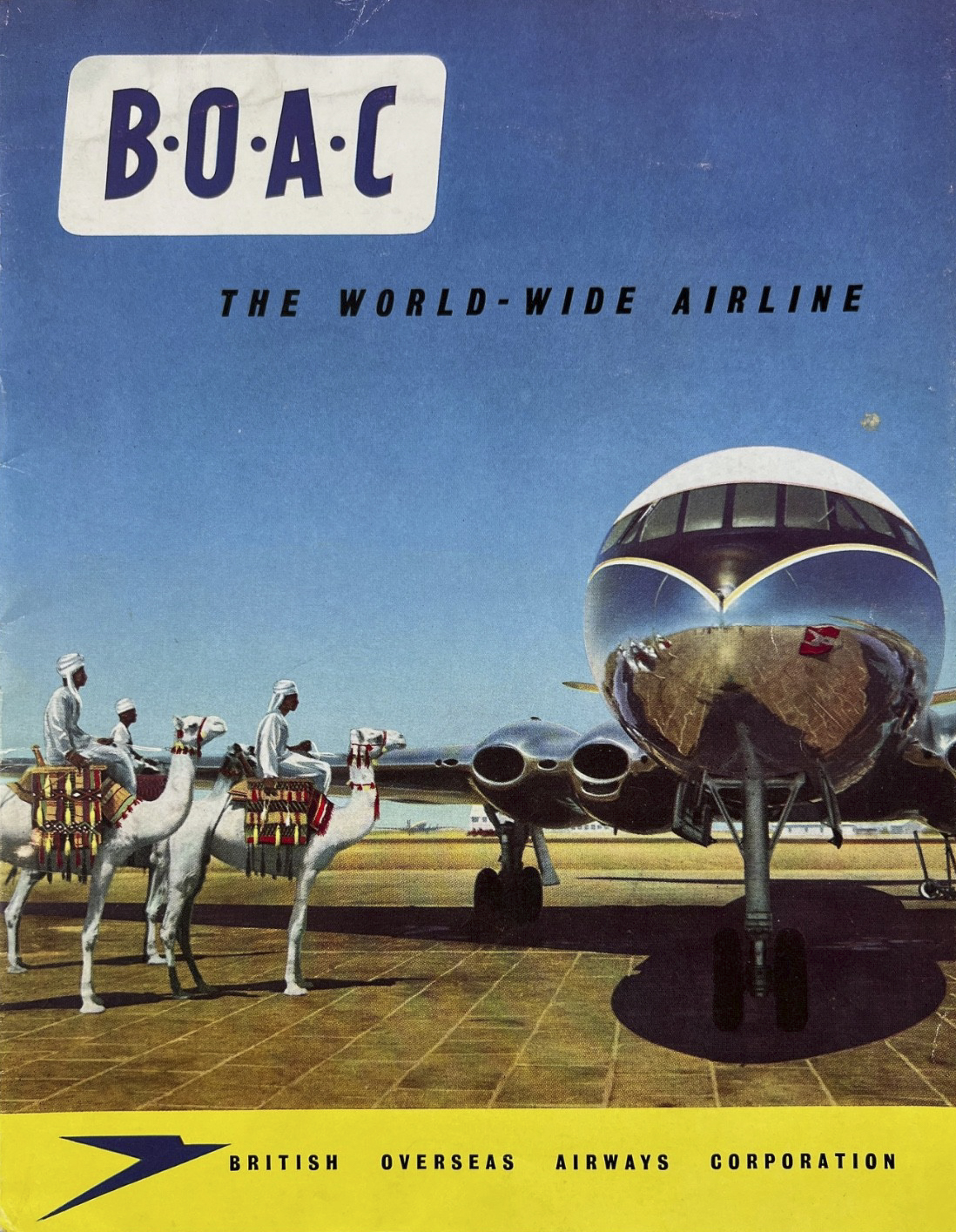
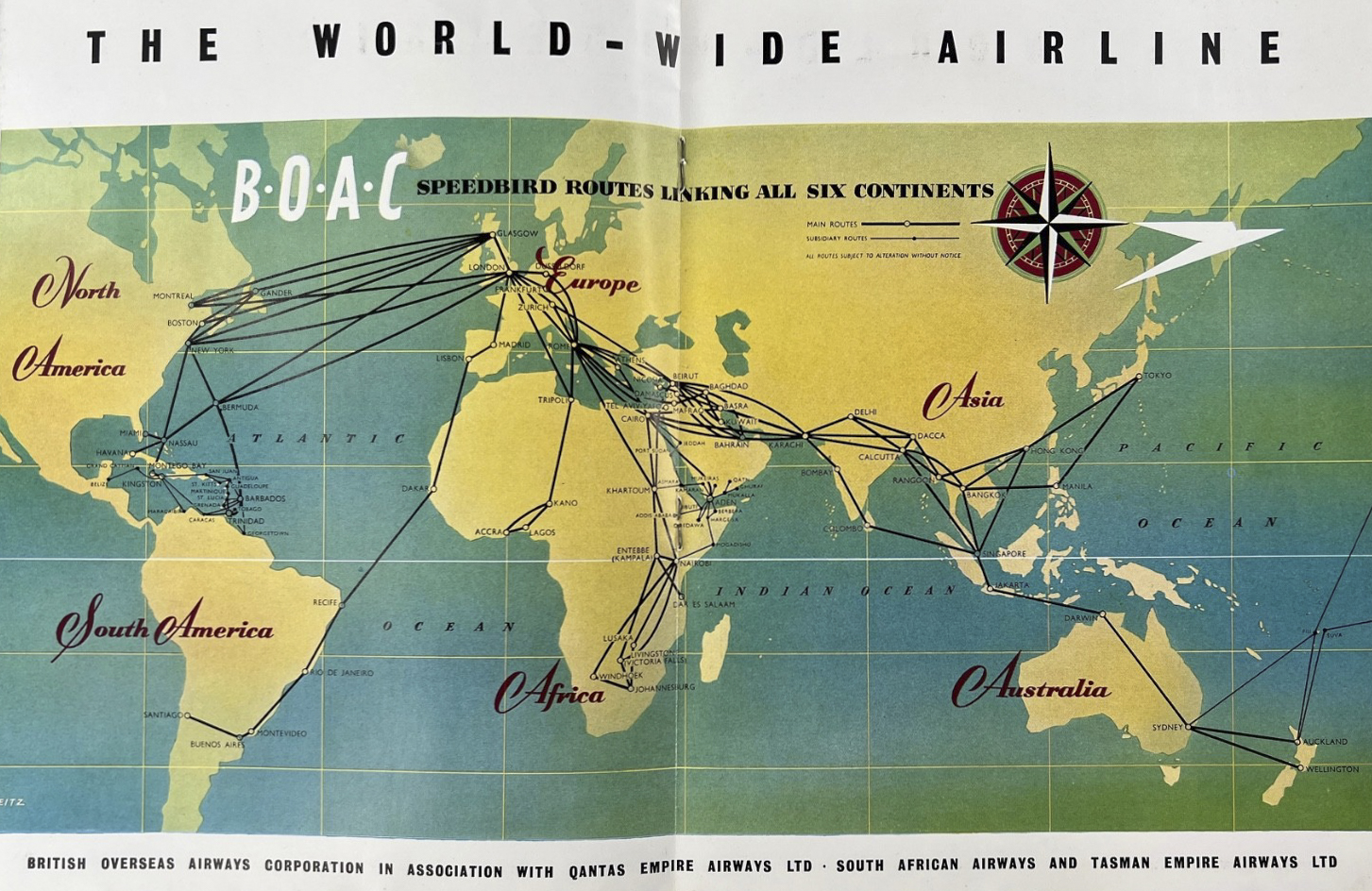
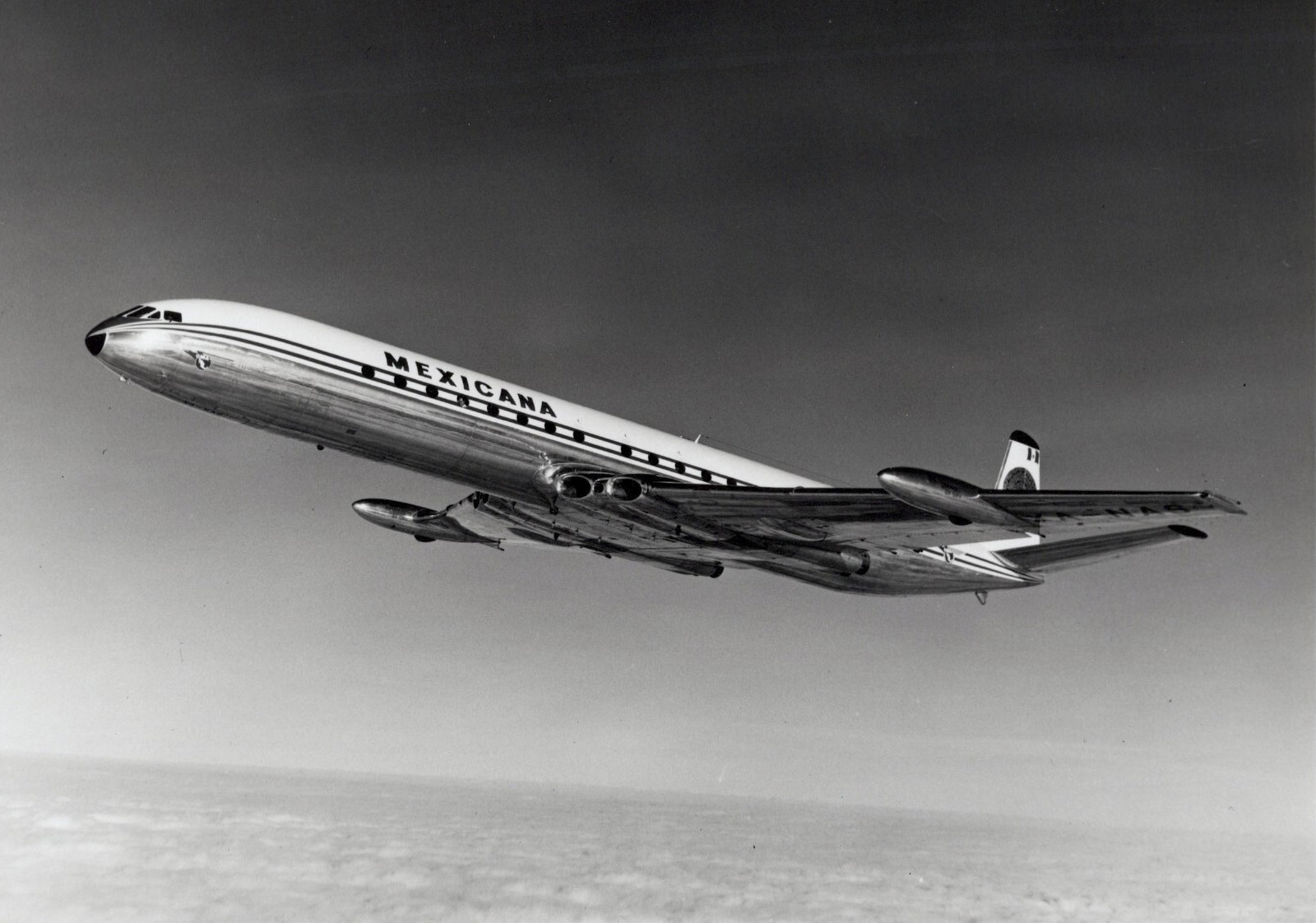
July 29, 1949 marked the maiden flight of the world’s first commercial jet-powered airliner, the de Havilland DH.106 Comet, with the legendary WWII night-fighter ace, John “Cats Eyes” Cunningham, guiding the prototype aloft from Hatfield Aerodrome in Hertfordshire, England. After a significant period of testing, this sleek, elegant and revolutionary design entered service with the British Overseas Airways Corporation (better known as BOAC) on May 2, 1952, more than six years ahead of its closest rival, the Boeing 707. Initial passenger reviews were incredibly positive, since the aircraft was so much quieter, smoother-flying and faster than the propeller-driven airliners it was intended to replace.
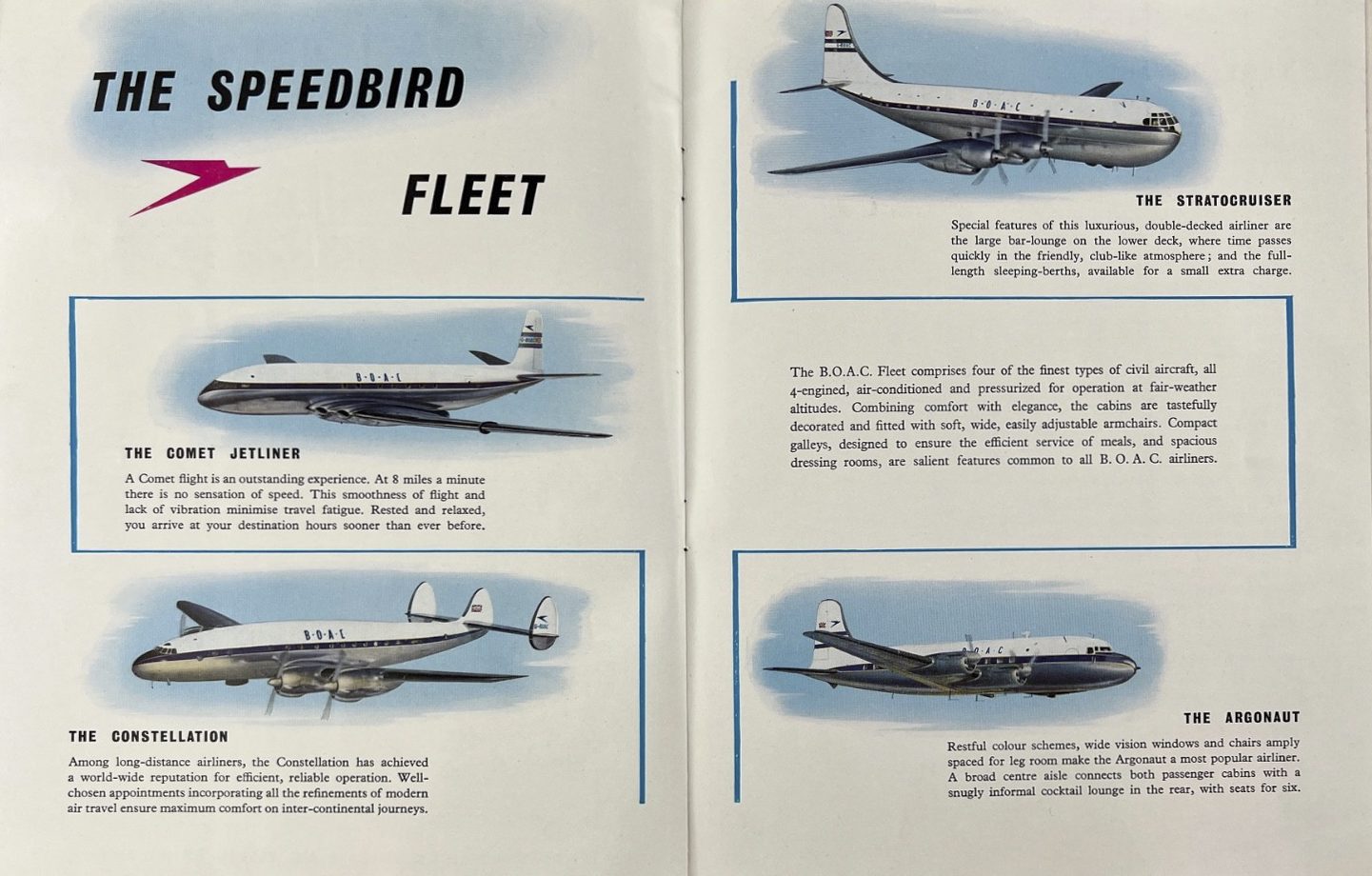
However, such pioneering, technological leaps forward often arrive with unanticipated and sometimes catastrophic flaws. Tragically, such was the case with the Comet. Within the first year of flight operations, two aircraft crashed due to a wing design error, while a third broke up after flying through a severe thunderstorm shortly after takeoff. Airliner accidents were relatively frequent in those days so, while troubling, these incidents did not immediately cause operators (nor aviation authorities) to suspend Comet flights. However, a sequence of two fatal accidents resulting from in-flight structural failure during early 1954 saw the global Comet fleet grounded, and the production line halted, until a review board could determine the cause. Despite extensive physical testing, including pressure hull cycling, de Havilland’s engineers had missed a mistake in the forward, lefthand escape hatch cutout. The fuselage skin in this area was of insufficient thickness to withstand the repeated stresses of pressurized flight and caused the airframe to rip apart after about three thousand flight cycles.
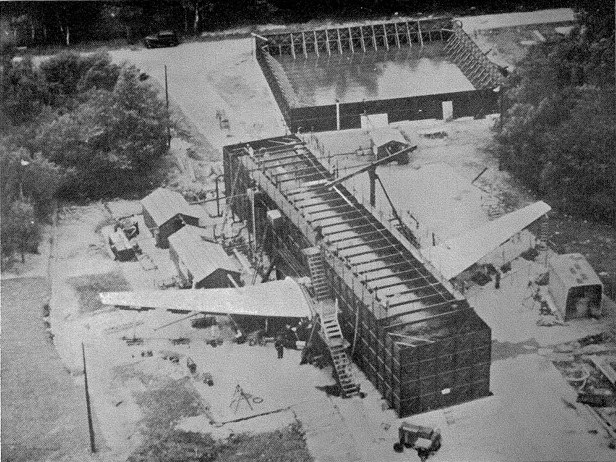
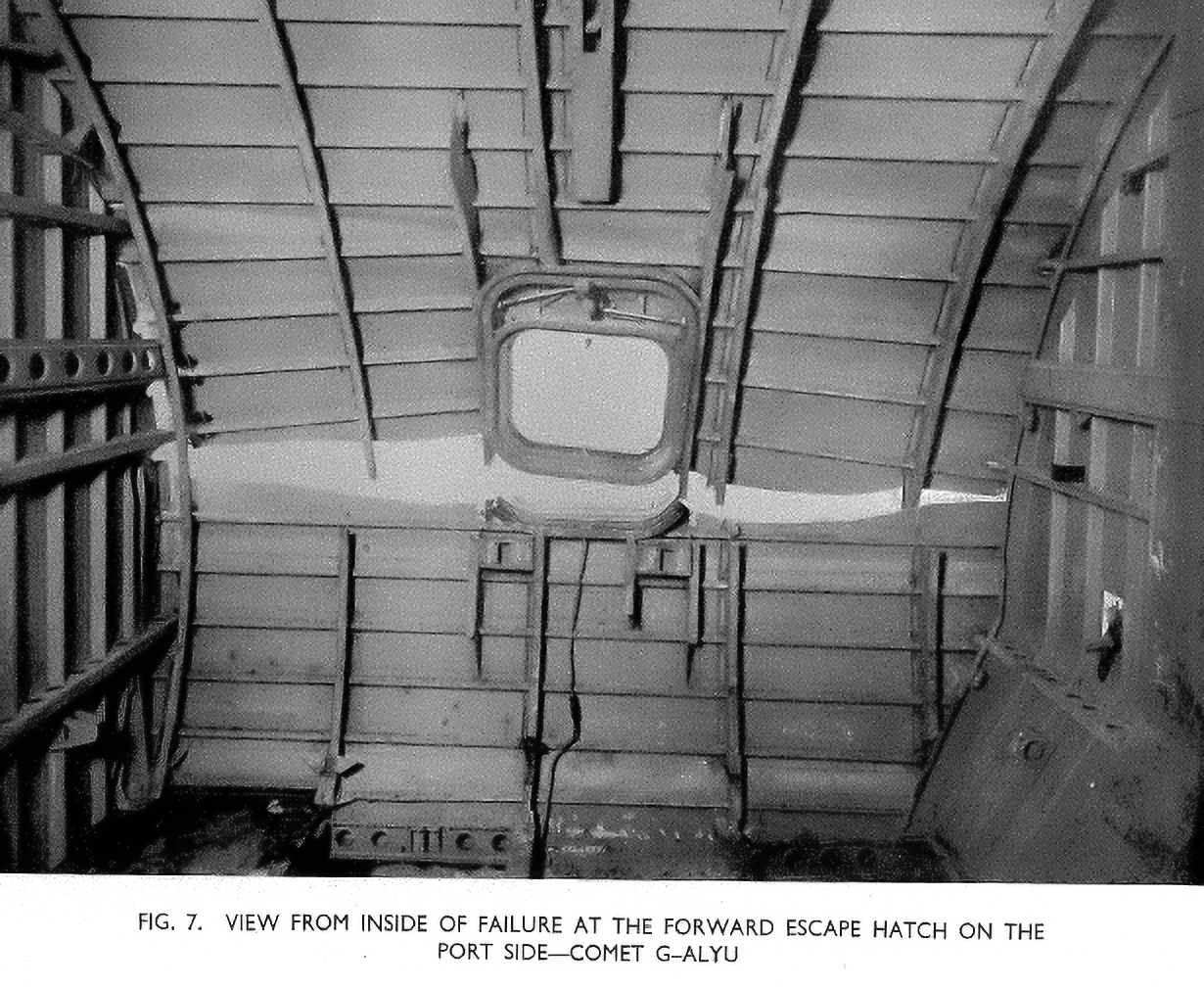
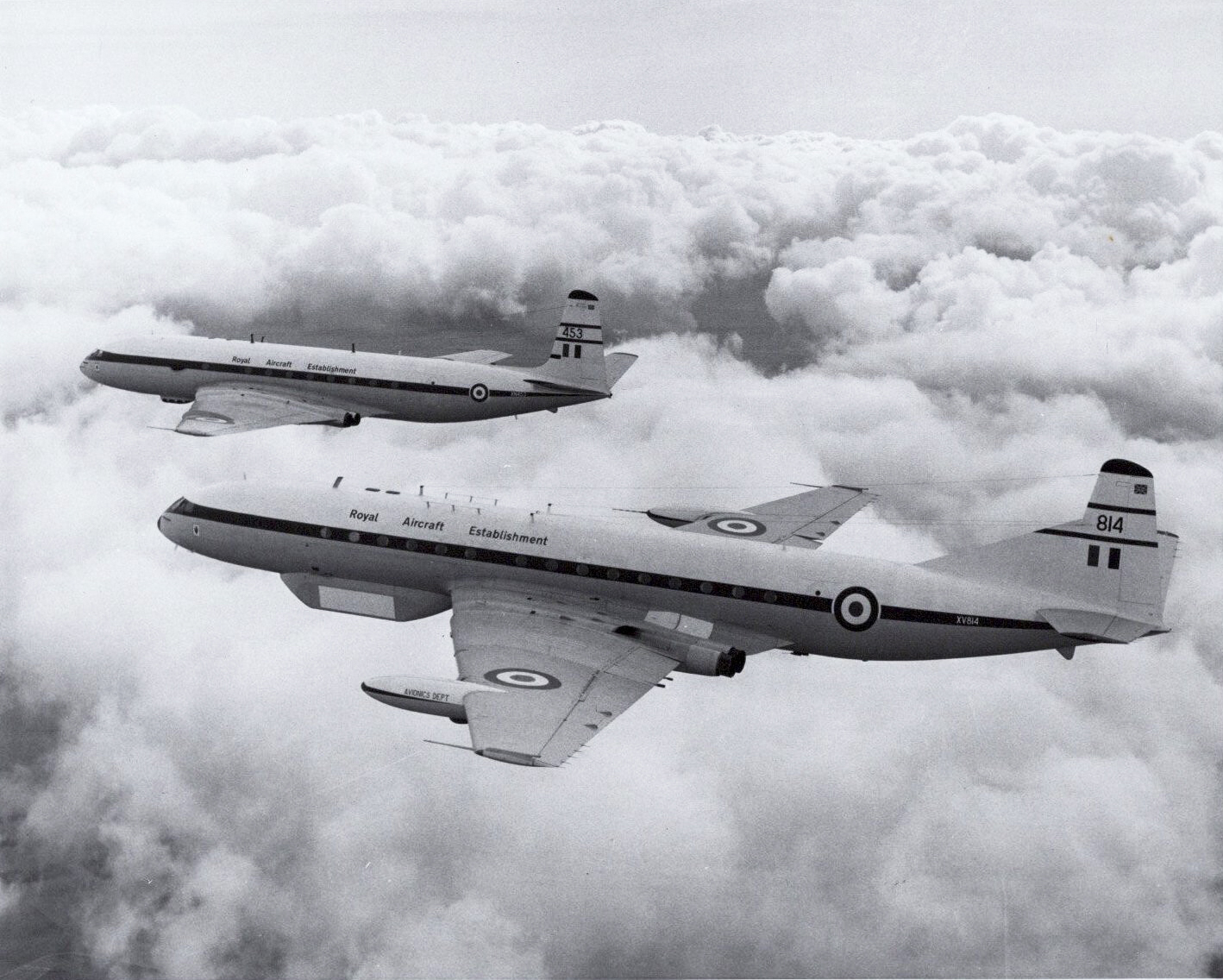
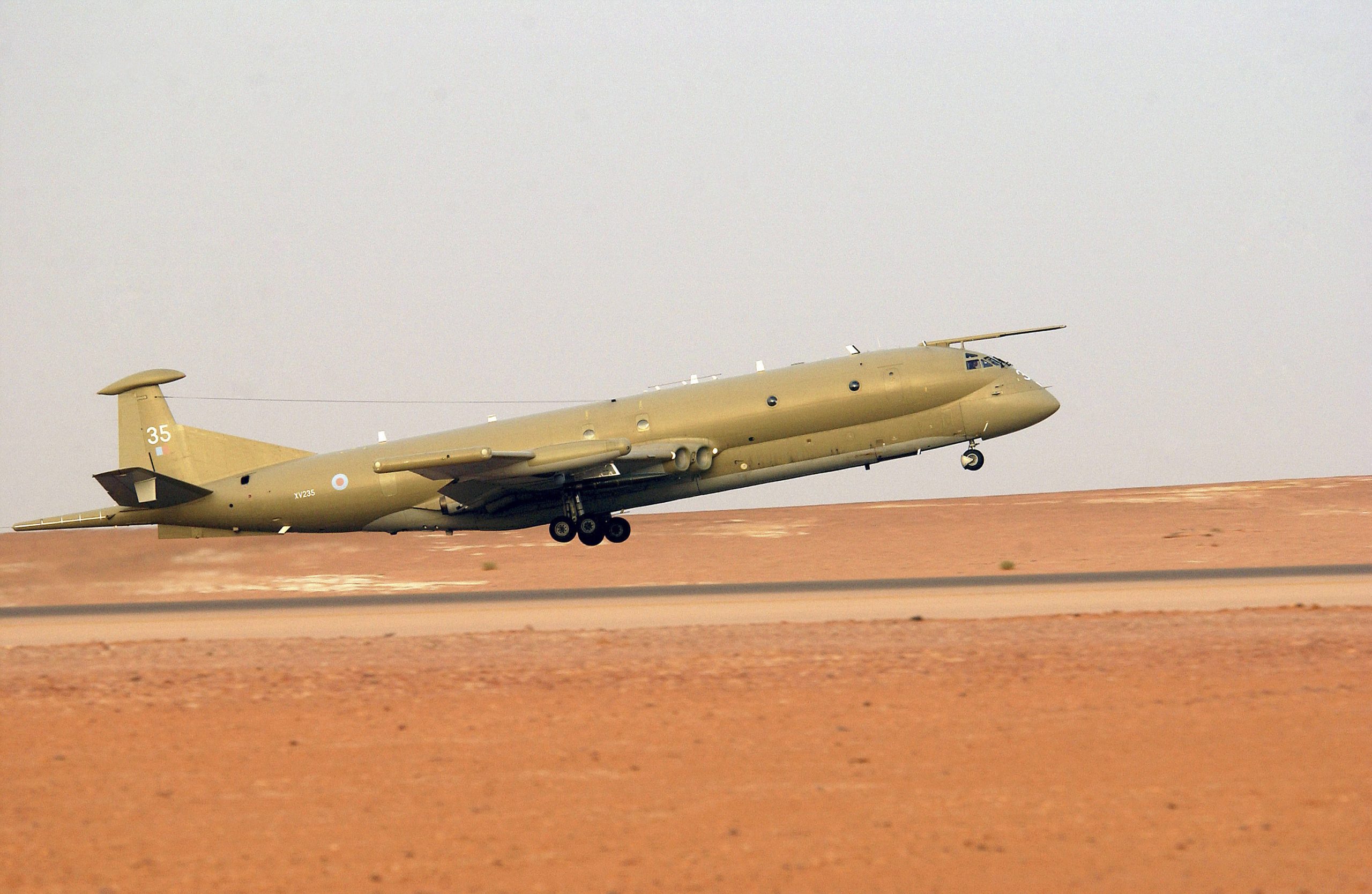
While de Havilland came up with a method for ameliorating this issue and resumed production relatively quickly, the aircraft’s reputation had suffered a near-fatal blow. Furthermore, significantly superior jet airliners like Boeing’s 707 and the Douglas DC-8 were already in production by that point, and soon swallowed up most orders which the Comet had hoped to fulfill. While the Comet remained in production until 1964, only 106 examples (including prototypes) were built. A military adaptation, however, did result in the superlative Hawker Siddeley Nimrod maritime patrol aircraft, which flew with the RAF from October 1969 until the type’s retirement in June 2011.
Despite the Comet’s failings, it still holds a special place in history… not to mention the hearts of many aviation enthusiasts around the world, and especially those in the nation of its birth. That being said, we at Vintage Aviation News were surprised to learn about a dedicated Comet devotee named Steve McNeilly who is building the forward fuselage of a Comet 1 in southeast Wisconsin – from scratch!
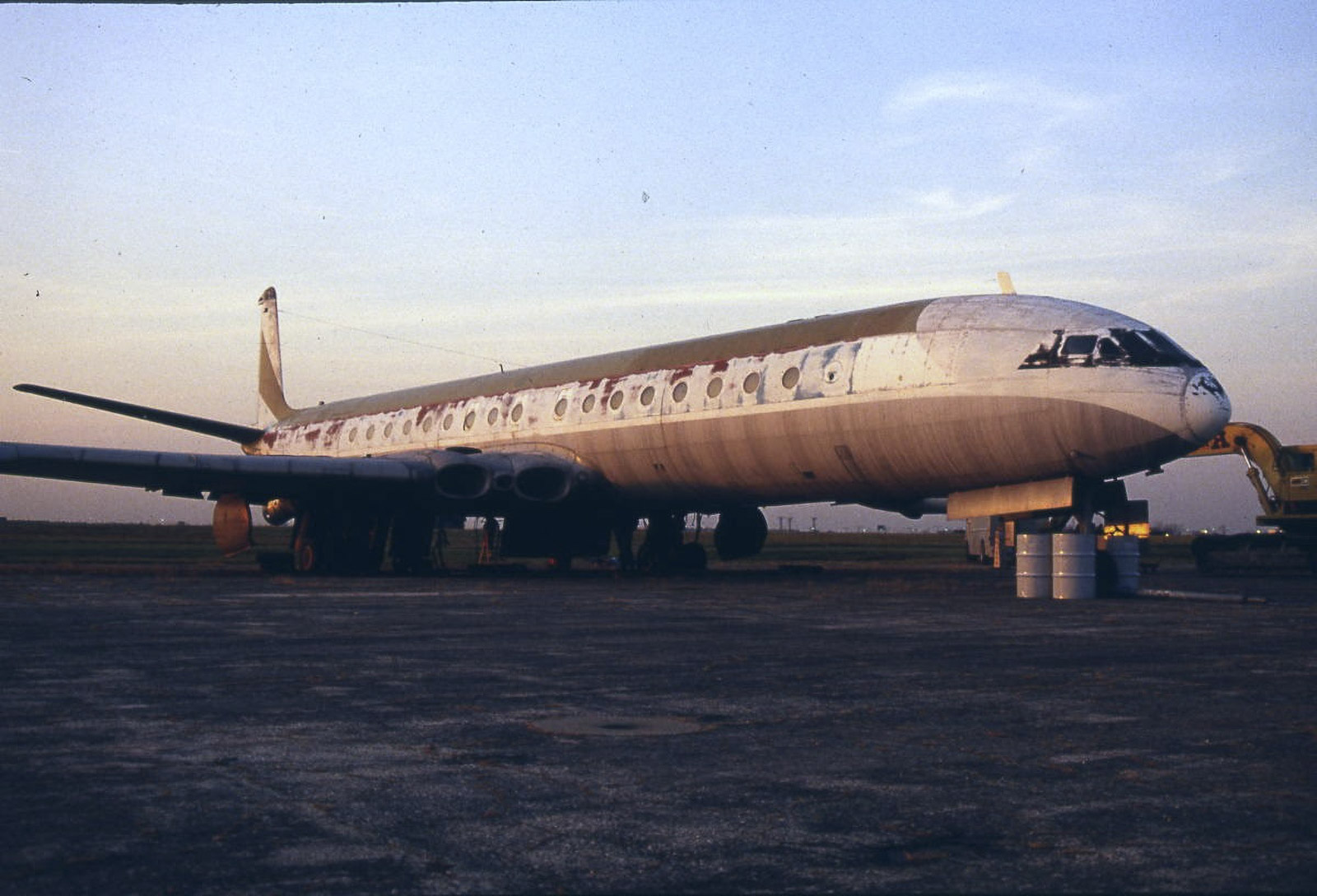
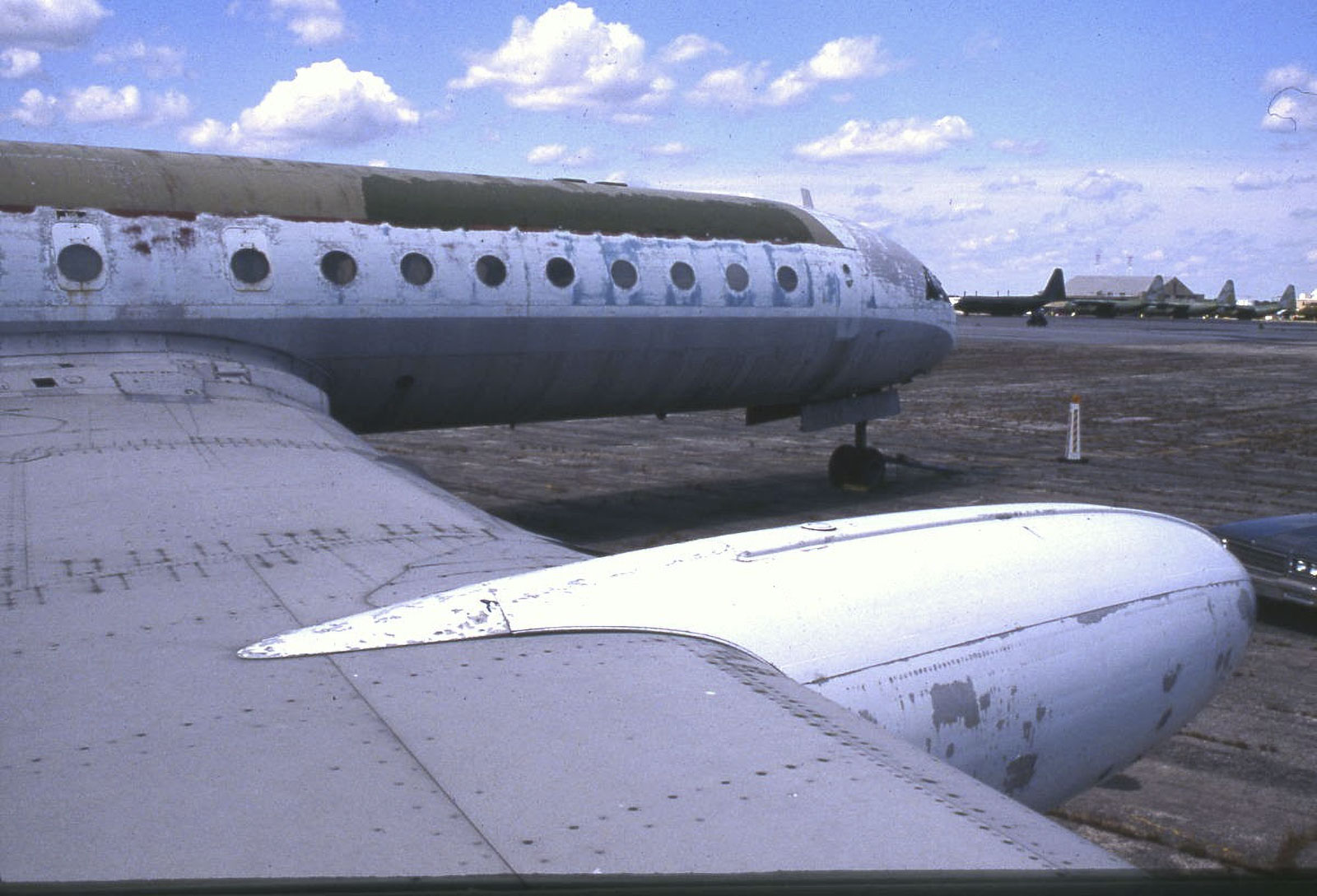
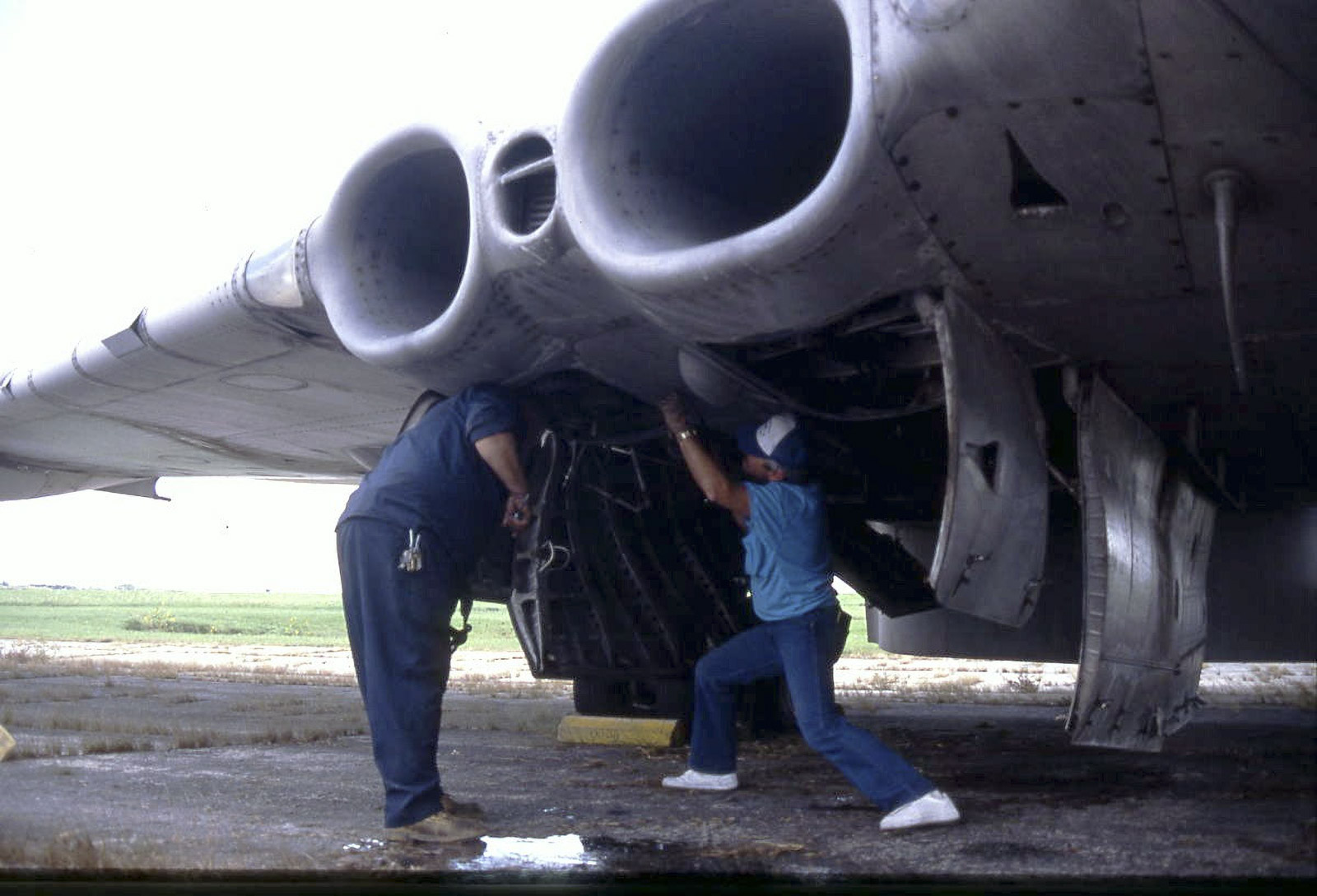
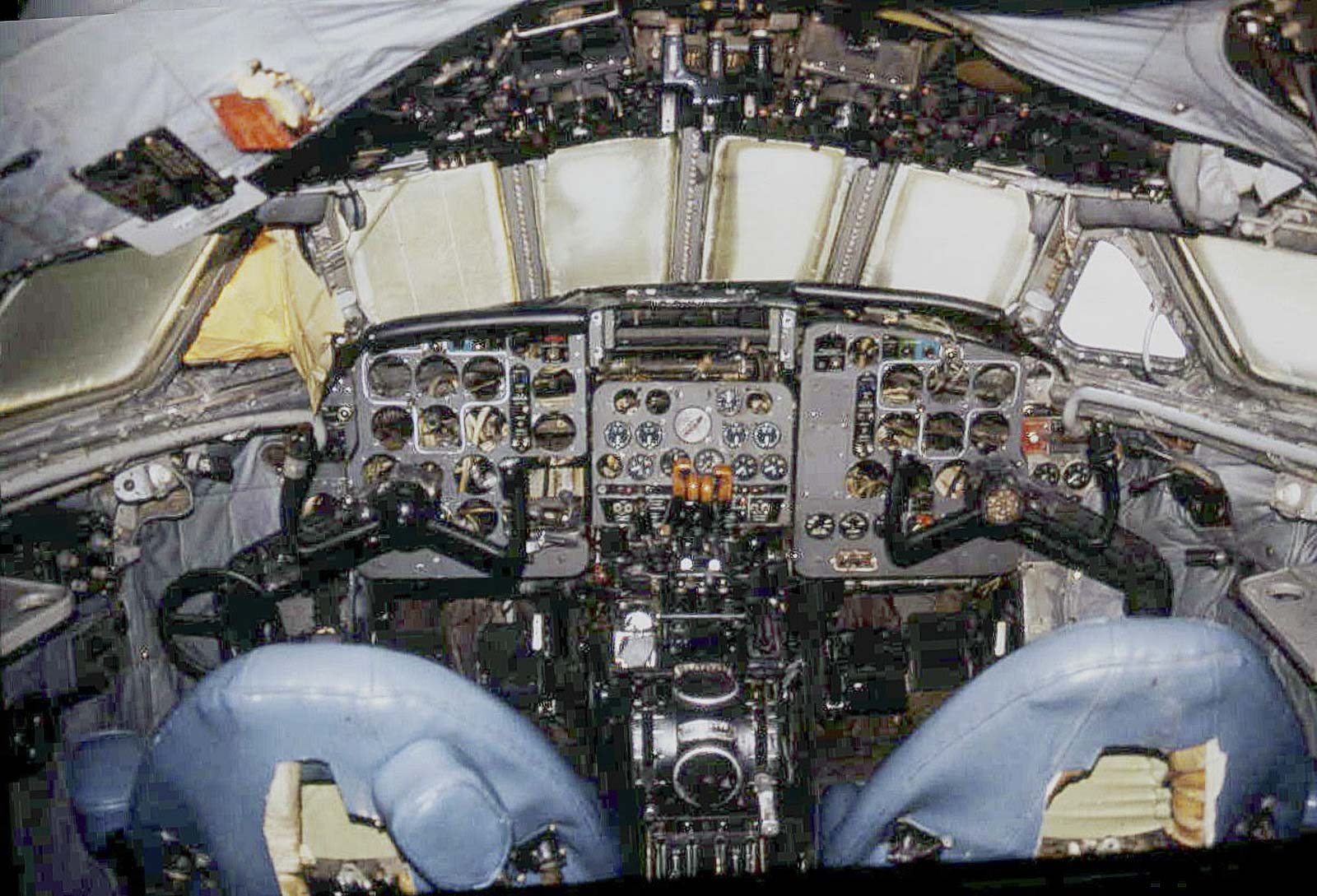
We recently had a conversation with McNeilly to learn more about his project, and what prompted his enthusiasm for the Comet. It turns out that his love for the type dates to 1987 when, as a teenager, he helped a team of volunteers from there Rotary Club of O’Hare disassemble a grounded, and by then derelict, former Mexicana de Aviación Comet 4C (XA-NAS) at O’Hare Airport. McNeilly noted, “It took four years to dismantle the aircraft, as the Smithsonian had expressed interest in taking it for eventual restoration. That never materialized, and by the early 1990s, the completely dismantled aircraft was cut up for scrap by the City of Chicago, with no warning.”
;
“As a teenager, I loved working on N999WA,” McNeilly continued. “It was like walking into another world. For decades, memories of [XA-NAS] at O’Hare made me wish the aircraft could have been saved. Now, as a Captain at a major airline, I had the resources to do the unthinkable; build a replica de Havilland Comet. But, time and money constraints have limited us to the first 30 feet of the fuselage.” “I chose to do a replica Comet 1, instead of a Comet 4C (like the one at O’Hare). The Comet 1 was iconic… it entered service as the world’s first jet airliner… I created all the technical drawings, based on photos and known measurements. Several friends in England helped me with technical data that they had access to.” “I started work in May 2022, cutting plywood for the nose jig, and then cutting aluminum and countersinking thousands of holes to be flush-riveted. The first stage was to build the nose production jig.”
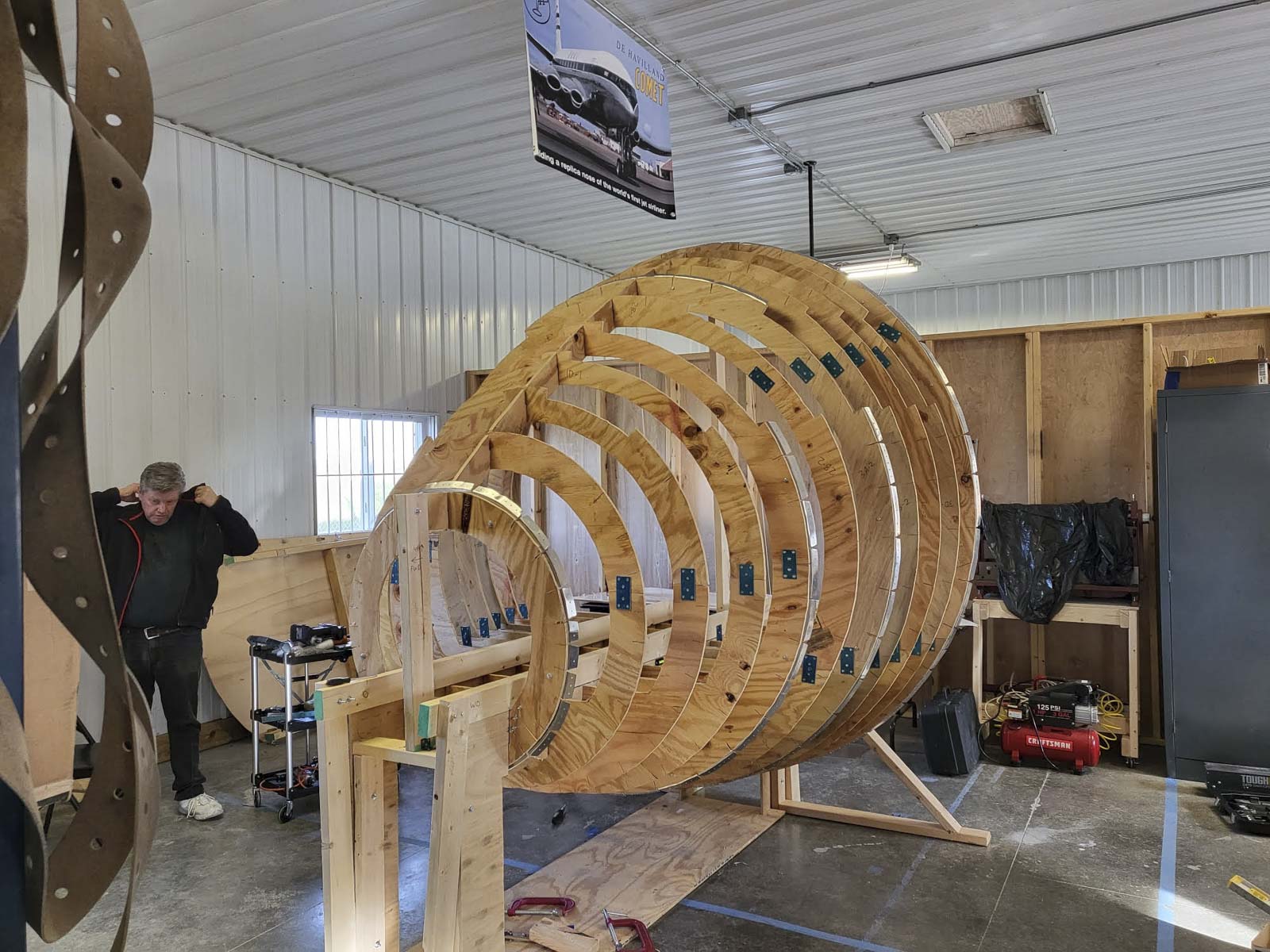
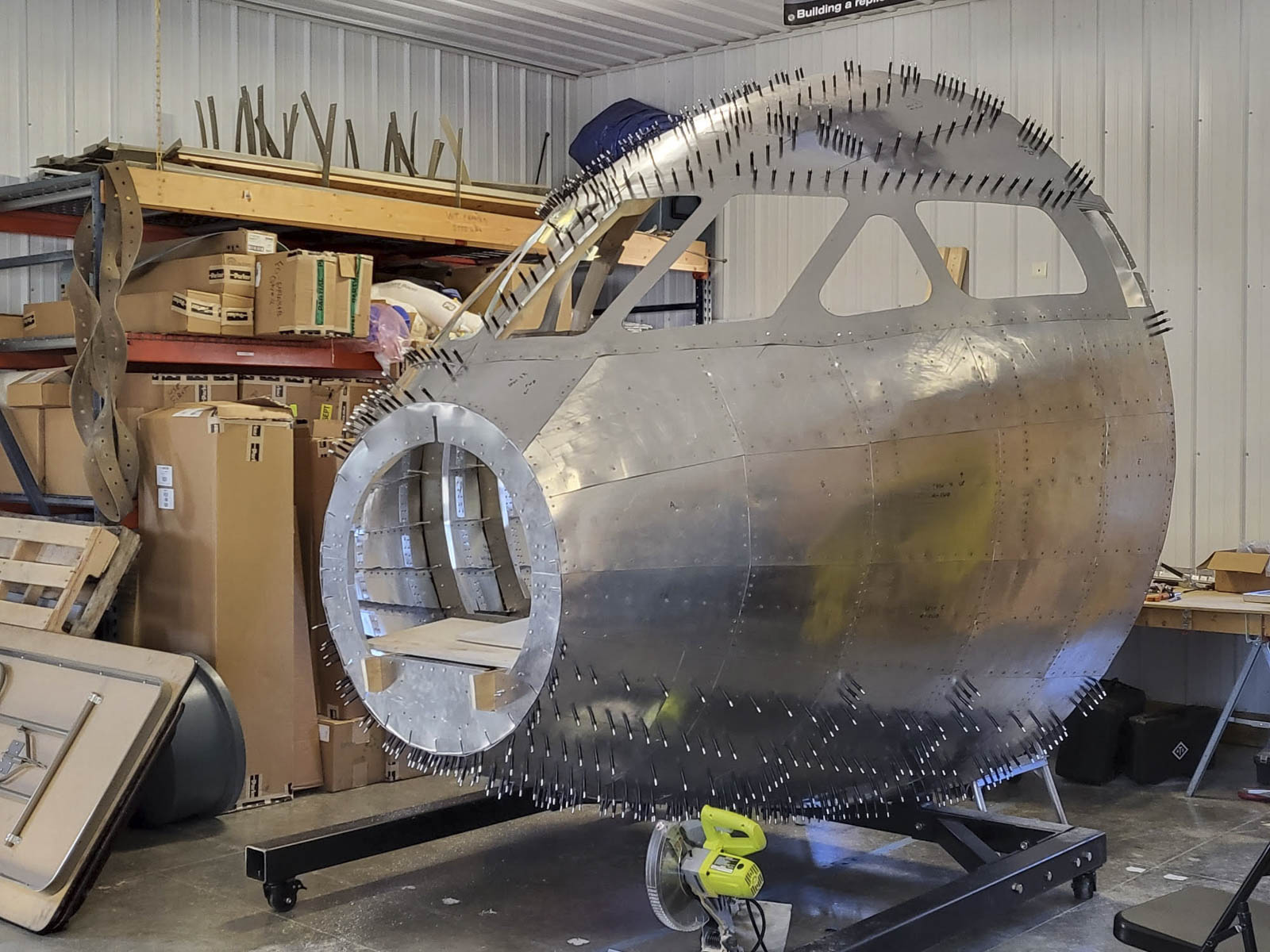
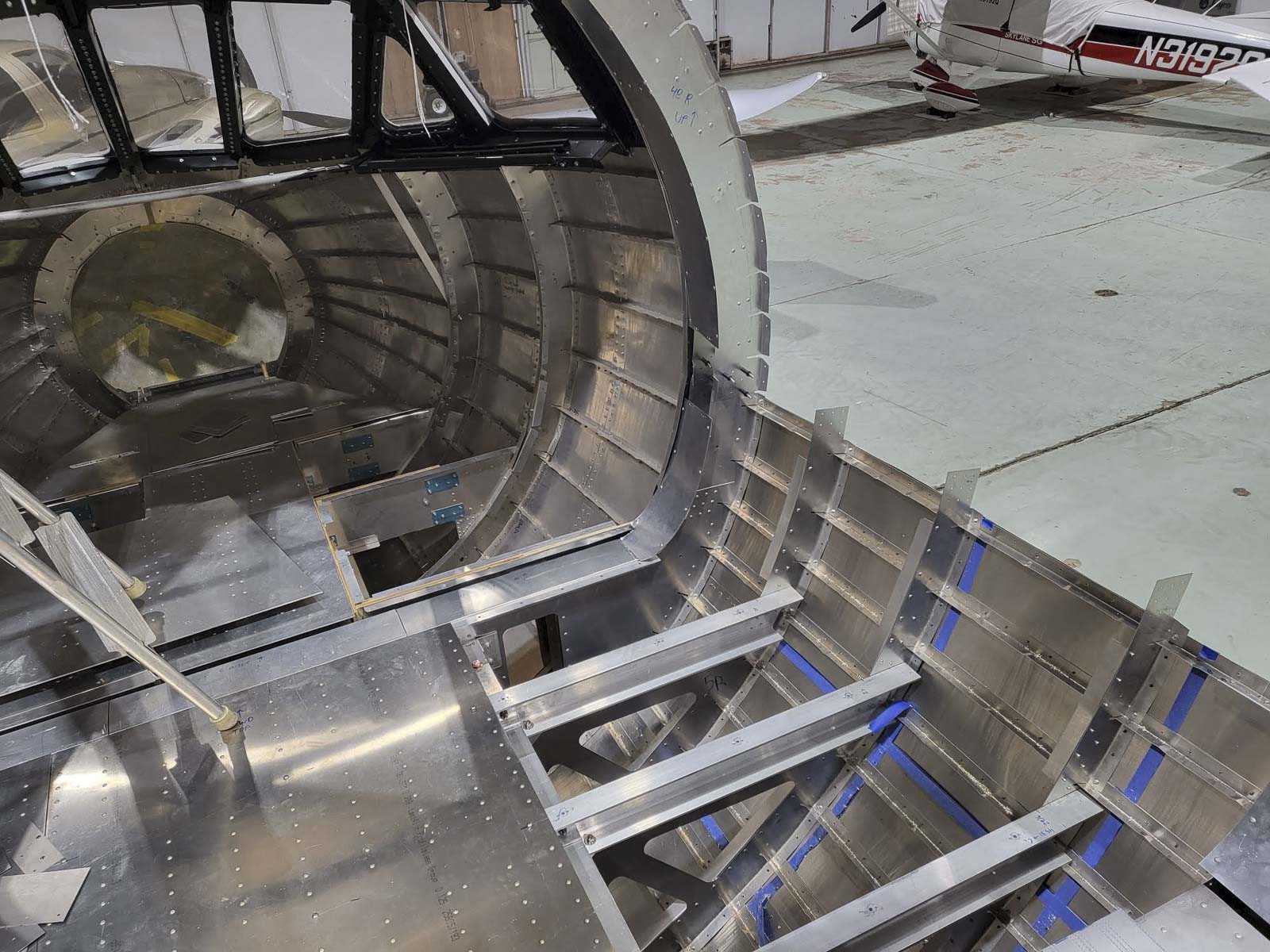
“The Comet 1 replica is 100% aluminum, with flush riveting. We’ve driven around 4,000 rivets to date. The goal has been to build the structure as close as possible to the original de Havilland designs, given limitations of time, money, materials availability, and fabricating capabilities. The entire structure has been hand-built using hand tools, with the exception of CNC-cut fuselage frames.”
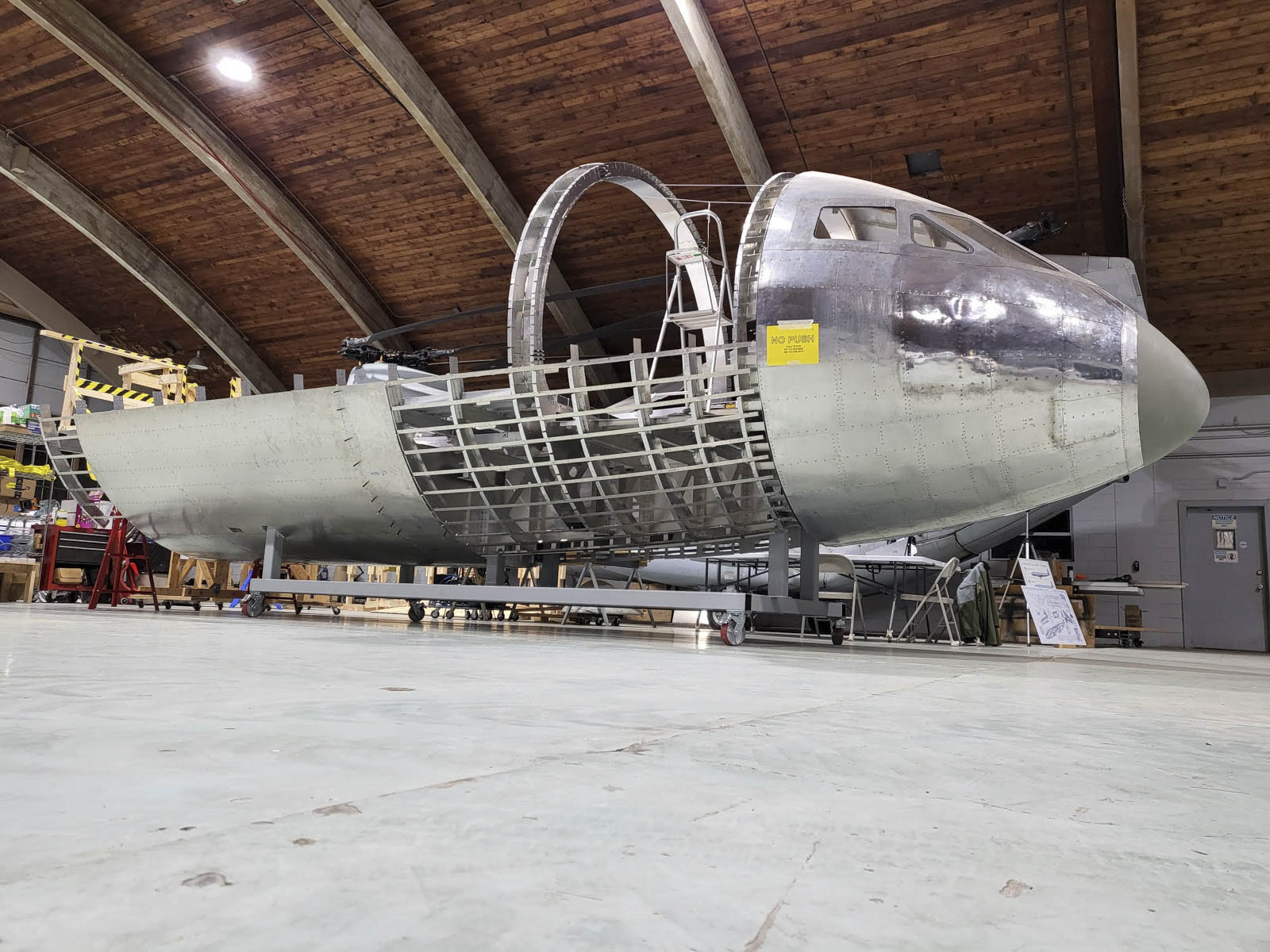
“Once the nose was completed in May 2024, I moved the project to a large hangar. There, I hired [3 part time] mechanics to help with the remaining build of “Section 2,” the next 21 feet of fuselage. Major tasks included building the steel support stand, drilling the longerons and floor beams, cutting and shaping the keel frames and stringers, fabricating the floor panels, and the most difficult part: shaping the skins and riveting them. Today, the entire keel is riveted, and we’re starting work on the side walls. Those will require new jigs and more tasks to learn.”
When asked about the configuration he plans to finish his Comet fuselage in, McNeilly responded that it will be: “… a replica of the 1952 BOAC Comet 1 interior, featuring cool light gray headliners and royal blue carpeting. The cabin seats will be fabricated, using first class modern seat frames as the main structure. The cockpit seats will be Weber bolt-down, fully articulating seats, modified with the lower and back cushions to match the original Comet cockpit seats. The Comet cockpit seats were unique, not used in any other aircraft type. But, they’re unavailable, and my efforts to locate any around the world have been unsuccessful.”
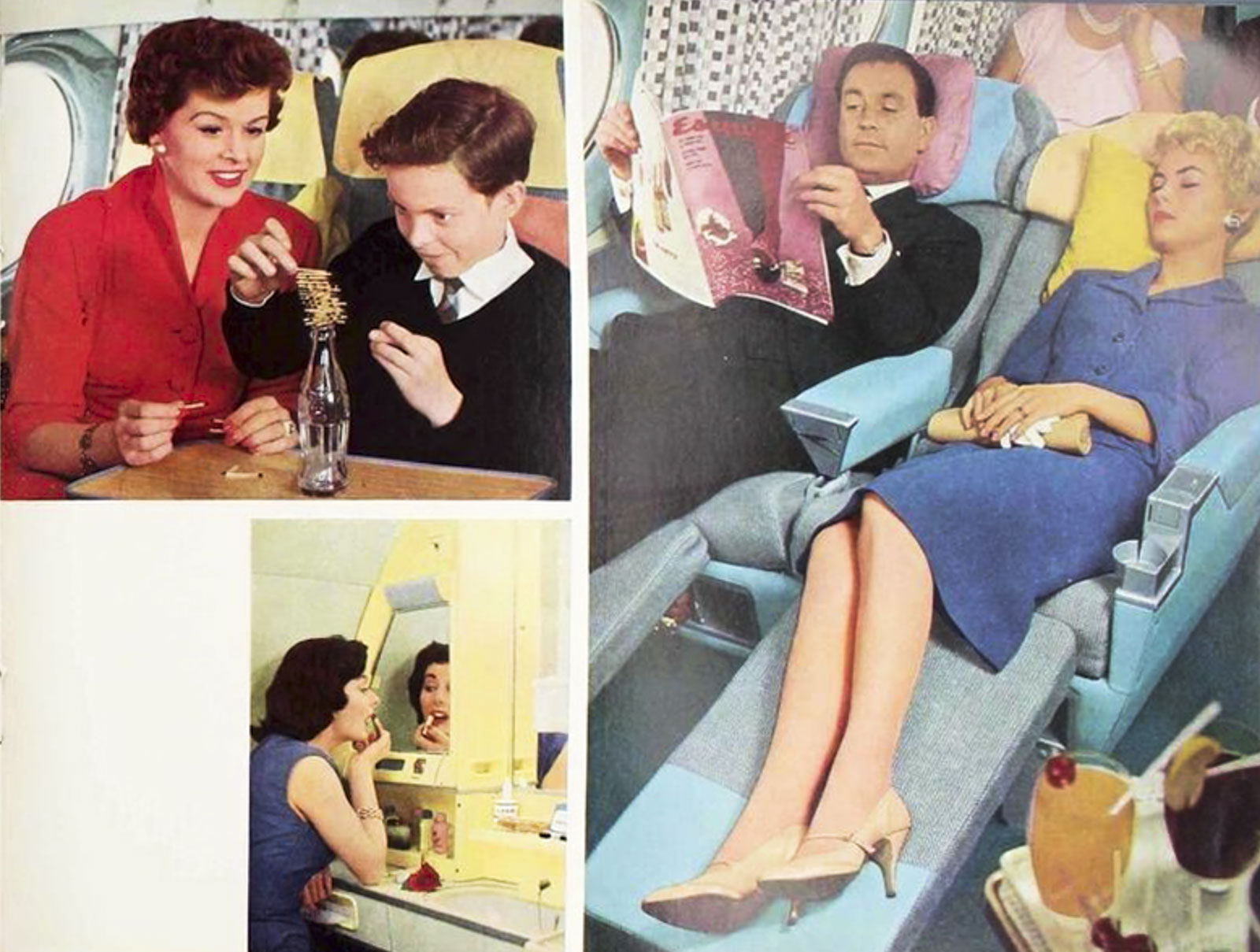
“The ultimate plan is to have a mostly-functioning cockpit flight simulator, with a 16-foot diameter visual system that moves in front of the nose. The forward galley will be fabricated and will be functional, and the forward passenger compartment of 8 seats will be an exact replica. The fuselage will be painted in the classic BOAC paint scheme, with an authentic interior, and polished aluminum keel. The main objective is to bring back to life something that no longer exists, except for a few pieces in museums.” Steve reckons it will take another two to three years to complete this worthy project. We wish him well with his endeavors, and look forwards to posting updates from time to time.