


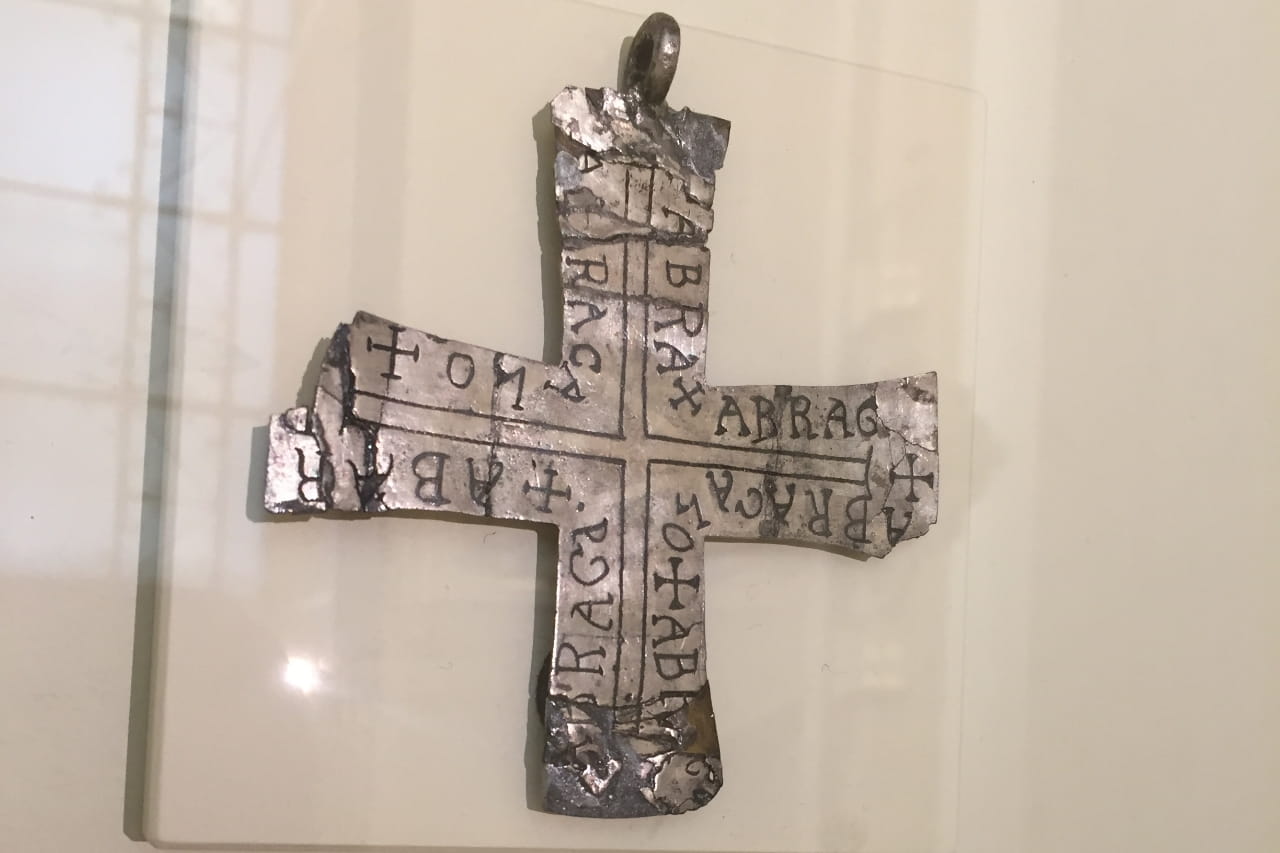

Romans wore amulets, hung them on doors, and buried them near fields. The habit lasted from 100 BCE to 600 CE. It didn’t die when Christianity arrived. New research from PhD candidate Patricia Kret shows the practice simply changed clothes.

Kret says where an amulet sits matters most. The object has to be in the exact spot it’s meant to guard or heal. That rule stayed the same after Christianity spread through the empire. Looks stayed similar too. Body amulets were often a strip of text on a metal plate or a scrap of papyrus, worn around the neck.
The words changed. Over time they turned more Christian, and so did the shapes. Some amulets became crosses. People still wore them on a cord for protection.
That’s odd, because church leaders didn’t like amulets. Bishops wrote in sermons that anyone using them would be kicked out of the church. In those same sermons, they told priests to stop making them. Priests kept at it anyway. Many amulets carried Bible quotes, and back then mostly priests had Bible manuscripts to copy from.

For ordinary people, an amulet was often the only piece of scripture they could hold. Kret compares them to relics, which appeared around the same time. Both gave people something Christian to take home.
Historians know how amulets were made from surviving manuals. How people used them is harder to pin down. Few texts describe it. So Kret studied the objects themselves, and even asked what they might have smelled and felt like. She analyzed about 300 amulets. Some name the illness they treat. Some state how far their protection reaches. Those details helped her link each amulet to the place it was found.
Others were stranger. Some began with “abracadabra” on the top line. Each line below dropped the outer letters, so the word shrank row by row. As the letters faded, the fever was meant to fade too.
Kret also found that people reused amulets. Some were family heirlooms. Others resurfaced after so many centuries that nobody knows why. Either way, belief in them ran deep.
Her favorite is a reused one. It’s a small metal plate, inscribed as a cure for migraines. Someone buried it in a grave with three other amulets, but it’s far older than they are. Migraines run in families, Kret says, so the plate may have passed from parent to child for generations.