


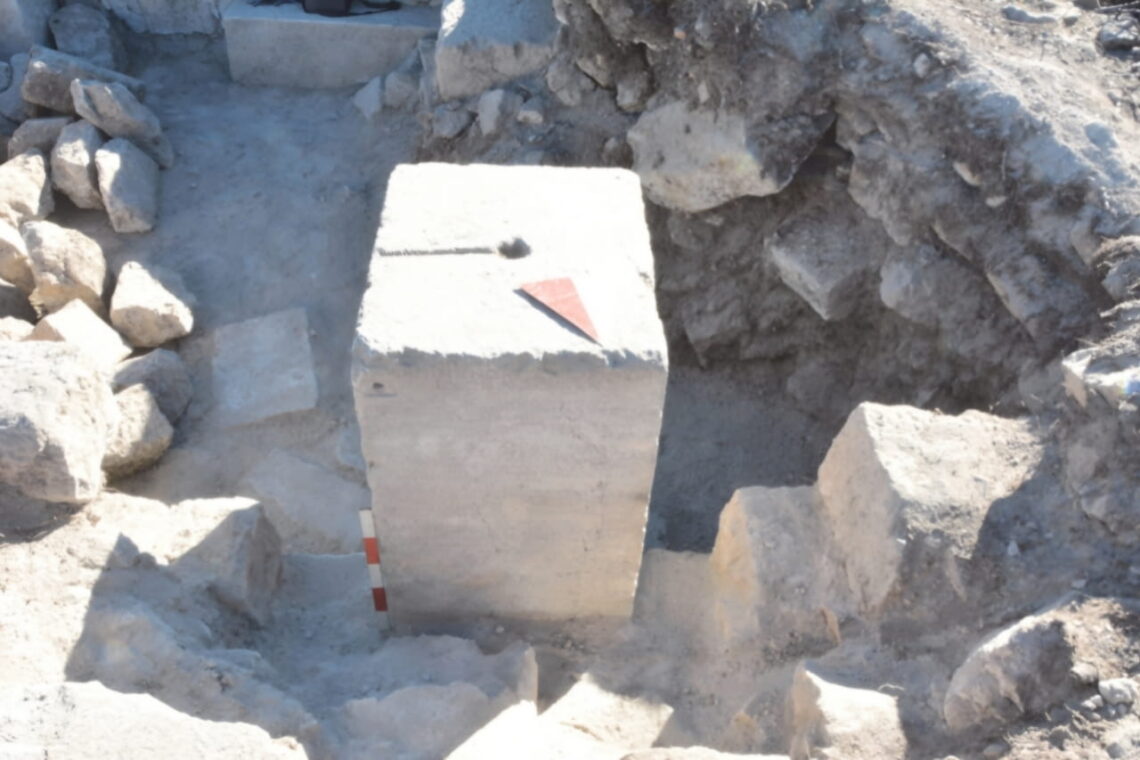

An inscribed stone found at the ancient city of Kibyra in southwestern Turkey offers a glimpse of Roman-era fortune-telling. Archaeologists unearthed the stone in 2024 inside a chapel. Its Greek text records an oracle based on animal bones, a practice once used across southern Asia Minor.

The limestone block came from the third terrace of Kibyra’s ancient agora. All four sides carry inscriptions linked to the oracle. The text adds to the record of how people in Roman cities sought answers about their lives.
The study by Şenkal Kileci, Nihal Tüner Önen, and Şükrü Özüdoğru compares the Kibyra text with similar finds from nearby cities. Their work links the monument to a wider regional custom, with local versions of the same practice.
People used small ankle bones from sheep, goats, and calves for this type of fortune-telling. The practice is known as astragalomancy. Each bone has four sides, with a number assigned to each one: 1, 3, 4, or 6.

In one common method, a person threw five bones at once. The numbers from the throw were added together, then matched to a result carved on a stone. The oracle listed 56 possible outcomes, each linked to a message.
Some messages encouraged people to act on their plans. Others advised patience or warned against certain choices. The texts dealt with everyday matters such as travel, trade, money, illness, and disputes. People could seek advice in public places rather than travel to a distant oracle site.
Hermes played a key role in this tradition. The Greek god was linked to trade, profit, and the casting of lots. The Kibyra inscription also names Zeus, Athena, Apollo, and Asclepius.
A larger inscription on one side records the gift behind the monument. A benefactor paid for the oracle, a statue of Hermes, its base, and other parts of the structure. The text says the person covered the costs from personal funds.

Similar monuments stood in public areas across southern Asia Minor. The agora was a busy part of city life, where traders and other visitors gathered. An oracle placed there would have been easy for people to consult during a normal day.
The stone later became part of a chapel wall. This reuse helped preserve the inscription, even though the block no longer stood in its original setting. The researchers believe the agora was the monument’s first home.
The Kibyra text shares much with other known oracle inscriptions, but the wording isn’t always the same. Some lines contain grammar mistakes or changes in rhythm. The authors suggest such differences arose when stone carvers copied the text, or when local versions changed over time.
Among the closest matches is an oracle from Kremna. Texts from Termessos, Ormeleis, and Adada also show strong links. The Kibyra monument preserves the full set of casting results, while other examples have lost parts of their text.
Published in Gephyra, the study adds evidence for the use of knucklebone oracles in Kibyra. The inscription links the city to a practice shared across southern Asia Minor, while its wording shows how each community kept its own version.