



The pre-flight checklist
In aviation, a pre-flight checklist is a list of tasks that should be performed by pilots and aircrew prior to takeoff. Its purpose is to improve flight safety by ensuring that no important tasks are forgotten. Failure to correctly conduct a preflight check using a checklist is a major contributing factor to aircraft accidents.
When did pilots start using pre-flight checklists?
According to Boeing’s website, the defining moment leading to the innovation of using a formal checklist occurred in 1935.
The Army Air Corps was to award a contract to build its next-generation long-range bomber, and three companies were bidding for the contract: the Douglas Aircraft Co. with the Douglas DB-1, the Glenn L. Martin Co. with the Martin 146, and Boeing with the Model 299. The 299 flew farther and faster, and it carried more payload than either of the other two entries. It was acknowledged that the advanced, sophisticated Boeing four-engine airplane was the inevitable winner. The Army had already planned to order at least 65 of Boeing’s aircraft, once the formalities of an official flying demonstration were completed.

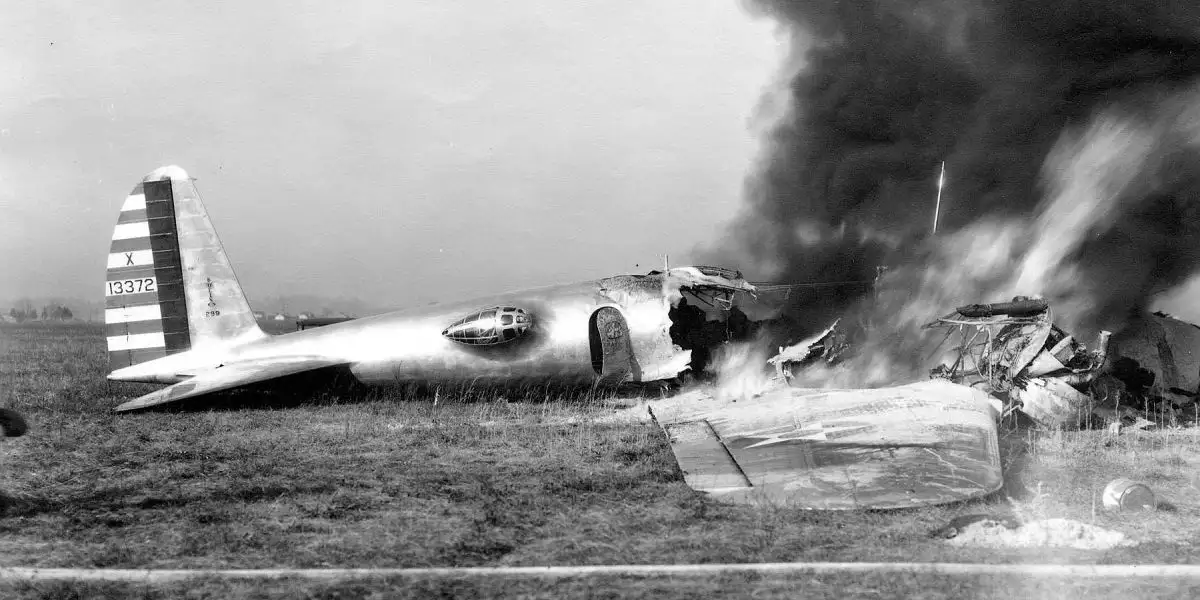
Crash of the prototype B-17
On Oct. 30, 1935, at Wright Airfield in Ohio, the Model 299 lifted off, climbed to 300 feet, then stalled and crashed killing two of the five crew members, including the pilot. An investigation determined that pilot error caused the crash. While tending to the airplane’s multitude of switches and controls, the pilot forgot to release a new locking mechanism on the airplane’s elevator controls. Critics declared that the Model 299 was “too complex to fly.”
Boeing initially lost the contract, but some remained convinced that the aircraft could be safely operated. A group of Boeing engineers and test pilots developed a simple approach: They created a pilot’s checklist with critical action checks for taxi, takeoff and landing. They believed that this airplane was not too complex to fly, but was too complicated to be left to a pilot’s memory.

The pre-flight checklist becomes a permanent and mandatory tool
A technicality in the selection process allowed Boeing to build and test another 12 Model 299 aircraft. With the checklist in hand, Boeing and Air Corps pilots went on to fly the initial 12 airplanes a total of 1.8 million miles without an accident. The Army ultimately ordered almost 13,000 of the aircraft, which were designated the B-17 and gave the Allies an air advantage in World War II as they helped carry out a devastating bombing campaign across Nazi Germany.
The checklist became a permanent and mandatory tool, for both routine and emergency conditions, to be used by all pilots in the Boeing fleet, in all of military aviation, and soon after in commercial aviation as well.

The Boeing B-17 Flying Fortress
The Boeing B-17 Flying Fortress flew in every combat zone during World War II, but its most significant service was over Europe. Along with the B-24 Liberator, the B-17 formed the backbone of the USAAF strategic bombing force, and it helped win the war by crippling Germany’s war industry.
The B-17’s design emphasized high altitude flight, speed, and heavy defensive armament in order to survive enemy defenses. Advanced turbosupercharged engines allowed it to fly up to about 30,000 feet with a combat load, while powered turrets and flexible guns covered all areas around the aircraft.
Although the B-17 prototype flew in 1935, only a relatively small number of B-17s were in service when the US entered the war in 1941. Production quickly increased, and three companies—Boeing, Lockheed-Vega, and Douglas—mass-produced Flying Fortresses by the thousands.
