


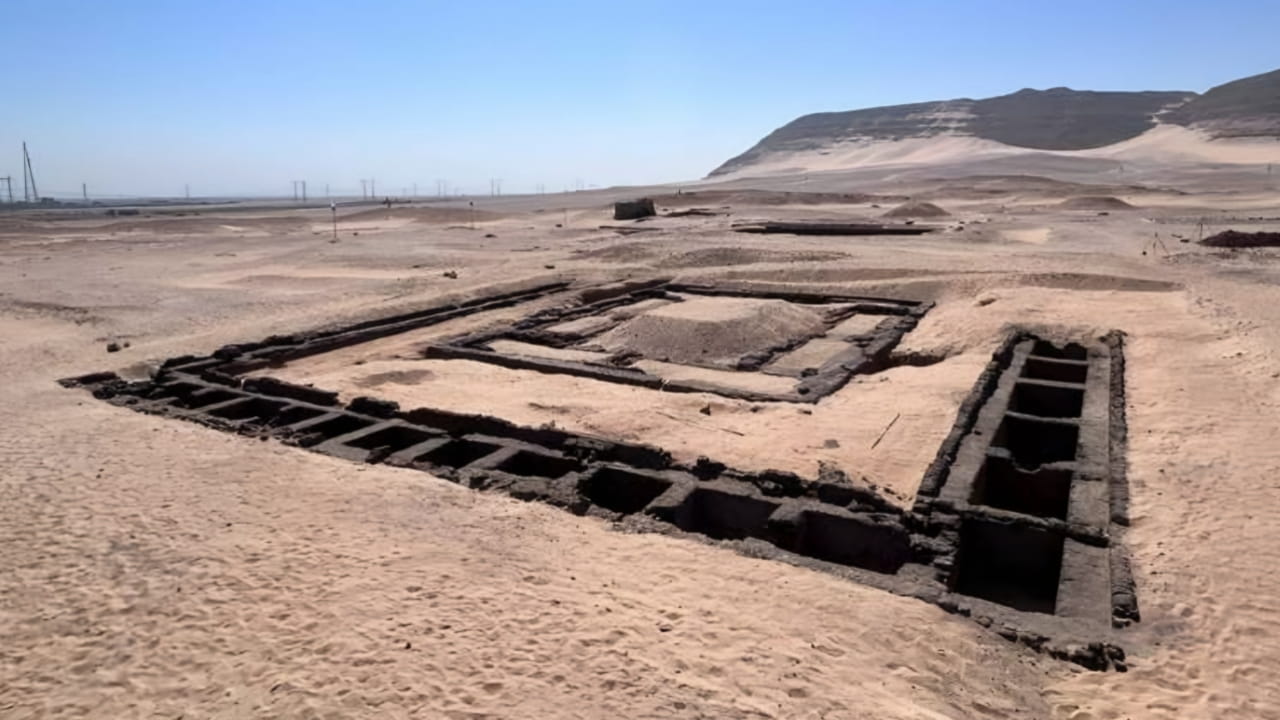

For more than a century, archaeologists have debated the deaths of people buried beside Egypt’s earliest royal tombs. Many early researchers linked these graves to human sacrifice. New study of the surviving skulls now points to a more complex story.

The burials sit at Umm el-Qaab, near Abydos, where Egypt’s First Dynasty rulers built large tombs. Hundreds of people were buried in small graves around royal funerary sites between about 3078 and 2900 BCE.
Early excavator W. M. Flinders Petrie studied many of these graves in the 1920s. He thought the buried people belonged to the royal court and died to serve their ruler after death. He also raised the idea of live burial based on the positions of some bodies.
The new study examined 46 preserved skulls from graves linked to the funerary sites of Djer, Djet, and Merneith. Eighteen skulls, or 39 percent, show signs of serious injuries around the time of death.

Most injuries appear as long fractures across the skull. Other remains show sharper wounds. One skull has a penetrating injury on the side of the head. Another has a chopping injury near the eye.
These injuries provide the strongest evidence yet for violent deaths among some people buried near the royal tombs. The researchers stress that skull damage alone doesn’t prove human sacrifice in every case.
Petrie appears to have noticed some of the fractures during his work. He often placed paraffin wax around damaged parts of the skulls. Yet early archaeologists lacked modern methods for separating injuries from damage caused after burial.
Bone changes after death follow different patterns from fresh injuries. Fresh bone bends and breaks in ways different from dry bone. Researchers now use these differences when studying ancient skull trauma.
The body positions also need a closer look. Petrie thought unusual positions might point to people buried alive. The new study offers another explanation based on normal decay inside a grave.
As soft tissue breaks down, bones shift from their original position. Slow filling of a grave could also move parts of a body. Small bones from the hands and feet also survived at the sites, suggesting the bodies weren’t moved after major decay.
The people buried around the royal sites also weren’t a single social group. Their titles include seal-bearers, inspectors, artisans, physicians, and other court workers. Surviving records don’t identify people with titles such as king’s wife, vizier, or royal child.

Men and women both appear among the burials. Children and older adults were less common in the surviving sample. Grave goods included copper tools, stone vessels, flint knives, and ivory combs with royal names.
Health clues add another part to the story. People buried around the funerary enclosures show signs of better childhood health than people buried around royal tombs. They also show less physical stress in their bones.
The researchers warn against drawing broad conclusions from the skull sample. Only about 5 to 15 percent of the original burial populations are represented by surviving skulls. Much of the postcranial skeleton is also missing.
Some people therefore suffered severe head injuries close to death, while others show no such signs. The cause of each injury also can’t always be determined.
The study changes how researchers view the old sacrifice debate. Evidence for violence exists, but the graves don’t provide a simple answer for every death.
The findings also show why old museum collections deserve fresh study. Early excavations often lacked specialists trained to read human remains. Modern bone analysis now offers new evidence from collections studied many decades ago.