


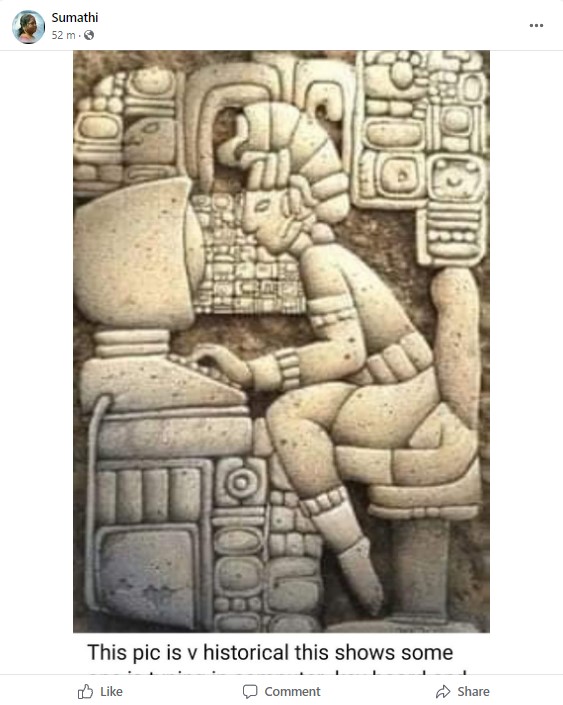
An image of what appears to be an ancient engraving of a man seated in front of a computer is going viral on social media. Users claim that it to be a “historical” engraving that proves India was ahead of other civilizations. Some users in Tamil claim the image to be of an engraving in a temple built by a Pallava king 1,400 years ago.
Newschecker found the claim to be untrue and that the image was actually of a modern artwork.
Several Facebook users shared the image, with one caption saying, “This pic is v historical this shows someone is typing in computer keyboard and traveling in space this should be protected (sic).”
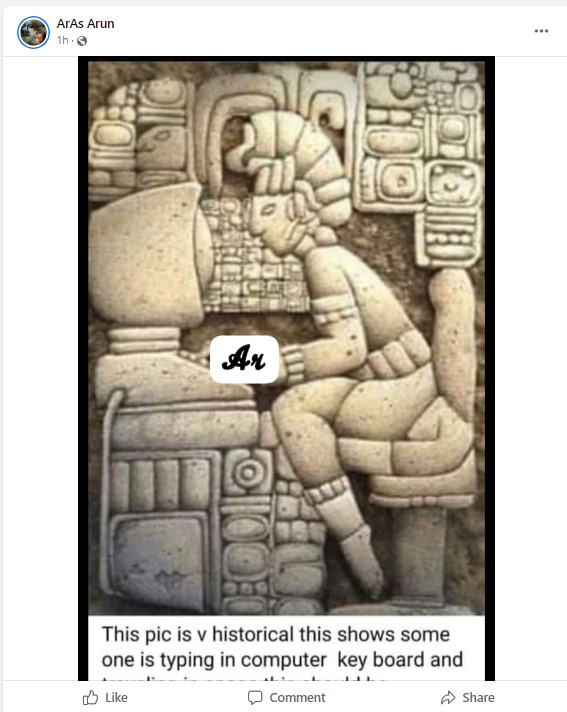
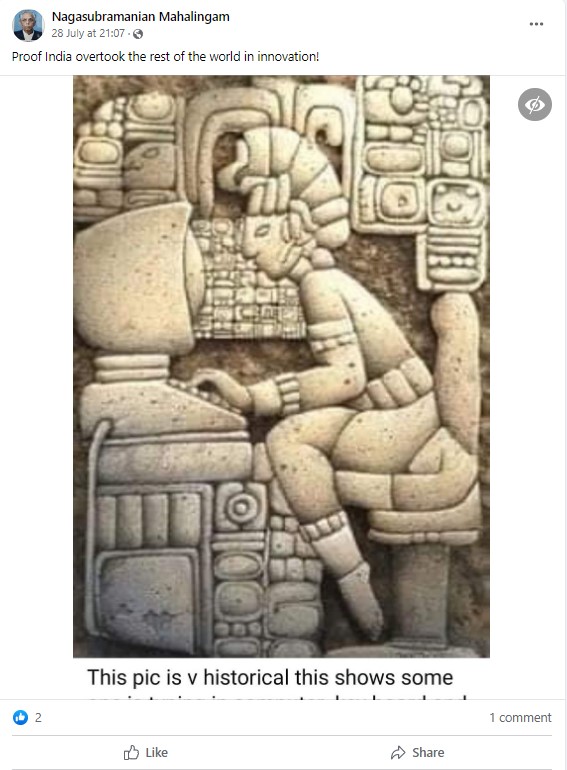
Another user claimed it to be “proof India overtook the rest of the world in innovation!”.
Links to such posts can be found here, here and here.
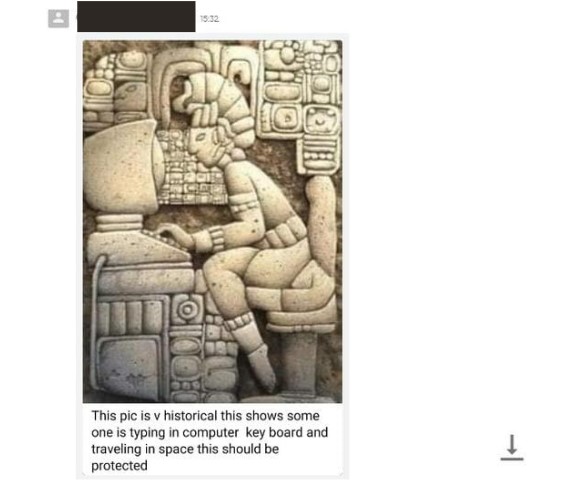
Newschecker also received the same image on our WhatsApp tipline (+91-9999499044), requesting a fact-check.
Fact Check/Verification
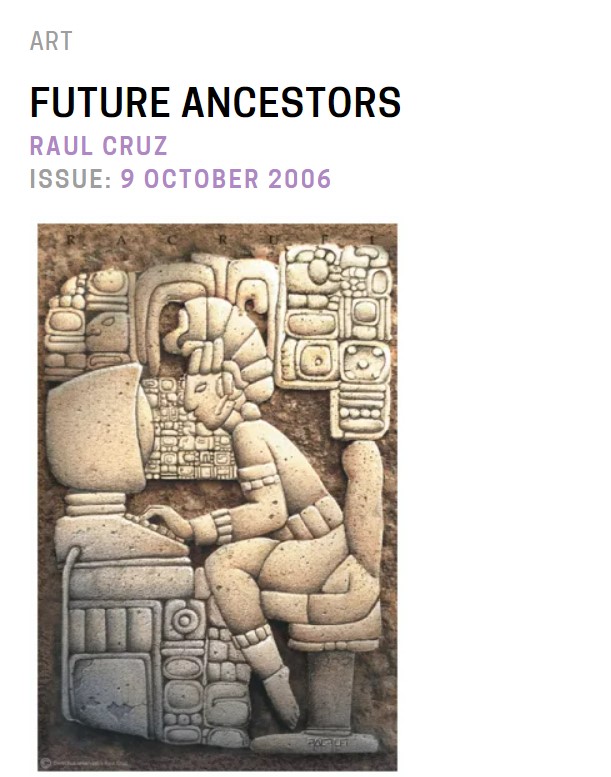
Newschecker conducted a Google reverse image search, which led us to a website titled “Strange Horizons”. Displaying the viral image, the website elaborated on an artwork called “Future Ancestors” by Raul Cruz as a part of its October 9, 2006 issue. It stated that Raul’s work, inspired by Aztec and Mayan art, mixes traditional elements with science fiction and fantastic themes.
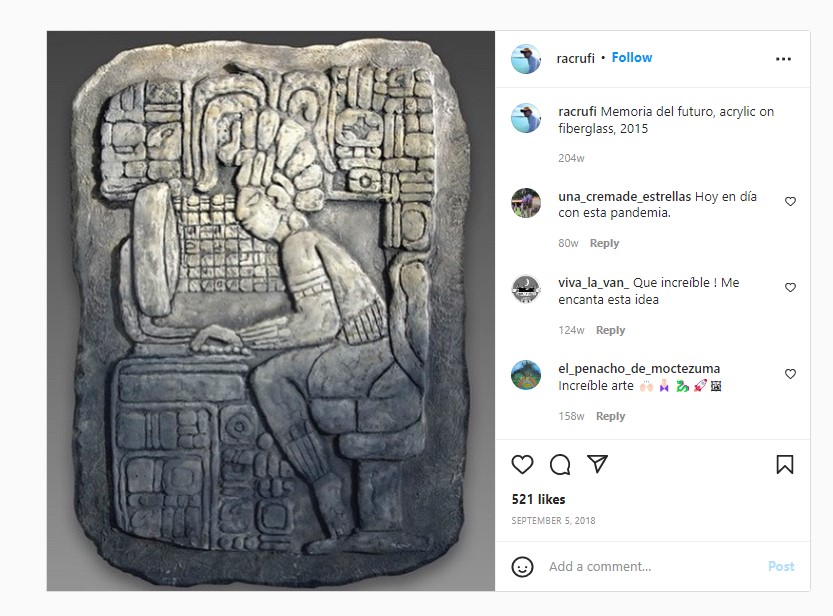
We found another version of the viral image on Cruz’s Instagram account, titled “Memoria del futuro, acrylic on fiberglass, 2015”, which translates to “Memory of the future, acrylic on fiberglass, 2015”.
Also, we found that the artwork was featured as the book cover for “Cosmos Latinos: An Anthology of Science Fiction from Latin America and Spain (Early Classics of Science Fiction)”.